
Trees
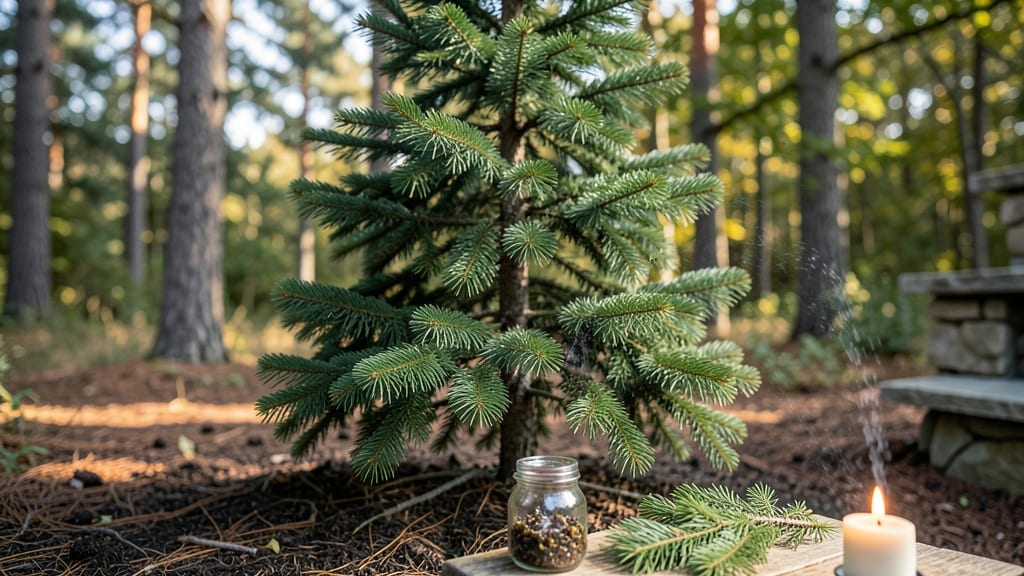
The balsam fir Christmas tree scent is legendary because its natural volatile oils—like pinene and limonene—create that unmistakable fresh, resinous aroma with citrusy undertones. This makes it the most fragrant evergreen for holiday decor, though its scent fades faster without proper care.
The balsam fir's signature holiday fragrance isn't just pleasant—it's chemically engineered by nature. 🌲 Those volatile oils, including terpenes and myrcene, react differently based on temperature and humidity, which is why freshly cut trees smell stronger.
Unlike Douglas firs (which lean more piney) or Scotch pines (sharper), balsam firs offer that balanced citrus-resin blend that instantly feels like winter. The secret to keeping it alive?
Consistent watering (never let the trunk dry out) and placing your tree near a humidifier—this prevents the needles from drying and losing their aromatic oils prematurely.
Fun fact: The scent isn't just a holiday tradition—it's been scientifically proven to reduce stress. That's why balsam firs dominate Christmas markets and tree lots.
For an extra boost, try lightly misting the tree with water mixed with a few drops of lemon or orange essential oil—this mimics the natural citrus notes and amplifies the fragrance for days.
💡 In This Article
- Science Behind Balsam Fir’s Signature Holiday Scent
- Tips to Maximize Balsam Fir Scent in Your Home
Science behind balsam fir’s signature holiday scent
The balsam fir's iconic aroma comes from a complex mix of volatile organic compounds (VOCs), primarily α-pinene (which smells like fresh pine) and limonene (that citrusy note). These compounds are stored in tiny resin ducts within the needles and bark, released when the tree is cut or damaged.
The balsam fir produces 2-3 times more of these aromatic oils than Douglas firs, giving it that signature holiday fragrance that feels like winter in a bottle. 🌲
What makes this scent unique is the balance of terpenes (like myrcene and camphene) that create that resinous depth, while the limonene adds brightness.
For comparison, Scotch pines rely more on β-pinene, which has a sharper, more medicinal smell, while Fraser firs have less limonene, making their scent more muted. The balsam fir's chemistry is why it's the top choice for scent lovers—it's like nature's perfect fragrance blend.
Temperature and humidity play critical roles in scent release. Warmer rooms (68-72°F) cause the volatile oils to evaporate faster, intensifying the aroma for the first 48 hours after cutting.
However, if the air is too dry (below 30% humidity), the needles lose moisture and the oils degrade quicker. That's why placing your tree near a humidifier or on a damp stand keeps those aromatic compounds active longer. 💫
Light exposure also matters—the brighter the room, the more the tree's natural oils break down. Direct sunlight accelerates this process, which is why many experts recommend keeping your tree away from windows.
The ideal spot is a cool, dimly lit area where the scent can linger without being "cooked" by heat or light. This is why basements or living rooms with controlled lighting preserve the fragrance best.
Here's what happens chemically: When you cut the trunk, the tree's vascular system is disrupted, causing the resin ducts to release their stored oils. These oils then diffuse into the air as gaseous molecules, creating that familiar holiday aroma.
The process slows as the tree dries out, which is why consistent watering (every 24-48 hours) is key—it keeps the needles hydrated and the scent pathways open. 🔥
Fun science fact: The balsam fir's scent isn't just pleasant—it's evolutionarily designed to repel pests. Those same terpenes that make it smell amazing to us act as natural insect deterrents. That's why your tree stays fresher longer in terms of both scent and needle health.
The more you understand these natural mechanisms, the better you can preserve that magical holiday aroma throughout the season.