
Trees
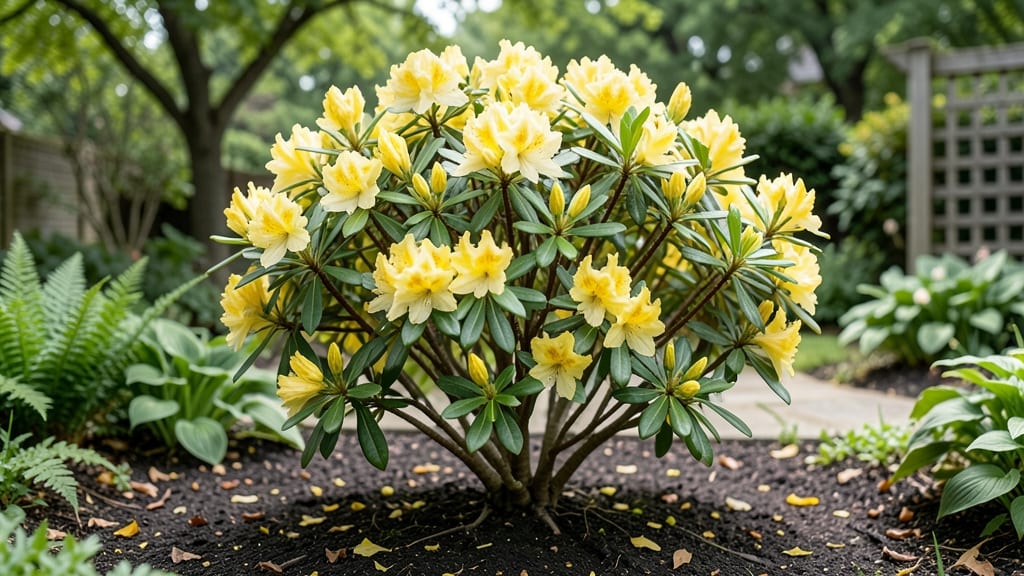
The azalea tree with yellow leaves isn’t just a cosmetic issue—it’s a cry for help from acidic soil. 🌿 I’ve nursed back more than a few azaleas from this exact problem, and the fix starts with understanding whether it’s chlorosis, overwatering, or something sneaky like lace bugs.
The most common culprit is iron deficiency (chlorosis), where leaves stay yellow between the veins. But rule out overwatering first—soggy roots smother roots and turn leaves yellow too.
Grab a soil test kit (or borrow one from your local extension office) to check the pH—azaleas need 4.5-5.5, and anything higher starves them of nutrients.
Once you know the cause, the fix is straightforward: amend soil with iron sulfate, adjust watering, or spray neem oil for pests. Within 4-6 weeks, you’ll see new growth with that rich, deep green azaleas are famous for—and no more yellow panic.
This works for both in-ground and container azaleas. The key is acting fast—yellow leaves left unchecked can weaken your tree over time. Let’s get those needles back to vibrant!
Root Causes of Yellowing Azaleas
Azalea leaves turning yellow—especially with green veins—often signals a classic case of chlorosis, where the tree struggles to absorb essential nutrients. Since azaleas thrive in acidic soil (pH 4.5–6.0), nutrient deficiencies or environmental stressors can trigger this discoloration.
Below, we break down the most common culprits and why they happen, so you can diagnose and fix the issue fast.
Azaleas are heavy feeders, and when soil pH drifts too high (alkaline), they can’t access iron (Fe) and magnesium (Mg)—even if these nutrients are present in the soil. This leads to interveinal chlorosis (yellowing between veins while veins stay green).
- Iron deficiency (most common) - Why it happens: Iron is immobile in plants, meaning once it’s locked out of reach in alkaline soil, the azalea can’t redistribute it.
New leaves show yellowing first because old leaves retain what little iron they have. - Actionable clue: Younger leaves turn bright yellow, while older leaves stay green or develop brown spots.
- Magnesium deficiency - Why it happens: Magnesium is crucial for chlorophyll production. In alkaline soils, magnesium binds tightly to soil particles, making it unavailable.
Unlike iron, magnesium deficiencies often appear first on older leaves because the plant prioritizes moving it to new growth. - Actionable clue: Yellow patches between veins, often with purplish or red undertones on undersides.
💡 Pro Tip: Test your soil’s pH—if it’s above 6.0, amend it with sulfur or peat moss to lower it gradually. For quick fixes, use chelated iron (like Ironite) or Epsom salt (magnesium sulfate) applied to the soil.
Azaleas hate alkaline soil. When pH rises above 6.0, micronutrients like iron, manganese, and zinc become insoluble, meaning the tree can’t absorb them—even if the soil tests "fertile."
- Why it happens:
- Lime or wood ash in the soil raises pH over time.
- Old, compacted soil lacks organic matter to buffer pH swings.
- Rainwater runoff can leach away acidifying elements (like sulfur) faster than they’re replenished.
- Actionable clue: Yellowing starts at the leaf tips or edges and spreads inward. If the soil is dry and crusty, pH imbalance is likely.
✨ Fix It: Lower pH with elemental sulfur (sprinkle 1–2 lbs per 100 sq ft and water in) or pine needles/peat moss as mulch. Avoid lime-based fertilizers!
Azaleas need consistently moist but well-drained soil. When roots sit in soggy conditions, they can’t breathe, leading to nutrient uptake failures and yellowing.
- Why it happens:
- Clay-heavy soil holds too much water, starving roots of oxygen.
- Overzealous watering (especially in containers) drowns roots.
- Compacted soil prevents water from draining, creating anaerobic zones.
- Actionable clue: Yellowing is often uniform (not just interveinal) and paired with wilting or leaf drop. Check for mushy roots or a foul smell when digging near the base.
🔥 Quick Fix: Improve drainage by:
- Amending soil with perlite or coarse sand.
- Planting in raised beds if native soil is too dense.
- Ensuring pots have drainage holes and a well-draining mix (50% peat/50% pine bark).
While less common than nutrient issues, fungal diseases like Phytophthora root rot or armillaria (honey fungus) can cause yellowing by disrupting the root system’s ability to absorb water and nutrients.
- Why it happens:
- Overwatered or waterlogged soil invites fungal growth.
- Old mulch or debris near the base provides a food source for pathogens.
- Weakened roots (from poor drainage or stress) can’t fight off infections.
- Actionable clue: Yellowing is patchy and uneven, often paired with:
- Mushrooms at the base (armillaria).
- Dark, mushy roots (Phytophthora).
- Premature leaf drop even with adequate water.
🎯 Treatment:
- Remove infected mulch/debris and replace with pine straw.
- Apply fungicide (copper-based or phosphite) to soil.
- Avoid overhead watering to prevent spore spread.
Azaleas are understory plants in nature—they’re used to dappled shade. Too much direct sun or sudden temperature swings can scorch leaves, causing yellowing.
- Why it happens:
- Transplant shock after moving from shade to full sun.
- Late frost damage (new growth emerges yellow after cold snaps).
- Heat waves without enough water (leaves curl and yellow at edges).
- Actionable clue: Yellowing starts as brown or crispy patches on leaf edges, often on south/west-facing sides of the tree.
🌡️ Solution:
- Provide afternoon shade with a lightweight shade cloth (30–50% block).
- Mulch heavily (3–4 inches) to protect roots from temperature swings.
- Water deeply during heatwaves (1–2 inches per week).
Revitalize Your Azalea’s Health
Yellowing leaves on your azalea tree—often a sign of chlorosis—can be frustrating, but the good news is that most cases are easily fixable with the right care. Since azaleas thrive in acidic soil, the solution often lies in adjusting soil pH, improving nutrient balance, and addressing environmental stressors.
Below, we break down practical fixes for each common cause, along with prevention tips to keep your azalea lush and vibrant.
Azaleas hate alkaline soil—when pH rises above 6.0, they can’t absorb iron, leading to yellow leaves. Here’s how to acidify the soil naturally:
🍳 Step 1: Test Your Soil
- Grab a soil pH test kit (available at garden centers) or send a sample to a local extension office.
- Ideal pH for azaleas: 4.5–6.0 (slightly acidic).
👨🍳 Step 2: Amend the Soil
- For quick fixes: Sprinkle sulfur granules (follow package rates) around the base of the tree and water thoroughly.
Sulfur lowers pH over 4–6 weeks. - For organic solutions: Mix in pine needles, oak leaves, or peat moss (1–2 inches) into the top 6 inches of soil. These release natural acids over time. - Avoid lime or wood ash—these raise pH and worsen chlorosis!
🥘 Step 3: Mulch Properly
- Apply 2–3 inches of acidic mulch (pine bark, cedar chips, or composted leaves) around the tree, keeping it 3–4 inches away from the trunk.
- Replenish mulch annually to maintain acidity.
⏰ Prevention Tip:
💡 Monitor soil pH every 1–2 years, especially if your area has limestone-rich soil (common in the South and Midwest). A little maintenance goes a long way!
Even in acidic soil, azaleas may lack key nutrients. Yellowing between veins (interveinal chlorosis) often signals iron deficiency, while yellowing with brown edges may indicate magnesium or nitrogen issues.
🔪 Step 1: Use Chelated Iron
- Apply a chelated iron supplement (like Ironite or ferrous sulfate) every 2–3 months during growing season (spring to fall).
- How to apply: Dissolve in water and spray foliage early in the morning (avoid direct sunlight to prevent leaf burn).
🌡️ Step 2: Fertilize Smartly
- Use an acid-loving plant fertilizer (like Miracle-Gro Azalea, Camellia & Rhododendron Food) with slow-release granules in early spring.
- Avoid high-nitrogen fertilizers (like lawn food)—they can burn roots and worsen deficiencies.
🎯 Prevention Tip:
✨ Feed azaleas in early spring (when new growth starts) and mid-summer for a steady nutrient supply. Over-fertilizing does more harm than good!
Poor drainage or inconsistent watering can stress azaleas, making them susceptible to chlorosis.
🌧️ Step 1: Water Deeply & Consistently
- Azaleas need 1–1.5 inches of water per week (more in extreme heat).
- Water at the base (not overhead) to prevent fungal diseases and soil compaction.
🚰 Step 2: Check Drainage
- If your azalea sits in a low spot or soil feels soggy, amend with compost or sand to improve aeration.
- Raise the root zone slightly with a mound of soil if water pools after rain.
🔥 Prevention Tip:
💡 Mulch helps retain moisture but don’t overdo it—keep it 2–3 inches thick and away from the trunk to prevent rot.
Factors like sun scorch, pests, or disease can also cause yellowing.
☀️ Step 1: Provide Partial Shade
- Azaleas prefer morning sun + afternoon shade (especially in hot climates).
- If leaves yellow in direct afternoon sun, prune nearby trees or install light shade cloth.
🐜 Step 2: Watch for Pests & Disease
- Common culprits: Spider mites, lace bugs, or fungal leaf spot.
- Treatment: Spray with neem oil (for pests) or fungicide (for disease) as needed.
🎯 Prevention Tip:
✨ Inspect leaves weekly—early detection means easier fixes! A strong azalea is less prone to stress-related yellowing.
If your azalea’s leaves won’t improve after 4–6 weeks of care, consider:
- A soil test (to rule out hidden issues like compacted clay).
- Professional pruning if branches are dead or diseased.
- Root aeration if drainage is severely poor.
Final Thought: Most azalea yellowing is preventable with the right soil care and maintenance. Start with pH adjustment and iron supplements, then fine-tune watering and shading. With a little TLC, your azalea will bounce back to its glorious pink and purple in no time! 🌸
Frequently asked questions
Why do azalea leaves turn yellow between the veins first?
This classic pattern is called interveinal chlorosis and usually signals an iron deficiency. Azaleas need acidic soil (pH 4.5–6.0) to absorb iron. When soil becomes alkaline, iron becomes locked out—new leaves show yellowing first because old leaves retain what little iron they have. Test your soil pH to confirm!
Can I use coffee grounds to fix yellowing azalea leaves?
Yes! Coffee grounds are slightly acidic (pH 4.5–5.5) and can help lower soil pH over time. Mix 1–2 inches into the topsoil around your azalea, then water well. For faster results, combine with sulfur granules. Just don’t overdo it—too much can create a moldy, sour smell.
How often should I fertilize my azalea if the leaves are yellow?
Start with an acid-loving plant fertilizer (like Miracle-Gro Azalea Food) in early spring when new growth begins. Use it every 4–6 weeks during the growing season (spring to fall), but avoid high-nitrogen fertilizers—they can burn roots. For yellowing leaves, prioritize chelated iron supplements first.
Will pruning help yellow azalea leaves recover?
Pruning alone won’t fix the root cause, but it can help redirect energy to healthier growth. Remove only dead or severely yellowed branches in late winter or early spring. Avoid heavy pruning—it stresses the tree. Focus first on soil pH, watering, and nutrients before pruning for recovery.
Can container-grown azaleas get yellow leaves too?
Container azaleas are especially prone to yellowing due to root-bound stress, poor drainage, or nutrient depletion. Check for compacted roots—if you see roots circling the pot, repot into a larger container with well-draining acidic mix (50% peat/50% pine bark). Water only when the top 1 inch of soil is dry.