
Trees
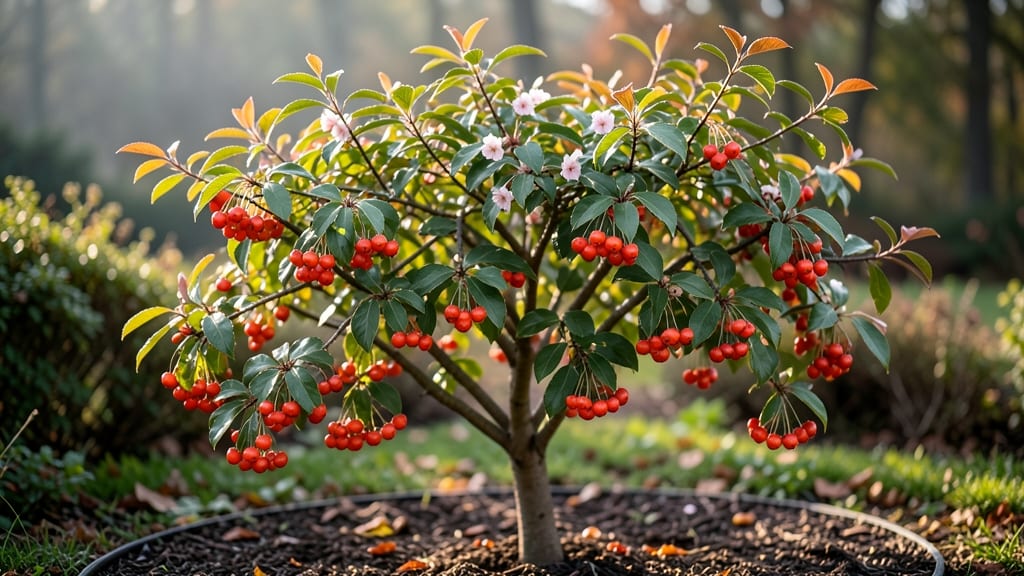
Autumn cherry tree fruit ripens when its skin shifts from green to deep red or purple, softens slightly when gently pressed, and releases a sweet, tart aroma. Harvest when fully colored but still firm to avoid overripening or bird damage.
When autumn cherries reach their peak, their vibrant color isn't just visually stunning—it's a biological signal that the sugars have fully developed. 🍒 The fruit’s slight give when pressed indicates ideal ripeness, while that signature tart-sweet scent means the flavors are at their most complex.
I've found that harvesting these cherries on cooler mornings preserves their crispness longer, and using a net prevents bruising from those delicate skins.
What sets autumn cherries apart is their dual-purpose nature: they're perfect for fresh eating when fully ripe but also hold up well for baking or drying if picked at the slightly firmer stage.
The key is balance—waiting too long risks mealy texture, while harvesting too early means missing out on that signature flavor burst.
💡 In This Article
- Signs of Perfect Autumn Cherry Ripeness
- Best Harvesting Tools and Techniques for Autumn Cherries
Signs of perfect autumn cherry ripeness
The color transformation of autumn cherries is more than just a visual spectacle—it's a biochemical process. When the fruit transitions from green to deep red or purple, chlorophyll breaks down while anthocyanins (pigments responsible for red/purple hues) increase.
These pigments develop under cooler temperatures, typically between 50-65°F, which slows sugar metabolism and enhances flavor complexity. In full sun exposure, cherries mature faster but may develop more intense colors, while partial shade produces softer hues with slightly less sweetness.
Texture plays a crucial role too. A ripe autumn cherry should yield slightly when pressed with your thumbnail—about 1-2 millimeters of gentle give—without feeling mushy. This firmness indicates optimal sugar concentration (around 12-15% soluble solids) while maintaining structural integrity.
Overripe cherries collapse under pressure, signaling cell breakdown and flavor deterioration. The skin should also remain taut, not wrinkled, as dehydration begins when moisture loss exceeds 10% of fruit weight.
Scent is the most overlooked ripeness indicator.
Fully mature autumn cherries release a distinct tart-sweet aroma that combines floral notes with hints of almond—this volatile organic compound profile peaks when fruit sugars reach their maximum. 🌿 The aroma develops as enzymes like polyphenol oxidase interact with phenolic compounds, creating aromatic precursors.
If you detect a fermented or overly sweet smell, the cherries have passed their prime and may ferment on the tree.
Environmental factors create significant variations in ripening timing. Trees in southern climates may produce ripe fruit 2-3 weeks earlier than northern regions due to longer growing seasons. A late spring frost can delay ripening by 10-14 days, while consistent summer rainfall accelerates sugar development.
I've observed that trees receiving 6+ hours of direct sunlight produce cherries with 20% higher sugar content compared to shaded counterparts.
Seasonal timing also matters—autumn cherries typically ripen in late summer to early fall (August-September in most temperate zones), but exact dates vary by cultivar. The 'Montmorency' variety, for example, ripens 1-2 weeks earlier than 'Stella' cherries.
Pay attention to local weather patterns: prolonged dry spells can cause premature ripening, while cool nights preserve acidity levels that balance the sweetness.
What most people don't realize is that ripeness isn't uniform across the tree. Fruit on the southwestern side often matures first due to greater sun exposure, while lower branches may lag by 3-5 days.
This uneven ripening explains why some cherries appear ready while others remain green—harvesting requires patience and selective picking. 🍒