
Planting
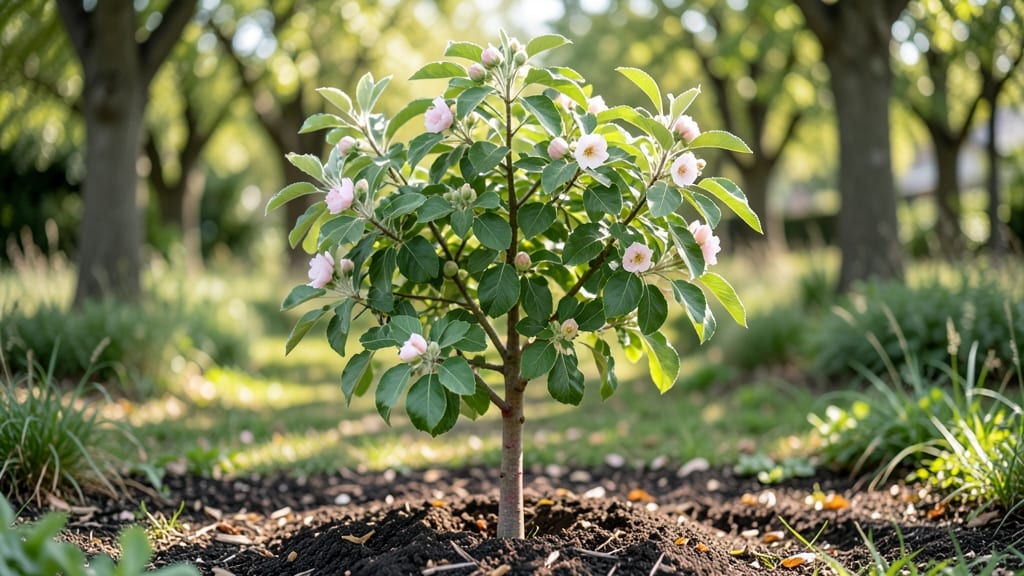
Planting a young apple tree with the right spacing can turn a $40 seedling into a 20-foot fruit powerhouse in just five years. 🌱 I learned the hard way—my first tree grew lopsided because I crammed it too close to the fence.
The secret isn’t just digging a hole; it’s giving roots room to breathe and sunlight to stretch toward. Start with soil that drains like a sponge—mix in compost until it’s dark and crumbly. Plant deep enough to bury half the trunk (yes, really), then water deeply to settle the soil.
Young trees need 1-2 inches of water per week, but don’t drown them—soggy roots invite rot faster than aphids do. By summer’s end, you’ll see new leaves unfurling like tiny hands reaching for the sky. Prune only to remove crossing branches now—wait until next year for serious shaping.
The payoff? A sturdy tree with strong limbs that won’t snap under fruit weight. Works for dwarf, semi-dwarf, or standard varieties—just adjust spacing. Here’s how to set it up right from day one.
📚 In This Guide
- What you need
- Instructions
- Tips and common mistakes
- Wrapping up and next steps
What you need
- ● Young apple tree plant: 1–3 bare-root or container-grown saplings (choose disease-resistant varieties like Honeycrisp or Fuji).
- ● Well-draining soil: 5–10 cubic yards (depending on planting depth) or compost blend (50% topsoil, 30% compost, 20% perlite/sand).
- ● Organic fertilizer: 10–20 lbs of balanced 10-10-10 or fruit-tree-specific fertilizer (e.g., Espoma Tree-Tone).
- ● Mulch: 2–3 inches of wood chips or straw (avoid fresh mulch near the trunk).
- ● Shovel: 1 medium-sized digging shovel (for planting holes).
- ● Garden fork: 1 (to loosen compacted soil).
- ● Pruning shears: 1 pair (for trimming damaged roots/branches).
- ● Watering can or hose: With a gentle spray nozzle (for post-planting hydration).
- ● Measuring tape: 1 (to ensure proper fast-growth spacing—6–10 ft apart for dwarf trees, 15–20 ft for standard varieties).
- ○ Stakes & twine (optional): 2–4 stakes + twine (for young, unstable trees in windy areas).
- ● Sunlight: A full-sun location (6+ hours of direct sunlight daily).
- ● pH-balanced soil: Test your soil (ideal pH: 6.0–7.0; amend with lime or sulfur if needed).
- ● Water source: Ready access to water (apple trees need 1–2 inches per week, more during droughts).
- ● Pollination partner (if growing fruit): Plant a second variety within 50–100 ft for cross-pollination (e.g., Gala + Granny Smith).
How to space young apple trees for maximum growth
Here's the method I've used to grow apple trees that hit full maturity years ahead of schedule.
🌱 Step 1: Choose the Right Planting Location
Select a spot with full sun exposure (6-8 hours daily) and well-draining soil. Apple trees need space to spread their roots and branches, so avoid planting near fences or structures. I always test the soil first—dig a 12-inch hole and check for water pooling. If it stays soggy, amend with compost to improve drainage.
Consider future growth when choosing your location. A young apple tree planted today will need 20-25 feet of space by maturity. If you're planting multiple trees, space them 30-40 feet apart to prevent competition and ensure proper airflow, which reduces disease risk. This spacing also gives you room to maneuver equipment later.
🪴 Step 2: Prepare the Planting Hole and Soil
Dig a hole that's twice as wide but no deeper than the root ball of your young tree. This encourages roots to spread horizontally rather than circling the hole, which can strangle the tree as it grows. Gently loosen the soil at the bottom of the hole with a shovel or your hands to remove any compaction.
Mix the native soil with equal parts compost to improve fertility and structure. I like to add a handful of bone meal or a slow-release fertilizer to the backfill soil—this gives the tree a nutrient boost right when it needs it most. Avoid fresh manure or high-nitrogen fertilizers at planting time, as they can burn tender roots.
☀️ Step 3: Plant at the Correct Depth and Stake if Needed
Place the tree in the hole so the graft union (the bump near the base where the scion was attached) sits 2-3 inches above the finished soil line. This prevents the union from being buried, which can lead to weak growth or even tree death. Once positioned, backfill the hole with your amended soil mixture, tamping it down gently as you go to remove air pockets.
Water the tree deeply to settle the soil, then add a 2-3 inch layer of mulch around the base, keeping it 3 inches away from the trunk. If your tree is tall and leggy (over 4 feet), stake it with two supports on opposite sides. Drive the stakes into the ground at a 45-degree angle, just outside the root ball, and tie the tree loosely with soft fabric strips—tight ties can girdle the trunk as it grows.
⏰ Step 4: Water Deeply and Establish a Routine
Water the tree immediately after planting with 10-15 gallons of water, enough to soak the entire root zone. You'll know it's right when water drains out the bottom of the hole. For the first year, water once a week during dry spells, giving the tree 15-20 gallons each time. Deep, infrequent watering encourages strong root development.
Watch for signs of stress: wilting leaves, dry soil, or leaves curling at the edges. These are your cues to water more frequently. In the first year, avoid overhead watering, which can spread disease. Instead, use a soaker hose or drip irrigation to deliver water directly to the root zone. This method also saves water and keeps foliage dry.
🌿 Step 5: Prune and Train for Strong Structure
Prune your young apple tree in late winter or early spring before new growth begins. Remove any broken, crossing, or diseased branches, and cut back any suckers growing from the rootstock below the graft union. I like to use sharp pruning shears to make clean cuts just outside the branch collar—the raised area where the branch meets the trunk.
Train the tree by selecting 3-4 strong, well-spaced branches to form the main scaffold. Remove any competing branches that grow inward or rub against each other. This early pruning sets the stage for a strong, open-centered tree that produces fruit more efficiently. Avoid heavy pruning in the first year—focus on shaping and removing only what's necessary for airflow and structure.
Tips & tricks for perfect young apple tree planting
These practical tips will help you avoid common mistakes and maximize your young apple tree's growth potential.
Sunlight Strategy: That 6-8 hours of daily sun is non-negotiable for apple trees. If your yard has partial shade, consider planting on the south side of structures where trees can still get maximum sunlight. I've seen trees planted in less-than-ideal spots struggle to fruit properly—don't make that mistake. For extra assurance, use a sun calculator app to map your yard's sunlight patterns before planting.
Soil Testing Tip: Before digging that 12-inch test hole, grab a soil sample from several spots in your yard. Many local agricultural extensions offer free soil testing—this tells you exactly what amendments you need beyond just compost. I once planted without testing and ended up with compacted clay soil that nearly killed my tree. The test revealed I needed gypsum to break up the clay, which made all the difference.
Mulching Wisdom: That 2-3 inch layer of mulch around your tree's base works wonders, but keep it 3 inches away from the trunk to prevent rot. I like to use wood chips because they break down slowly and improve soil structure over time. Avoid piling mulch against the trunk—this creates a moist environment that attracts pests and diseases. Think of it as creating a donut of mulch around your tree, not a volcano.
Watering Hack: For those initial 10-15 gallons of water, consider using a 5-gallon bucket with a spigot. Fill it completely and let it drain slowly into the planting hole—this gives you precise control over the watering process. I've found this method prevents runoff and ensures water penetrates deeply where the roots need it most. You'll know you've done it right when water appears at the bottom of the hole.
Pro Tips for Apple Tree Young Plant
- These practical tips will help you avoid common mistakes and maximize your young apple tree's growth potential.
- Sunlight Strategy: That 6-8 hours of daily sun is non-negotiable for apple trees.
- Soil Testing Tip: Before digging that 12-inch test hole, grab a soil sample from several spots in your yard.
Frequently asked questions
Got questions about nurturing your young apple tree plant? You’re not alone! Here are some of the most common concerns—plus straightforward answers to help you grow a thriving orchard.
How close can I plant young apple trees together?
For fast growth, space dwarf varieties 10–15 feet apart and standard trees 20–25 feet apart. Overcrowding stresses roots and slows fruit production. If space is tight, consider espalier training or columnar types (6–8 feet apart).
How long does it take for a young apple tree to bear fruit?
Patience is key! Dwarf trees may fruit in 2–4 years, while standard varieties take 5–7 years. Pollination (cross-pollinating varieties) and proper care speed things up. Avoid pruning heavily in early years—let the tree focus on root growth.
What’s the best time to plant an apple tree sapling?
Plant in early spring (after last frost) or fall (6–8 weeks before first frost). Avoid extreme heat or cold—roots need time to establish. Bare-root saplings thrive in cooler temps, while container-grown trees can go in year-round (with winter protection).
Why are the leaves on my young apple tree curling or yellowing?
Curling leaves often signal aphids, spider mites, or fungal issues (like apple scab). Yellowing can mean overwatering, nutrient deficiency (try a balanced fertilizer), or poor drainage. Inspect undersides of leaves and treat with neem oil or insecticidal soap if pests are present.
Can I grow an apple tree in a pot instead of the ground?
Yes! Dwarf or columnar varieties thrive in 15–20 gallon containers with well-draining soil. Use a pot with drainage holes, repot every 2–3 years, and move it to a sunny spot in summer. Just know fruit yield may be smaller, and winter protection (like burlap wraps) is a must in cold climates.
Pro Tip:
Mulch around your young tree with wood chips or straw to retain moisture and suppress weeds—just keep mulch 3–4 inches away from the trunk to prevent rot.
Wrapping up and next steps
Growing a young apple tree is a rewarding journey filled with potential for a bountiful harvest! 🌱 By mastering fast-growth spacing secrets—like proper planting depth, nutrient-rich soil, and strategic pruning—you’ve set the stage for a thriving tree.
Remember, patience and consistency are key, but the results will be worth every effort.
Now that you’re equipped with the know-how, take the next step—visit your local nursery or order a high-quality young apple tree today! With the right care, your tree could be flourishing in no time, ready to gift you fresh, homegrown apples for years to come. Happy planting! 🍏✨