
Pruning
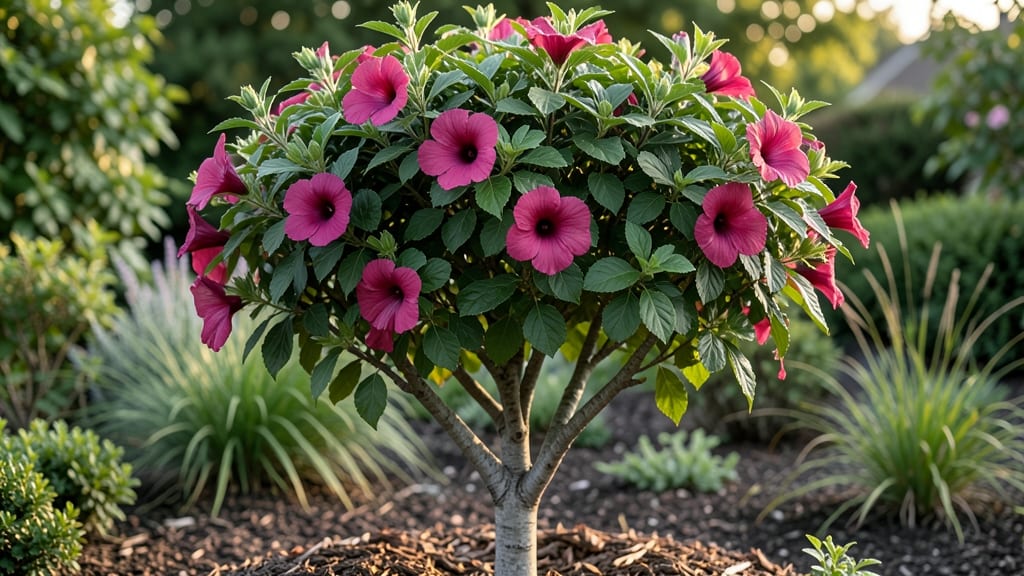
Shaping an Althea 🌳 into a tree form is all about guiding its natural growth into a single, strong trunk with an open canopy—something that takes patience but pays off with years of dramatic, garden-worthy structure.
If you’ve ever stared at your sprawling Althea and wondered how to tame its wild, bushy habit into something more refined, you’re not alone. The key lies in strategic pruning, seasonal timing, and a little extra attention to branch selection—details that turn a rambling shrub into a stately tree.
This guide breaks down the exact steps to encourage that upright form, from selecting your main stem to trimming competing branches, while avoiding the common mistakes that leave your Althea looking leggy or uneven.
Whether you’re starting fresh or revamping an established plant, these techniques will help you achieve that clean, tree-like silhouette you’ve been dreaming of.
Ready to transform your Althea? We’ll cover when to prune, how to support new growth, and the seasonal care that keeps your tree form thriving for decades—no green thumb required.
How to prune Althea for a natural tree-like structure
Transforming your Althea (Hibiscus syriacus) into a stunning tree form takes patience and precision, but the results are worth it. This elegant shrub naturally grows as a bush, but with the right pruning techniques, you can sculpt it into a single-trunk specimen that resembles a small ornamental tree.
The key lies in selecting the right main stem early and guiding the plant’s growth with strategic cuts. Whether you’re starting with a young plant or reshaping an established bush, these steps will help you achieve a graceful, tree-like structure that thrives for years.
Before you begin, gather your pruning tools—a pair of sharp bypass pruners for clean cuts and a hand saw for thicker branches. You’ll also need a glove for protection and a disinfectant to prevent spreading disease between cuts.
Timing is critical: the best time to prune for tree form is late winter or early spring, just as new growth begins. This allows the plant to heal quickly and encourages robust branching.
Avoid pruning in fall or winter, as the plant is dormant and more susceptible to damage.
Step-by-Step Guide to Pruning Althea for Tree Form
- 1 Identify the Main Stem: Choose the straightest, healthiest stem closest to the center of the plant. This will become your tree trunk. Remove all competing stems at the base, cutting them back to the ground.
- 2 Remove Lower Branches: Prune away any branches growing below 3 feet on the main stem. These will compete with your desired canopy structure and create a cluttered base. Use clean cuts at a 45-degree angle just above a bud or leaf node.
- 3 Shape the Canopy: Select 3-5 strong branches evenly spaced around the main stem to form your upper canopy. Prune these branches back by one-third to encourage bushier growth. Avoid leaving stubs—cut just above a leaf node.
- 4 Thin Out Crowded Growth: Look for crossing branches or those growing inward. Remove these to improve air circulation and reduce disease risk. Aim for an open, balanced canopy with branches spaced 6-12 inches apart.
- 5 Encourage Trunk Thickness: To thicken the main trunk, avoid pruning the top of the plant in the first 2-3 years. This allows the trunk to mature and develop a sturdy structure. Once established, you can lightly prune the top to control height.
- 6 Maintain Yearly: Every late winter or early spring, repeat the process by removing suckers at the base, thinning crowded branches, and shaping the canopy. Light pruning in summer can also help control growth and encourage flowering.
One of the most common challenges when pruning Althea for a tree form is leggy growth, where the main stem stretches too tall without enough branching. To prevent this, avoid heavy pruning at the top of the plant in its early years.
Instead, focus on removing lower branches and encouraging lateral growth. If your plant develops a weak trunk, stake it for support and avoid pruning the top until the trunk reaches at least 2-3 inches in diameter. This ensures structural integrity as the plant matures.
Another critical aspect is seasonal care. After your initial pruning in late winter, monitor the plant closely during spring and summer. New growth will emerge quickly, so stay vigilant about removing water sprouts (fast-growing, weak branches) and any branches that disrupt the tree form.
In fall, reduce watering slightly to prepare the plant for dormancy, but avoid heavy pruning until the following winter.
For best results, combine pruning with proper fertilization and watering. Use a balanced fertilizer (10-10-10) in early spring to support new growth, and water deeply once a week during the growing season. Mulch around the base of the plant to retain moisture and protect roots.
With consistent care, your Althea will develop a sturdy trunk and a lush, balanced canopy that resembles a miniature ornamental tree.
If you’re working with an established Althea bush and want to convert it to a tree form, the process takes a bit more time. Start by selecting the strongest central stem and gradually remove competing branches over 2-3 years.
This phased approach reduces stress on the plant and allows it to adjust to its new structure. Be patient—reshaping an older plant requires careful pruning to avoid shocking the system.
Finally, don’t forget to disinfect your tools between cuts to prevent the spread of disease. A quick wipe with <
Bushy Althea vs. tree form: growth habits and maintenance differences
When you first plant Althea (Hibiscus syriacus), it typically grows as a multi-stemmed bush, producing lush blooms but with a wild, sprawling shape.
However, with targeted pruning techniques, you can transform it into a single-trunk tree form—a process that changes both its growth habits and your long-term care routine. The key difference lies in how each form responds to sunlight, seasonal changes, and pruning intensity.
A bushy Althea thrives on minimal structure, producing multiple stems that create dense foliage and abundant flowers. In contrast, a tree-form Althea requires selective pruning to develop a strong central trunk while maintaining a balanced canopy.
This structural shift demands more frequent attention but rewards you with a statuesque, garden-focal-point plant that can reach 8-12 feet tall.
Bushy Althea vs. Tree-Form Althea
- ✅ Low maintenance – Minimal pruning needed
- ✅ Abundant blooms – More flowers per square foot
- ✅ Fast recovery – Cuts heal quickly
- ❌ No defined structure – Can look unkempt
- ❌ Limited height – Typically stays under 6 ft
- ✅ Elegant structure – Single trunk, tiered branches
- ✅ Taller growth – Reaches 8-12 ft with proper care
- ✅ Focal point – Stands out in landscapes
- ❌ Requires pruning – Needs annual shaping
- ❌ Slower recovery – Over-pruning risks weak growth
The pruning frequency is the biggest differentiator. A bushy Althea only needs light pruning in late winter to remove dead wood and shape the outline.
In contrast, a tree-form Althea requires three pruning sessions per year: late winter to establish the trunk, summer to shape the canopy, and early fall to encourage next year’s blooms. This extra attention ensures the trunk thickens and branches develop properly.
Sunlight needs also shift slightly. While both forms prefer full sun (6+ hours), a tree-form Althea benefits from morning sun and afternoon shade in hot climates to prevent leaf scorch.
Bushy varieties, however, handle full afternoon sun better due to their dense foliage, which provides natural shade for lower branches. Adjusting your plant’s location or using light shade cloth can help bridge this gap.
Seasonal care differs dramatically. Bushy Altheas enter dormancy naturally in winter with minimal prep, while tree-form Altheas need winter protection for their developing trunks. Wrap the base with burlap or apply mulch (3-4 inches) to insulate roots from freezing temperatures.
Additionally, tree-form Altheas require balanced fertilizer (10-10-10) every 4-6 weeks during the growing season to support their upright growth, whereas bushy varieties thrive on light feeding (every 8-10 weeks).
If you’re starting with a bushy Althea and want to convert it to a tree form, the best time to begin is in early spring when the plant is just waking up. Select the strongest, straightest stem and remove all competing branches within the first 12-18 inches.
Over 2-3 years, you’ll gradually shape the trunk and canopy, but be patient—rushing this process can lead to weak, leggy growth. The payoff? A stunning, long-lived specimen that becomes the centerpiece of your garden. 🌳