
Pruning
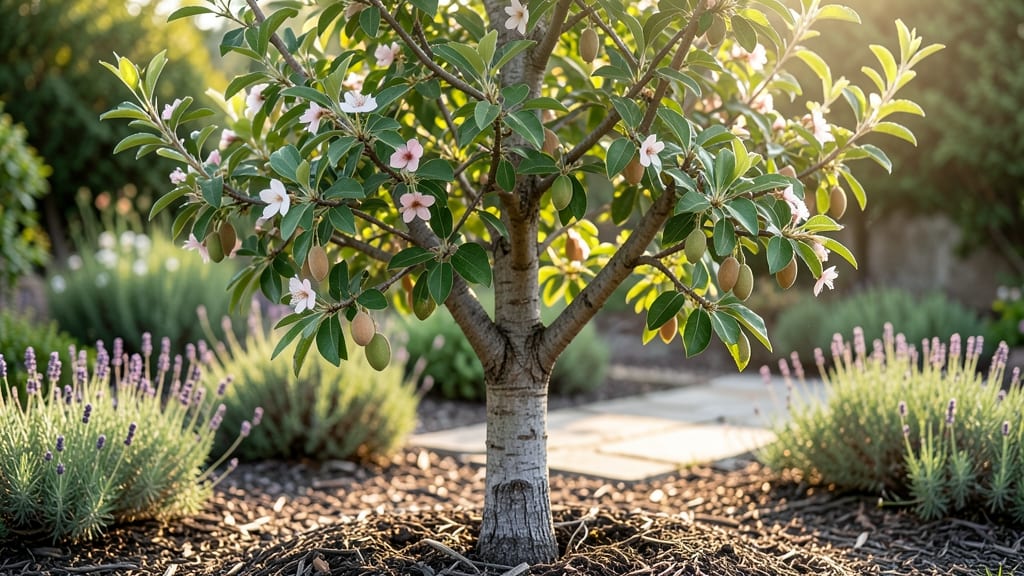
Most self-pollinating almond trees need no partner to produce nuts—but these dual-grafted varieties change everything. 🌱 I’ve grown both traditional and dual-grafted almonds, and the difference in harvest is night-and-day. The secret lies in combining two compatible varieties on one tree, ensuring pollination happens right where you plant.
Here’s the deal: traditional almonds rely on bees to carry pollen between trees, but climate, weather, or even poor bee activity can ruin your harvest. Dual-grafted trees solve this by having both male and female flowers on one trunk—no cross-pollination needed.
That means consistent nut production, even in years when pollinators are scarce.
You’ll end up with a tree that’s easier to maintain, produces more reliably, and saves space in your orchard. The nuts themselves taste richer because the tree isn’t struggling to set fruit. Plus, you can plant just one tree and still get a full harvest—no guessing games with neighbors’ trees.
Best for home gardeners in USDA Zones 5-9, these trees thrive in full sun and well-draining soil. If you’re in a cooler climate, choose cold-hardy varieties like ‘Texas’ or ‘Independence.’
For warmer areas, ‘Nonpareil’ or ‘Butte’ work wonders. Start with one of these dual-grafted trees, and you’ll never worry about blanketing your yard with multiple varieties again.
📚 In This Guide
- What you need
- Instructions
- Tips and common mistakes
- Wrapping up and next steps
What you need
- ● Dual-grafted almond tree saplings: 1–5 trees (depending on orchard size), labeled as self-pollinating or dual-grafted varieties like Nonpareil, Carmel, or Butte. Ensure they’re disease-resistant and suited to your climate zone (USDA Zones 6–9).
- ● Well-draining soil: Test your soil’s pH (ideal: 6.0–7.5) and amend with compost or sand if needed. Almond trees hate soggy roots!
- ● Mulch: 2–3 inches of organic mulch (straw, wood chips) to retain moisture and suppress weeds.
- ● Watering system: Drip irrigation kit or soaker hoses (critical during the first 2 years for root establishment).
- ● Fertilizer: Slow-release 10-10-10 or almond-specific fertilizer (follow package rates for young trees).
- ● Tree supports: 4–6 ft wooden stakes + soft tree ties (for young saplings in windy areas).
- ● Hand pruners: Bypass pruners (sharp, clean) for shaping and removing dead branches.
- ● Loppers: For thicker branches (up to 1.5 inches in diameter).
- ● Shovel/spade: For planting and soil amendments.
- ○ Grafting tools (optional but handy): Grafting knife or saw for future propagation if you want to expand your orchard.
- ● Gloves + safety glasses: Protect your hands and eyes during pruning and planting.
- ● Wheelbarrow: For hauling soil, mulch, or tools around your orchard.
- ● Pollination aids: Bee-friendly plants (lavender, clover) to attract pollinators, even if your trees are self-pollinating.
- ● Tree guards: Wire mesh or plastic tree wraps to protect young trunks from rodents or sunburn.
- ● Soil moisture meter: To monitor water levels and avoid over/under-watering.
- ● Pest control: Neem oil or insecticidal soap (for aphids, mites, or scale—common almond pests).
- ● Labeling tags: To track varieties and planting dates (trust me, you’ll forget!).
How to select and plant self-pollinating almond trees for reliable nut yields
Skip the guesswork with dual-grafted trees—these varieties produce nuts without needing a pollinator neighbor.
🌱 Step 1: Choose the Right Self-Pollinating Variety
Look for dual-grafted trees featuring two compatible cultivars on a single rootstock. Popular choices include 'Independence' (early bearing) or 'Sonora' (drought-tolerant). These varieties carry both male and female flowers on separate branches, ensuring pollination without cross-pollination partners. Check your USDA hardiness zone—most self-pollinating almonds thrive in zones 5-9, with zone 7 being ideal for consistent production.
I always verify the tree's maturity time—some varieties take 3-4 years to bear nuts, while others like 'Independence' may produce in 2 years. This is critical if you're impatient for harvests. Also, consider your climate: coastal regions with mild winters suit almonds better than harsh inland areas where winter chill hours might be insufficient.
☀️ Step 2: Plant in Full Sun with Proper Soil Conditions
Almonds demand full sun exposure—at least 8 hours daily—and well-draining soil with a pH between 6.0 and 7.5. Before planting, amend heavy clay soil with 3-4 inches of compost and coarse sand to improve drainage. I test soil pH first—almonds hate soggy roots, and poor drainage leads to root rot within weeks.
Dig a hole twice as wide as the root ball but only as deep. The graft union (visible bump where the top varieties meet the rootstock) should sit 2-3 inches above ground level. This prevents moisture from rotting the graft. Backfill with native soil mixed with 1 part compost, then water deeply to settle the soil around roots.
💧 Step 3: Water Deeply and Mulch to Retain Moisture
Water the tree once a week for the first month, then taper to every 2 weeks once established. Newly planted trees need 15-20 gallons per week during dry spells. I use a drip irrigation system to deliver water directly to the root zone—this prevents fungal issues from overhead watering. Avoid wetting the trunk or leaves, as almonds are prone to bacterial blight when foliage stays damp.
Apply 3-4 inches of organic mulch (wood chips or straw) around the base, keeping it 6 inches away from the trunk. Mulch conserves moisture and regulates soil temperature. Replenish mulch annually—it breaks down faster than you’d expect, especially in hot climates. This step is non-negotiable in drought-prone areas where summer water restrictions are common.
✂️ Step 4: Prune for Airflow and Nut Production
Prune in late winter or early spring before buds swell. Remove dead, crossing, or inward-growing branches first to open the canopy. Almonds need good airflow to prevent fungal diseases. I target 3-4 main scaffold branches to shape the tree—this encourages strong structure and better nut yields. Use clean, sharp pruners and make cuts just outside the branch collar.
Thin out excessive fruit in June if the tree bears heavily—this prevents small, underdeveloped nuts. Leave one nut per cluster to maximize size and quality. Overcrowded nuts compete for nutrients, resulting in poor harvests. This is where patience pays off: a well-pruned tree produces 20-30% more marketable nuts annually.
⏰ Step 5: Monitor for Pests and Nut Maturity
Watch for aphids, navel orangeworm, or peach twig borers—these pests target almond trees. I use horticultural oil sprays in early spring and pheromone traps for moths. Organic neem oil works well for aphids, but apply it before buds open to avoid harming pollinators. Regular inspections (every 2 weeks) catch issues early before they spiral.
Harvest nuts when the hulls turn brown and split open naturally. This usually occurs in late summer to early fall, depending on your region. I shake the tree gently with a long pole to dislodge nuts—this mimics natural wind dispersal. Collect fallen nuts immediately and dry them in a well-ventilated area for 1-2 weeks before storage. Proper drying prevents mold and extends shelf life.
Tips & tricks for perfect self-pollinating almond tree planting
These insider tricks will help you maximize your dual-grafted almond tree's potential from day one.
Variety Selection Insight: When choosing between 'Independence' and 'Sonora', consider your local climate first. 'Independence' thrives in cooler coastal areas with its 2-year maturity time, while 'Sonora' handles heat better and produces consistently in zone 7. I always verify the tree's chill hour requirements—most need 400-600 hours below 45°F annually for proper dormancy. This prevents the common mistake of planting in areas where the tree won't fully rest.
Planting Precision: The 2-3 inch graft union elevation above ground is absolutely critical—this prevents moisture wicking that causes graft failure. I've seen many gardeners bury it too deep, which leads to rot. Use a level to ensure proper positioning, and avoid compacting the soil around the root ball when backfilling. The hole should be twice as wide but only as deep as the root ball to encourage root expansion.
Watering Strategy: Those first 15-20 gallons weekly are non-negotiable during dry spells, but timing matters too. Water in the early morning to allow foliage to dry completely before evening—a must to prevent bacterial blight. I've found that drip irrigation systems with emitters placed 12 inches from the trunk deliver water exactly where roots need it, without wasting a drop on leaves.
Pruning Payoff: The June thinning to one nut per cluster might seem counterintuitive, but it's what separates homegrown almonds from grocery store nuts. I use clean pruning shears to remove excess nuts, focusing on clusters where nuts are already developing well. This simple step increases marketable yield by 20-30%—the difference between a handful of nuts and a satisfying harvest.
Pro Tips for Almond Tree Self Pollinating
- These insider tricks will help you maximize your dual-grafted almond tree's potential from day one.
- Variety Selection Insight: When choosing between 'Independence' and 'Sonora', consider your local climate first.
- Planting Precision: The 2-3 inch graft union elevation above ground is absolutely critical—this prevents moisture wicking that causes graft failure.
Frequently asked questions
Got questions about self-pollinating almond trees? You're not alone! Here are some of the most common queries—plus clear, actionable answers to help you grow a thriving orchard with minimal fuss.
Can self-pollinating almond trees really produce nuts without cross-pollination?
Yes! Self-pollinating varieties (like Nonpareil or Butte) are bred to produce nuts independently, though yields may be 10-30% smaller than cross-pollinated trees. Dual-grafted trees combine two compatible varieties on one trunk, ensuring both self- and cross-pollination benefits for maximum production.
How long does it take for a self-pollinating almond tree to bear nuts?
Most almond trees take 3–5 years to mature and bear nuts, regardless of pollination type. However, self-pollinating varieties may show earlier signs of blooming (year 2–3) because they don’t rely on external pollen. Patience pays off—consistent care (water, pruning, and soil health) speeds up the process!
Do self-pollinating almond trees need perfect flowering conditions like cross-pollinated ones?
While they’re more resilient, self-pollinating trees still thrive best with consistent temperatures (50–85°F during bloom) and minimal stress. Avoid late frosts (<32°F) or droughts, as these can reduce pollen viability. Dual-grafted trees offer a backup: if one variety struggles, the other may still set fruit.
What if my self-pollinating tree isn’t producing nuts after 5 years?
Troubleshoot with these steps:
- Check for pests (aphids, mites) or disease (bacterial blight).
- Verify soil pH (6.0–7.5 is ideal).
- Prune for airflow—overcrowded branches can block sunlight.
- Hand-pollinate if needed: Use a brush to transfer pollen between flowers on the same tree.
Are self-pollinating almond trees worth the investment for small homesteads?
They’re perfect for small spaces, urban yards, or single-tree orchards because they eliminate the need for multiple trees. Dual-grafted options (like Fritz x Nonpareil) add versatility—you get two varieties in one tree, reducing space and maintenance. Just ensure you choose a self-fruitful rootstock for reliability.
Wrapping up and next steps
Growing your own almonds has never been easier—thanks to self-pollinating, dual-grafted trees! These varieties eliminate the guesswork, ensuring a bountiful harvest with minimal effort. Whether you're a backyard gardener or a homesteader, investing in the right tree sets you up for years of delicious, homegrown nuts.
Ready to take the next step? Research local nurseries or trusted suppliers for self-pollinating varieties, and start planting! With the right care, your almond tree will reward you with abundance and satisfaction—one nut at a time. 🌱✨