
Pruning
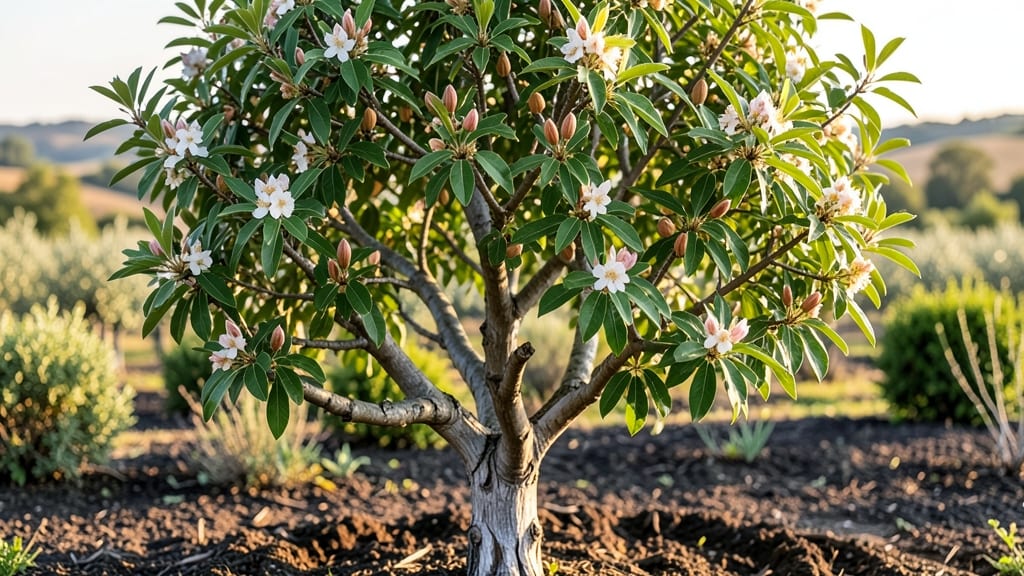
Creating the right almond tree environment means mimicking Mediterranean conditions—hot, dry summers with cool winters, well-draining soil, and full sun exposure. Protect trees from frost and maintain humidity below 70% while providing consistent watering to avoid root stress.
The Mediterranean climate isn't just about temperature—it's about the dryness and sun intensity that almond trees crave. 🌞 These trees evolved in regions with 50–85°F growing seasons and need at least 6–8 hours of direct sunlight daily.
The soil must breathe, which is why sandy loam or gravelly mixes work best, preventing root rot. I've seen firsthand how even slight soil compaction can stunt growth—always amend heavy soils with organic matter before planting.
Humidity above 70% creates the perfect storm for fungal diseases, so good airflow and proper spacing (30–40 feet apart) are non-negotiable for long-term health.
What's fascinating is how these trees adapt: they go dormant in winter but need chill hours (300–600) to set buds properly. In warmer zones, this means choosing varieties like Nonpareil or Butte, while colder regions benefit from Fritz or Sonora.
The key is balancing moisture—deep watering every 10–14 days (not daily) trains roots to grow deep, making them drought-resistant once established.
💡 In This Article
- Climate and Soil Needs for Healthy Almond Trees
- Best Practices for Almond Tree Planting and Maintenance
Climate and soil needs for healthy almond trees
Almond trees evolved in Mediterranean climates where summer temperatures average 80–95°F but rarely exceed 100°F. The key isn't just heat—it's the dryness that prevents fungal growth. Trees enter dormancy when nighttime temps drop below 40°F, but they need 300–600 chill hours (below 45°F) to trigger flowering.
Without enough chill hours, buds fail to open, and you get no nuts. This is why commercial orchards in California's Central Valley thrive—they get perfect Mediterranean conditions with 200–300 inches of annual sunshine and minimal summer rain.
The soil's job is to drain like a desert wash—water should disappear within 24–48 hours after irrigation. Ideal soil mixes are 60% sand, 20% silt, 20% clay with a pH between 6.0–7.5. Clay-heavy soils compact easily, suffocating roots, while pure sand holds no nutrients. The solution?
Amend with 1–2 inches of compost before planting and maintain 3–4 inches of organic mulch to regulate moisture. I've seen trees in heavy clay gardens wither because their roots couldn't breathe—always test drainage by digging a 12-inch hole and filling it with water.
If it doesn't drain in 6 hours, amend aggressively.
Humidity above 70% turns almond orchards into fungal hotspots. The Monilinia fungus, which causes brown rot, thrives in damp conditions, destroying blossoms and nuts. This is why proper spacing (30–40 feet between trees) creates airflow. In humid regions, prune to open the canopy and avoid overhead irrigation.
The 10–14 day watering cycle isn't just about moisture—it's about training roots to seek water deep in the soil, making trees resilient to drought once established. Without this deep root system, trees become shallow-rooted and vulnerable to stress.
Frost is the silent killer of almond trees. Young trees can handle 25–28°F for short periods, but mature trees suffer damage below 20°F. The Nonpareil variety, popular in California, can survive 15°F with proper care, but buds freeze at 24°F.
This is why growers in colder zones plant Fritz or Sonora varieties, which tolerate 10–15°F. Even a light frost can kill blossoms, reducing next year's crop by 50–70%. The solution? Use wind machines or smudge pots to raise temperatures by 2–5°F during critical bloom periods.
What most people overlook is how salinity builds up in irrigation water over time. Almond trees can't handle soil with electrical conductivity (EC) above 2.0 dS/m.
In regions with high mineral content in water, use leaching fractions—apply 20–30% more water than the tree needs to flush out excess salts. I've seen orchards in Arizona collapse because growers ignored this, leading to root burn and tree death within 3–5 years.
Regular soil tests every 2–3 years are a must for long-term health.
Here's the science behind why these conditions matter: Almond trees have deep taproots that can reach 10–15 feet deep, but they need loose, aerated soil to grow. The mycorrhizal fungi in well-draining soil help roots absorb phosphorus and nitrogen more efficiently.
Without this symbiotic relationship, trees grow slowly and produce fewer nuts. The hot, dry summers also concentrate sugars in the nuts, making them sweeter—a direct result of the tree's water-stress response. 🌿