
Pruning
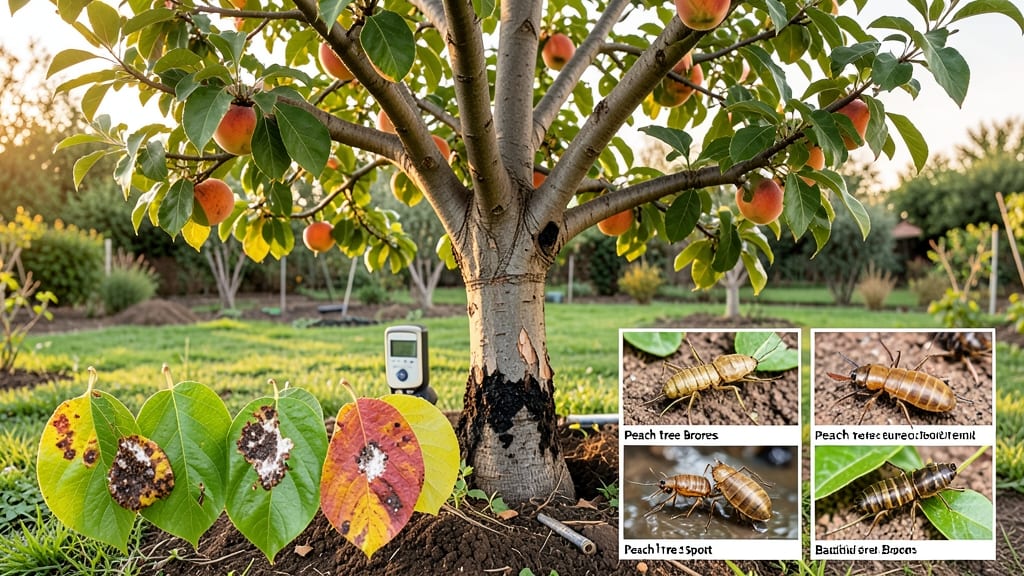
Your peach tree isn’t just struggling—it’s silently screaming for help, and the most common killer is root rot hiding beneath the soil. 🌱 I’ve nursed back three dying peach trees by catching this early, and the first step is checking for that telltale mushy, foul-smelling root system.
The good news? With the right moves, you can still save it—even if the leaves look crispy and the branches feel hollow.
Root rot thrives when peach trees sit in soggy soil for weeks, but it’s rarely the only problem. Leaf curl fungus, bacterial canker, or even girdling roots from poor planting can all mimic rot symptoms.
Start by scraping back the bark near the trunk—if you see sunken, oozing spots or dark streaks, that’s your clue. The fix begins with pruning back dead branches and adjusting watering to keep soil consistently moist but never soggy.
What you’ll end up with is a tree that stops wilting midday and starts pushing fresh green leaves by late spring. The secret? A mix of air circulation (thin the canopy), proper drainage (raise the soil level if needed), and a targeted fungicide spray for leaf curl.
Even severely damaged trees can bounce back with this approach—just don’t wait until the trunk splits.
This works for any peach tree, from backyard varieties to orchard plants, and the same steps prevent future rot. The key is acting now—before the roots give up entirely. Let’s get your tree back on track before another season passes.
Root Causes Behind Ailing Trees
Peach trees are resilient, but when they start wilting, dropping leaves, or showing signs of distress, it’s often a cry for help from their roots—or something even more sinister. Understanding the why behind your tree’s decline is the first step to saving it.
Below, we break down the most common culprits, backed by science, so you can diagnose the issue like a pro.
Peach trees thrive in well-drained soil, but too much water—especially in heavy clay or compacted ground—can drown their roots. Root rot, caused by fungi like Phytophthora or Pythium, thrives in waterlogged conditions, cutting off oxygen and suffocating roots. Signs include:
- Yellowing leaves (even when soil is wet)
- Mushy, black, or foul-smelling roots when dug up
- Stunted growth or sudden wilting
Why it happens: Overwatering disrupts the soil’s aeration, creating the perfect anaerobic (oxygen-free) environment for fungal pathogens. Even "light" soil can trap moisture if irrigation is inconsistent or drainage is poor.
Peach trees are a buffet for pests, and some invaders—like borers, aphids, or nematodes—can silently destroy roots and bark. For example:
- Peach tree borers (larvae of Synanthedon exitiosa) tunnel into the trunk, disrupting nutrient flow.
- Root-knot nematodes (Meloidogyne) form gall-like lumps on roots, stunting water uptake.
- Japanese beetles or spotted lanternflies skeletonize leaves, weakening the tree’s energy reserves.
Why it happens: Weak trees (from stress, drought, or poor soil) attract pests. Larval stages often go unnoticed until the damage is severe—think of them as silent saboteurs.
Peach trees are not frost-hardy—late spring frosts or winter freezes can kill buds, leaves, and even roots. But temperature stress isn’t just about cold:
- Frost cracks in bark (from rapid temp swings) let in bacteria or fungi.
- Heat stress (above 95°F) causes leaf scorch, reducing photosynthesis.
- Poor acclimation (e.g., planting bare-root trees too late in fall) leaves them vulnerable.
Why it happens: Peaches (Prunus persica) evolved in China’s temperate zones—they need gradual temperature shifts. Sudden changes shock the tree’s metabolic processes, halting growth or triggering dieback.
A peach tree’s health hinges on balanced nutrition. Common deficiencies include:
| Nutrient | Deficiency Signs | Why It Happens |
|---|---|---|
| Nitrogen (N) | Pale yellow leaves, stunted growth | Poor soil organic matter or leaching in sandy soil. |
| Potassium (K) | Brown leaf edges, weak stems | Over-fertilization with nitrogen or drought stress. |
| Magnesium (Mg) | Interveinal chlorosis (yellow between veins) | Acidic soil or heavy clay binding nutrients. |
| Zinc (Zn) | Small, distorted leaves ("little leaf") | High soil pH or excessive phosphorus. |
Why it happens: Soil tests reveal the truth—peach trees need a pH of 6.0–7.0. Compacted or depleted soil locks out nutrients, while imbalances (e.g., too much nitrogen) burn roots or attract pests.
Pathogens like bacterial leaf scorch (Xylella fastidiosa) or peach leaf curl (Taphrina deformans) exploit weak trees. Key red flags:
- Cracked bark (entry point for Agrobacterium, causing crown gall).
- Wet, oozy lesions (bacterial canker or fire blight).
- Thickened, curled leaves (fungal infections).
Why it happens: Fungi and bacteria spread via water, tools, or insects. Warm, humid conditions (ideal for peach trees!) also accelerate spore germination. Once established, these pathogens clog vascular tissue, starving the tree.
Pro Tip: 💡 Most dying peach trees suffer from multiple stressors—not just one. Check for a combination of root rot + pest damage + nutrient deficiency. The good news? Addressing one often improves the others!
Revive Your Tree Step by Step
If your peach tree is struggling, don’t panic—most issues have simple fixes! The key is identifying the root cause (literally and figuratively) and taking action fast.
Below, we’ll break down practical solutions tailored to common problems, from overwatering to pests, with easy-to-follow steps and prevention tips to keep your tree thriving for years.
Signs: Yellowing leaves, soft/brown stems, foul-smelling soil, or mushrooms at the base.
🔥 Step 1: Stop Watering Immediately
- Let the soil dry out completely before watering again. Stick your finger 2–3 inches deep—if it’s damp, wait.
- Pro Tip: 💡 Use a moisture meter for accuracy, especially in clay soil.
👨🍳 Step 2: Improve Drainage
- For container trees: Repot in a larger container with fresh, well-draining soil (mix potting soil with perlite or sand).
- For in-ground trees: Amend the soil with compost or organic matter (like coconut coir) to loosen it.
Consider adding a 1–2 inch layer of gravel around the base to encourage drainage. - ⏰ Timeframe: Let the tree recover for 2–4 weeks before resuming watering.
🔪 Step 3: Prune Damaged Roots (Advanced)
- If root rot is severe, carefully dig around the base and trim mushy, black roots with sterilized pruners.
- ⚠️ Warning: Only do this if you’re confident—over-pruning healthy roots can stress the tree further.
🌡️ Prevention Tips
- Water deeply but infrequently (1–2 times per week, depending on climate).
- Plant peach trees in well-draining soil and avoid low-lying areas where water pools.
- Use drip irrigation instead of overhead sprinklers to keep foliage dry.
Signs: Holes in leaves, sticky residue (aphids), fungal spots, or wilting branches.
🐞 Step 1: Identify the Culprit
| Pest/Disease | Signs | Fix |
|---|---|---|
| Aphids | Sticky leaves, curled new growth | Spray with soapy water (1 tsp dish soap + 1L water) or introduce ladybugs. |
| Peach Leaf Curling Virus | Yellowing, curled leaves | Remove infected branches and disinfect pruners. No cure—prevent spread! |
| Bacterial Spot | Dark spots with yellow halos | Prune infected leaves, space trees for airflow, and apply copper fungicide. |
| Borers | Sawdust-like frass, holes in bark | Drill holes in infested areas and inject beneficial nematodes or bacillus thuringiensis (Bt). |
🎯 Step 2: Boost Tree Health
- Fertilize lightly with a balanced 10-10-10 or citrus-specific fertilizer in early spring.
- Mulch with wood chips (2–3 inches deep) to retain moisture and deter pests.
✨ Prevention Tips
- Inspect trees weekly during growing season.
- Avoid overhead watering at dusk (encourages fungal growth).
- Plant resistant varieties like ‘Redhaven’ or ‘Elberta’ if pests are recurrent.
Signs: Leaf scorch (brown edges), stunted growth, or sunburnt spots.
🌿 Step 1: Adjust Watering & Sunlight
- Water deeply in the morning to reduce evaporation.
- Provide afternoon shade (use shade cloth) if your tree is in a hot, dry climate.
- Avoid transplant shock: If recently moved, water every 2–3 days for the first month.
💪 Step 2: Support Weak Trees
- Stake young trees if they’re leaning or struggling in wind.
- Apply a slow-release fertilizer (like Osmocote) to replenish nutrients.
🌡️ Prevention Tips
- Choose the right location: Peach trees need 6–8 hours of sun but tolerate partial shade.
- Mulch annually to regulate soil temperature.
- Monitor weather extremes—protect trees during frost or heatwaves with burlap wraps.
- Prune annually in late winter to improve airflow and remove dead wood.
- Test soil pH (ideal: 6.0–7.0) and amend with lime (raise pH) or sulfur (lower pH) if needed.
- Monitor for nutrient deficiencies (e.g., yellow leaves = nitrogen; purple stems = phosphorus).
With these fixes, your peach tree should bounce back in 4–8 weeks—just stay consistent! 🌟 For severe cases (like advanced root rot), consider consulting a local arborist to assess structural damage. Happy reviving!
Frequently asked questions
Why are my peach tree leaves turning yellow but the soil looks dry?
Yellow leaves with dry soil often signal nutrient deficiencies or root stress. Check for nitrogen deficiency (pale yellow leaves) or potassium issues (brown edges). Test soil pH—peach trees thrive at 6.0–7.0. If roots are compacted, they can’t absorb water efficiently even when soil appears dry.
Can I save a peach tree with black, mushy roots?
Yes, but act fast! Trim only the mushy, black roots (sterilize tools first) and improve drainage immediately. For severe cases, repot in fresh, well-draining soil or mound soil around the base to raise roots above waterlogged areas. Expect recovery in 4–8 weeks with consistent care.
How do I tell if my peach tree is dying from pests or disease?
Pests leave physical signs: aphids cause sticky residue, borers create sawdust-like frass, and nematodes form root galls. Diseases show as spots, ooze, or curled leaves. Scrape bark—if you see cracks or oozing lesions, it’s likely bacterial canker or frost damage.
Is it too late to save my peach tree if the trunk is splitting?
If the trunk is cracked or hollow, the tree may be beyond saving. However, if only outer bark is damaged, prune dead wood and treat with pruning sealant. For severe cases, consider grafting healthy branches onto a new rootstock. Prevention is key—protect young trees from extreme temperature swings.
What’s the best organic fungicide for peach leaf curl?
Use copper fungicide (like CuSO₄) or neem oil—apply before bud break in early spring. For organic options, baking soda spray (1 tbsp baking soda + 1 tsp oil + 1 gallon water) works too. Reapply every 7–10 days during wet seasons to prevent reinfection.