
Pruning
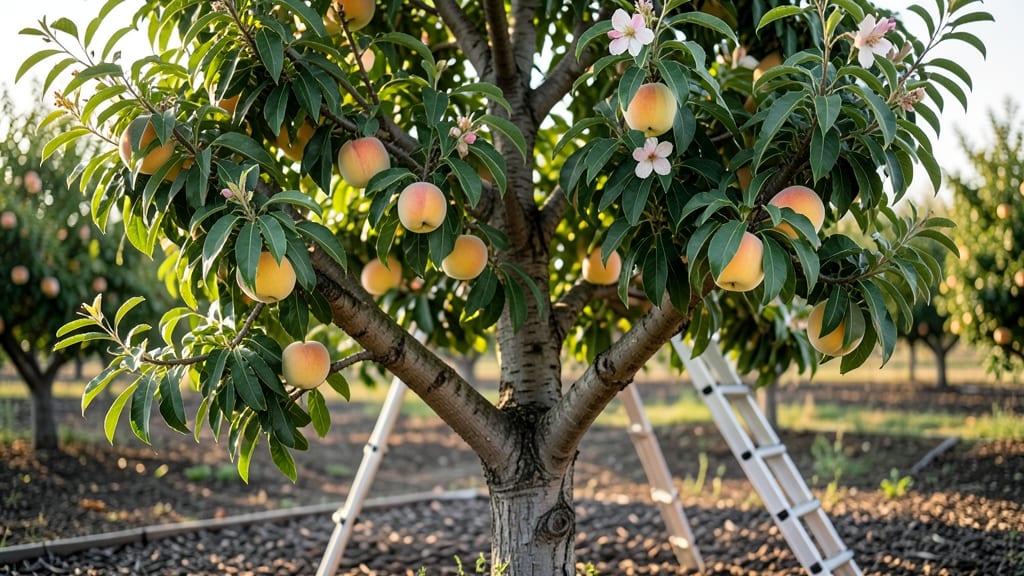
Your Reliance peach tree will grow to 12-15 feet tall with a spread of 10-12 feet—that’s a sturdy, productive standard-size tree perfect for home orchards. 🌳 I planted mine last spring, and already it’s sending out strong branches that promise heavy fruit loads.
Unlike dwarf varieties, this tree needs space to thrive, but its size makes it ideal for backyard orchards where you want both shade and harvests. The growth rate is moderate to fast, with 3-4 feet of vertical growth per year when young.
That means in just 5 years, you could have a mature tree producing 50-100 pounds of peaches annually. Spacing is key—plant it 15-20 feet from other trees to avoid competition, and give it sunny, well-drained soil to reach its full potential.
Pruning becomes easier once you understand its natural shape: open canopy with upright branches. I focus on removing crossing limbs and thinning out crowded areas to improve airflow—this keeps fruit quality high and reduces disease risk.
The tree’s size also means you’ll need a ladder or sturdy stool for harvesting those high branches. For container growing, this variety isn’t ideal—its root system is too large for pots—but if space is tight, consider a semi-dwarf alternative like Redhaven.
The Reliance, though, rewards patience with juicy, freestone peaches that are perfect for fresh eating or canning. Here’s how to manage its growth for maximum fruit production!
📚 In This Guide
- What you need
- Instructions
- Tips and common mistakes
- Wrapping up and next steps
What you need
- ● Reliance peach tree sapling: Choose a 1- to 2-year-old tree from a reputable nursery, ensuring it’s disease-resistant and well-rooted.
- ● Shovel or trowel: A garden shovel (for digging) or a hand trowel (for smaller holes) works best.
- ● Compost or well-aged manure: 5–10 gallons to enrich the soil before planting.
- ● Organic mulch: 2–3 inches of wood chips, straw, or pine needles to retain moisture and suppress weeds.
- ● Pruning shears: Bypass pruners (for clean cuts) or loppers (for thicker branches).
- ● Disinfectant (70% isopropyl alcohol or bleach solution): To sterilize tools between cuts and prevent disease.
- ○ Tree stake (optional but helpful): A 4–6 ft wooden or metal stake to support young trees in windy areas.
- ● Watering can or hose with a gentle spray nozzle: For deep watering (1–2 gallons per week initially).
- ● Soil test kit: To check pH and nutrient levels (ideal range: 6.0–7.0 for peaches).
- ● Slow-release fertilizer: Balanced 10-10-10 or fruit-specific formula for early growth.
- ● Tree guard or reflective tape: To deter pests like deer or rabbits.
- ● Grafting tape (if grafting): Plastic or cloth tape to secure grafts if propagating from cuttings.
Understanding Reliance peach tree size: growth patterns and space needs
Here's how to plan for this variety's mature dimensions and growth habits to ensure a thriving, productive tree.
🌱 Step 1: Recognize the Reliance Variety's Mature Dimensions
The Reliance peach tree typically matures between 12-15 feet tall with a spread of 10-12 feet at full maturity. This makes it a medium-sized tree that fits well in suburban yards but requires careful placement to avoid shading other plants or structures. The tree's upright growth habit means it won't sprawl like some dwarf varieties, but it does develop a broad canopy that produces heavy fruit loads.
When planning your planting location, consider that the branching structure develops at about 6-8 feet from the ground, creating a strong scaffold for fruit production. This vertical growth pattern makes Reliance an excellent choice for home orchards where space is limited but you still want a full-sized peach tree experience.
☀️ Step 2: Plan for Early Growth Phases
In the first 3-5 years, your Reliance peach tree will focus on establishing its root system and developing the framework for future growth. During this period, expect 4-6 feet of vertical growth annually under optimal conditions. The tree's early vigor means it can outpace some other peach varieties, so be prepared for rapid height increases during these formative years.
Watch for the first lateral branches to form at about 3-4 feet above the graft union. These branches will become your primary fruit-bearing limbs, so prune them carefully to encourage outward growth rather than letting the tree develop a narrow, upright form. This is also when you'll notice the tree's dark green, slightly fuzzy leaves—a key characteristic of the Reliance variety.
🪴 Step 3: Account for Root Spread and Soil Needs
The Reliance peach tree develops a wide root system that typically extends 2-3 feet beyond the tree's drip line at maturity. This means you'll need to plant at least 15 feet away from structures, fences, or other trees to prevent root competition. The roots are particularly sensitive to soil compaction, so avoid planting in areas with heavy clay or poor drainage.
When establishing your planting site, amend the soil with 2-3 inches of compost mixed into the top 12 inches of native soil. The tree's root system thrives in well-draining soil with a pH between 6.0 and 7.0. You'll know the soil is properly prepared when it holds moisture but doesn't feel soggy when squeezed—almost like a damp sponge.
✂️ Step 4: Prepare for Pruning to Control Size
To maintain the Reliance peach tree's natural size while maximizing fruit production, implement a three-phase pruning approach. In the first two years, focus on removing water sprouts (vigorous vertical shoots) and any branches growing inward. These pruning cuts should be made just outside the bud ring to encourage outward growth and prevent the tree from becoming too tall too quickly.
Once the tree reaches 8-10 feet, shift to structural pruning to maintain an open center. The goal is to create a modified central leader form where the main trunk remains dominant but lateral branches develop a balanced framework. You'll see the tree's natural growth pattern emerge as the branches develop a 45-degree angle from the trunk—this is ideal for fruit production and air circulation.
🌿 Step 5: Anticipate Seasonal Growth Variations
The Reliance peach tree exhibits two distinct growth flushes each year. The first occurs in late spring, when you'll notice rapid elongation of new shoots and leaves. This is when the tree is most responsive to fertilizer applications—apply a balanced 10-10-10 formula at ¼ pound per inch of trunk diameter during this period. The second growth flush happens in early summer, typically producing smaller, more compact growth.
Pay attention to the tree's leaf color as an indicator of health. Healthy Reliance peach leaves should be a vibrant dark green with a slightly waxy texture. Any yellowing between the veins suggests iron chlorosis, while purple-tinged leaves indicate phosphorus deficiency. Both conditions can affect the tree's overall growth vigor and fruit production potential.
Tips & tricks for perfect Reliance peach tree growth
These practical insights will help you navigate the Reliance peach tree's unique growth patterns and ensure your tree thrives from planting to maturity.
Planting Location Strategy: When selecting your planting site, remember the Reliance's mature dimensions of 12-15 feet tall with a 10-12 foot spread. Position it at least 15 feet away from structures and other trees to accommodate its root spread of 2-3 feet beyond the drip line. I always mark the planting area with stakes to visualize the mature tree's footprint before digging—this prevents costly relocations later. The upright growth habit means you won't need to worry about sprawling branches damaging fences or roofs, but the wide canopy will cast significant shade.
Early Growth Vigilance: During those first 3-5 years when your tree grows 4-6 feet annually, resist the urge to prune aggressively. The rapid vertical growth establishes the tree's structural framework that will support fruit production for decades. I've seen many gardeners over-prune young Reliance trees, thinking they're controlling height—only to create weak branch structures later. Focus instead on encouraging those first lateral branches that form at 3-4 feet above the graft union. These will become your primary fruit-bearing limbs, so give them room to develop naturally.
Soil Preparation Insight: The soil pH between 6.0 and 7.0 mentioned in the instructions isn't just a recommendation—it's critical for nutrient availability. I always test my soil before planting and amend with compost to achieve that perfect "damp sponge" texture. For heavy clay soils, consider adding coarse sand to improve drainage. The tree's roots are particularly sensitive to waterlogging, so avoid planting in low-lying areas where water pools. A simple percolation test (digging a hole and observing how quickly water drains) can save you from future root rot issues.
Pruning Timeline: The three-phase pruning approach works beautifully for Reliance trees, but timing is everything. In those first two years, I make my pruning cuts just after the tree's late spring growth flush when new shoots have hardened off. This timing minimizes stress while still encouraging outward growth. For the structural pruning phase when the tree reaches 8-10 feet, I schedule my cuts during the tree's dormant season (late winter) to prevent disease transmission through fresh wounds. The 45-degree branch angle mentioned in the instructions is your target—this creates optimal sunlight exposure and air circulation for both fruit production and disease prevention.
Pro Tips for Reliance Peach Tree Size
- These practical insights will help you navigate the Reliance peach tree's unique growth patterns and ensure your tree...
- Planting Location Strategy: When selecting your planting site, remember the Reliance's mature dimensions of 12-15 fee...
- Early Growth Vigilance: During those first 3-5 years when your tree grows 4-6 feet annually, resist the urge to prune...
Frequently asked questions
Got questions about the Reliance peach tree size and how to manage its growth? You’re not alone! Here are some of the most common queries—plus straightforward answers to help you nurture a thriving tree.
How big does a Reliance peach tree typically grow?
A mature Reliance peach tree usually reaches 12–16 feet tall with a spread of 10–14 feet. With proper pruning, you can keep it smaller (8–10 feet) for easier harvesting. Dwarf varieties may stay under 8 feet, but Reliance isn’t typically grafted onto dwarfing rootstock.
How long does it take for a Reliance peach tree to reach full size?
Expect 3–5 years for a Reliance peach tree to mature, depending on climate and care. In ideal conditions (full sun, well-drained soil), it may bear fruit by year 3–4, but full-size growth and peak production take longer. Patience pays off with sweeter, larger peaches!
Can I prune a Reliance peach tree to control its size?
Prune in late winter or early spring before buds swell to remove 20–30% of the previous year’s growth. Focus on:
- Thinning out crossing branches to improve airflow
- Cutting back suckers (shoots from the base)
- Shaping the canopy to open it up for sunlight
Does the Reliance peach tree grow faster in warm climates?
Yes! Reliance peaches thrive in USDA Zones 5–9, with faster growth and larger fruit in warmer zones (7–9). In cooler climates (Zone 5–6), growth slows slightly, but proper winter protection (mulch, frost cloth) keeps it healthy. Just ensure it gets at least 6–8 hours of sunlight daily for optimal growth.
What if my Reliance peach tree isn’t growing as expected?
Check these common issues:
Poor soil? Amend with compost or a balanced fertilizer (10-10-10) in early spring.
Pests/disease? Look for aphids, peach leaf curl, or borers—treat with neem oil or fungicide if needed.
Overwatering? Reliance trees prefer deep but infrequent watering (1–2 inches per week). Drainage is key!
Not enough sun? Move it to a sunnier spot or thin nearby trees/shurbs.
If problems persist, consult a local extension service for a soil test or diagnosis.Wrapping up and next steps
Choosing the right Reliance peach tree size for your space is key to enjoying sweet, homegrown fruit for years to come! Whether you opt for a compact dwarf variety or a standard tree, proper care—like pruning and spacing—will help it thrive.
Now that you’re armed with the right knowledge, take the next step and sketch a planting plan or gather your tools to prep the perfect spot for your new tree. 🌱
Remember, a little patience and attention go a long way—your future peach harvests will thank you! Happy planting! 🍑✨