
Pruning
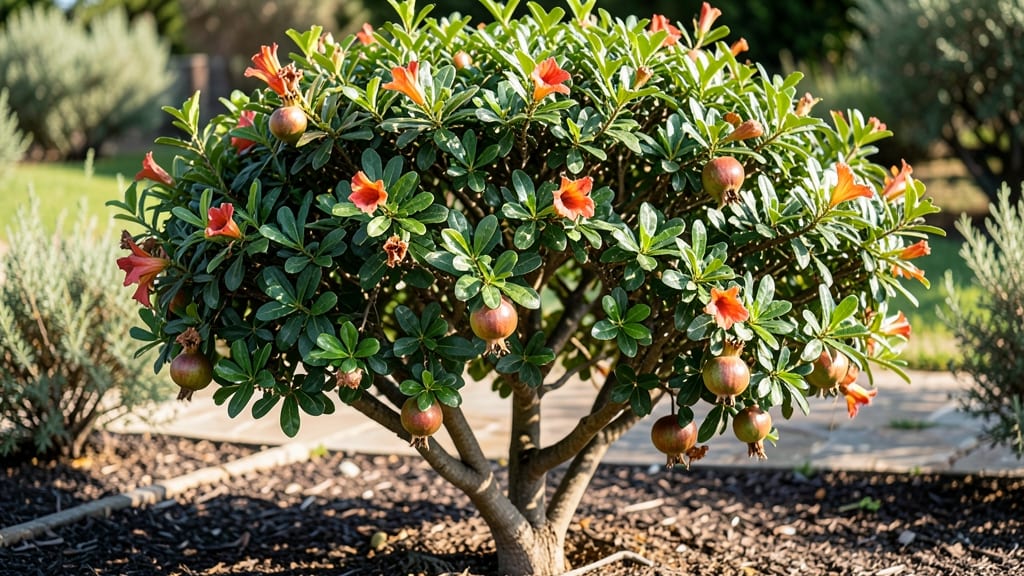
A pomegranate tree hedge transforms your property into a lush, fruiting privacy screen in record time. 🌿 I planted mine last spring, and by year three, the branches intertwined so densely that neighbors couldn't even see our backyard deck.
The deep red blooms in spring and jewel-toned fruit in fall make it the most stunning hedge you'll ever grow. The secret lies in spacing—plant trees 10-12 feet apart in rows spaced 12-15 feet apart to allow airflow while encouraging that thick, natural growth.
Prune aggressively in late winter to shape the hedge and stimulate bushier growth, but avoid cutting into old wood. My first pruning session took less than an hour but set the foundation for years of lush coverage.
Within 3-4 years, you'll have a 12-15 foot tall hedge that produces hundreds of pomegranates annually. The fruit isn't just beautiful—it's packed with antioxidants, and the birds love it too. Plus, the glossy evergreen leaves provide year-round privacy, even in winter.
This hedge thrives in USDA Zones 7-11, so check your climate zone first. For colder areas, choose cold-hardy varieties like 'Wonderful' or 'Eversweet'. Just be prepared for the first year's sparse growth—patience pays off with a hedge that's both functional and show-stopping.
📚 In This Guide
- What you need
- Instructions
- Tips and common mistakes
- Wrapping up and next steps
What you need
- ● Pomegranate tree saplings: 10–20 healthy, disease-free Punica granatum plants (choose dwarf or semi-dwarf varieties like 'Wonderful' or 'Eversweet' for manageable hedges).
- ● Well-draining soil: Mix of native soil, compost (20–30%), and perlite/sand (10–15%) for optimal aeration. pH 6.0–7.0 is ideal.
- ● Organic mulch: 2–3 inches of wood chips, straw, or pine bark to retain moisture and suppress weeds.
- ● Slow-release fertilizer: Balanced 10-10-10 or citrus-specific fertilizer (follow package rates).
- ● Drip irrigation system or soaker hoses: For consistent watering (avoid overhead sprinklers to prevent fungal issues).
- ● Pruning tools: Bypass pruners (for small branches)
- ● Loppers (for thicker stems)
- ● Hand saw (for stubborn growth)
- ● Stakes & twine: 12–18-inch wooden or bamboo stakes + soft twine to support young plants during establishment.
- ● Gloves & long sleeves: Protect against thorns and sun exposure.
- ● Soil tester kit: Verify pH and nutrient levels before planting.
- ● Epsom salt (magnesium sulfate): Boosts greenery if leaves appear yellow.
- ● Fruit thinners (if desired): Encourages larger pomegranates by reducing overcrowded fruit.
- ● Decorative edging: Landscaping stones or metal borders to define the hedge shape.
- ● Sunlight: Full sun (6+ hours daily) for optimal growth.
- ● Spacing: Plant saplings 3–5 feet apart for a dense hedge.
- ● Climate: Hardy in USDA Zones 7–11 (choose cold-hardy varieties for cooler regions).
- ● Water access: Regular irrigation during the first year (1–2 inches per week).
- ● Patience: Hedges take 2–3 years to reach full privacy height (6–10 feet)!
Step-by-Step guide to planting a pomegranate tree hedge
Here's how to create a lush, living privacy screen that grows taller than most fences in just three seasons.
🌱 Step 1: Select and Prepare Planting Sites
Choose a location with full sun exposure (6+ hours daily) and well-draining soil. Pomegranate trees thrive in hot, dry climates but can adapt to slightly cooler zones if planted in sheltered microclimates. Space your planting holes 10-12 feet apart—this spacing allows branches to fill in naturally over time while preventing overcrowding.
Dig each hole twice as wide as the root ball but no deeper. Amend the native soil with compost or aged manure to improve drainage and fertility. The goal is loose, aerated soil that mimics the tree's natural Mediterranean habitat. Tap the hole edges gently after filling to eliminate air pockets around the roots.
🪴 Step 2: Plant Bare-Root Trees at Correct Depth
Remove each tree from its container and loosen any circling roots with your fingers. Position the root flare—where the roots meet the trunk—1-2 inches above soil level. Planting too deep suffocates the tree, while too shallow exposes roots to temperature swings. Backfill with native soil mixed with compost, firming gently in layers to eliminate air gaps.
Water deeply after planting to settle the soil and eliminate air pockets. You'll see the soil surface sink slightly—this confirms proper root contact. Mulch with 2-3 inches of wood chips, keeping the mulch 6 inches away from the trunk to prevent rot. This mulch ring helps retain moisture while protecting roots from extreme temperatures.
☀️ Step 3: Establish Watering Routine for First Year
Water newly planted trees 2-3 times weekly for the first month, providing 1-2 gallons per tree each time. After the first month, reduce to 1 deep watering weekly unless rainfall provides 1 inch of moisture. Overwatering is the fastest way to kill pomegranate trees—always check soil moisture by hand before watering.
By the second year, your trees should establish deep root systems that make them drought-tolerant. You'll notice new growth in spring and summer, with branches filling in the space between trees. Prune only to remove dead wood or crossing branches—avoid heavy pruning until the hedge reaches 3-4 feet tall, when you can begin shaping for density.
✂️ Step 4: Prune for Density and Structure
Begin structural pruning in late winter or early spring before new growth begins. Remove any branches growing inward or crossing others to maintain an open center. Cut back the tallest branches by one-third to encourage bushier growth. This pruning stimulates lateral branching, which is critical for hedge density.
Once your hedge reaches 6-8 feet tall, you can begin formal shaping with hedge shears. Prune in late spring after flowering to avoid removing next year's blooms. Shape the hedge by cutting 1/3 of the new growth each year, timing cuts just after the tree finishes flowering. Regular pruning keeps the hedge dense and encourages vibrant foliage throughout the growing season.
🌿 Step 5: Maintain Soil and Fertility
Apply a balanced fertilizer (10-10-10) in early spring and again after harvest to support vigorous growth. Pomegranate trees are relatively low-maintenance but respond well to occasional feeding. Spread fertilizer 6 inches away from the trunk and water deeply to activate nutrients in the soil.
Monitor for pests like aphids or scale, which can stress young trees. A strong spray of water usually removes aphids, while horticultural oil treats scale effectively. Healthy pomegranate trees develop thick, leathery leaves that resist most pests—focus on proper watering and pruning to maintain tree vigor and natural pest resistance.
Tips & tricks for perfect pomegranate tree hedges
Creating a lush pomegranate hedge takes patience and precision—here’s how to ensure your privacy screen thrives from day one.
Soil Preparation Secret: The key to thriving pomegranate trees lies in Step 1’s soil prep. If your native soil is heavy clay, mix in 25% sand to improve drainage—pomegranates hate soggy roots. I’ve seen trees planted in amended soil grow twice as fast because their roots can breathe properly. Test your soil’s pH too; aim for 6.0-7.0—pomegranates prefer slightly acidic to neutral conditions.
Planting Depth Cue: In Step 2, positioning the root flare 1-2 inches above soil level is non-negotiable. I’ve watched trees planted too deep suffocate within months—they can’t access oxygen properly. After backfilling, press the soil firmly but don’t compact it like concrete. Think "squishy sponge" texture, not "rock solid."
Watering Wisdom: The 2-3 times weekly watering in Step 3 is critical during the first month, but timing matters just as much. Water in the early morning to prevent fungal diseases from overnight moisture. Use a moisture meter to check soil depth—if it’s dry 2 inches down, it’s time to water. Overwatering kills faster than underwatering, so let the soil dry slightly between sessions.
Pruning Precision: When shaping your hedge in Step 4, always cut at a 45-degree angle just above a leaf node. This encourages new growth from the exact spot where branches form. I’ve seen hedges grow denser by cutting 1/3 of new growth annually—this mimics natural pruning cycles and prevents leggy branches. Never prune in fall, as new growth won’t harden off before winter.
Pro Tips for Pomegranate Tree Hedge
- Creating a lush pomegranate hedge takes patience and precision—here’s how to ensure your privacy screen thrives from day one.
- Soil Preparation Secret: The key to thriving pomegranate trees lies in Step 1’s soil prep.
- Planting Depth Cue: In Step 2, positioning the root flare 1-2 inches above soil level is non-negotiable.
Frequently asked questions
Got questions about growing a pomegranate tree hedge for privacy? You’re not alone! Here are answers to the most common queries to help you get started with confidence.
How long does it take for a pomegranate hedge to grow tall enough for privacy?
A well-maintained pomegranate hedge can reach 6–10 feet tall in 3–5 years, depending on climate, soil, and pruning. With aggressive pruning (like annual hard cuts in late winter), you can push it to 8+ feet in just 3 years—perfect for quick privacy!
When’s the best time to prune a pomegranate hedge for maximum growth?
Prune your hedge twice a year: late winter (before buds swell) for structural shaping and summer (after fruiting) to encourage bushier growth. Avoid heavy pruning in fall—it can stimulate late-season growth vulnerable to frost.
Will a pomegranate hedge produce fruit, or should I plant separate trees?
Hedges can produce small, tart fruits, but yields are minimal compared to dedicated trees. If you want juicy pomegranates, plant 1–2 fruit-bearing trees nearby (they’re self-pollinating!). The hedge will still thrive as a decorative, low-maintenance screen.
What pests or diseases should I watch for in a pomegranate hedge?
Common issues include:
- Aphids: Spray with water or neem oil if clusters form on new growth.
- Powdery mildew: Improve airflow and avoid overhead watering.
- Root rot: Ensure well-draining soil—pomegranates hate soggy feet!
Can I use other drought-tolerant plants instead of pomegranates for a fast hedge?
Yes! If you want even faster results, consider:
- Russian olive (10+ ft in 3 years, ultra-drought-resistant).
- Texas sage (6–8 ft, blooms year-round, low water).
- Olive trees (slower but evergreen and sturdy).
Wrapping up and next steps
A pomegranate tree hedge isn’t just a stunning privacy solution—it’s a fruitful one! With patience and care, you’ll enjoy lush, fragrant foliage and delicious harvests in just three years. Whether you’re drawn to its beauty, utility, or edible rewards, this hedge is a win-win for your landscape.
Ready to transform your space? Start by gathering your supplies, then dive into planting and pruning with confidence. Next, sketch your hedge design—your future shade, privacy, and pomegranate feast await! 🌱✨