
Trees
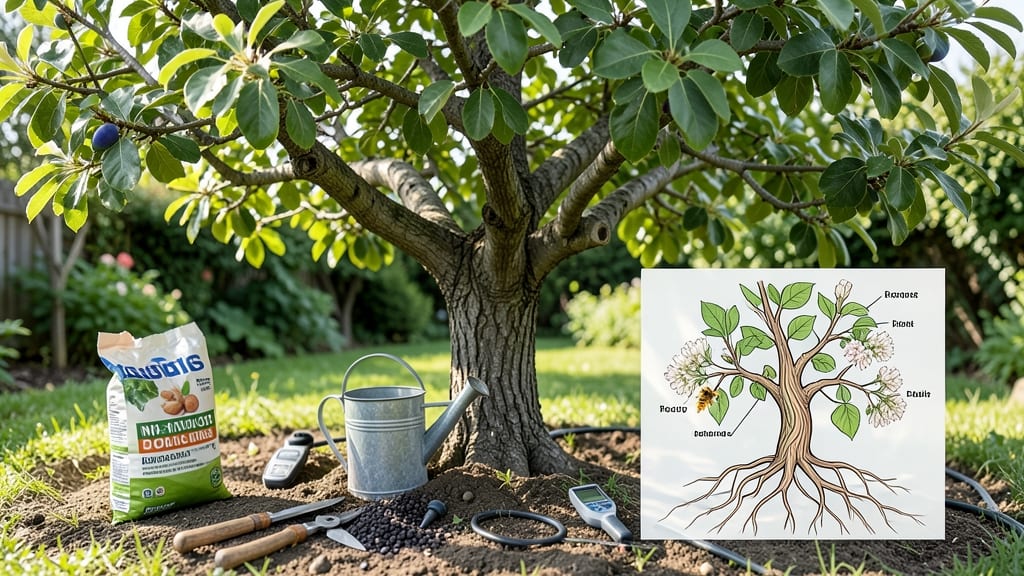
A plum tree not producing fruit despite its beautiful blooms? That stubborn silence between blossoms and harvest usually boils down to one sneaky culprit: cross-pollination.
I’ve had my own plum tree stand there covered in pink flowers, only to produce zilch—until I learned the secret handshake between trees that makes fruit happen.
The good news is, this is one of the easiest fixes in fruit tree care. Most plum varieties need another tree within 50 feet to shake pollen their way.
Even if your tree is healthy, without a pollinator buddy, those flowers just sigh and drop. And no, bees alone won’t cut it—plums need specific genetic partners.
Once you add the right companion tree, you’ll see tiny fruit cups forming within 3-4 weeks of successful pollination. The first harvest might be small, but each year after that, your tree will reward you with bushels of juicy plums—no fancy fertilizers or pruning tricks required.
Works for both backyard orchards and container-grown dwarf plums. Here’s how to diagnose your tree’s specific problem and pick the perfect pollinator—plus what to do if you’re stuck with just one tree forever.
Root Causes Behind Barren Trees
Plum trees are stunning in bloom, but when they fail to produce fruit, it’s often due to a mix of environmental, biological, or cultural factors. Understanding these causes is the first step to turning your tree into a fruitful powerhouse.
Let’s dig into the science behind why your plum tree might be playing hard to bear.
---
Plum trees are self-fruitful (meaning they can pollinate themselves), but many varieties—especially those grown from seed or certain cultivars—rely heavily on cross-pollination for optimal fruit set. If your tree lacks a compatible partner nearby, flowers may drop without forming fruit.
- Why it happens: - Plum flowers release pollen, but without bees, wind, or another tree’s pollen, fertilization fails. - Some varieties (like Santa Rosa or Stanley) are partially self-fruitful but produce far more fruit with a pollinator. - Environmental factors (e.g., cold snaps during bloom, lack of bee activity) can disrupt pollination.
- Actionable fix: - Plant a second plum tree of a compatible variety (check local nursery recommendations). - Hand-pollinate by transferring pollen with a small brush between flowers on the same tree. - Attract pollinators by planting bee-friendly flowers (e.g., lavender, clover) nearby.
---
Plum trees are temperature-sensitive, and unpredictable weather—whether too cold, too hot, or too wet—can sabotage fruit production.
- Why it happens: - Late frosts (below 28°F/-2°C) after buds swell can kill blossoms before pollination. - Heatwaves during bloom (above 90°F/32°C) can cause flower drop or poor pollen viability. - Excessive rain washes away pollen, while drought stress weakens flowers before they open.
- Actionable fix: - Monitor frost dates and protect young trees with frost cloth if late frosts are common. - Water deeply before and during bloom to prevent stress. - Choose early-blooming varieties (like Black Diamond) if late frosts are a local issue.
---
A plum tree needs balanced nutrients to produce fruit. If the soil lacks key elements, the tree may focus on leaves and growth instead of fruit.
- Why it happens: - Nitrogen-heavy fertilizers promote leafy growth but reduce fruit set. - Phosphorus deficiency (critical for flowering) leads to fewer or smaller blossoms. - Zinc or boron deficiencies cause poor fruit development or blossom drop. - Over-fertilizing with potassium can delay fruit maturation.
- Actionable fix: - Test your soil (pH 6.0–7.0 is ideal for plums). - Apply a balanced fertilizer (e.g., 10-10-10) in early spring before buds swell. - Add compost for organic matter and micronutrients. - Avoid high-nitrogen fertilizers (like lawn fertilizers) in bloom season.
---
Pruning is essential for plum trees, but wrong timing or aggressive cuts can reduce fruit production.
- Why it happens: - Heavy pruning in late winter/early spring (when buds are forming) removes potential fruit-bearing wood. - Over-thinning reduces the tree’s ability to photosynthesize enough energy for fruit. - Not pruning at all leads to overcrowded branches, blocking sunlight and airflow (which stresses the tree).
- Actionable fix: - Prune in late winter/early spring (just before buds swell) to shape the tree without removing fruit wood. - Remove dead, diseased, or crossing branches to improve airflow. - Avoid heavy pruning—never cut more than 25% of the canopy in one year.
---
Pests like plum curculio, aphids, or borers and diseases such as silver leaf fungus or bacterial leaf spot drain the tree’s resources, leaving little energy for fruit.
- Why it happens: - Aphids suck sap, weakening blossoms before they open. - Plum curculio beetles lay eggs in fruit, causing premature drop. - Fungal diseases (e.g., brown rot) infect flowers, preventing fertilization. - Root rot (from overwatering) starves the tree of nutrients.
- Actionable fix: - Inspect trees regularly for chewed leaves, sawdust-like frass (borer signs), or mold. - Use organic sprays (neem oil, horticultural oil) before bloom to deter pests. - Remove fallen fruit/dropped leaves to prevent fungal spread. - Improve drainage if roots are waterlogged.
--- Not all plum trees are created equal—and age and genetics play a huge role in fruit production.
- Why it happens: - Young trees (under 3–5 years) focus on root and branch growth before fruiting. - Some varieties (e.g., ornamental plums) are grown for flowers, not fruit. - Seed-grown trees (not grafted) may take 5–10 years to bear reliably.
- Actionable fix: - Be patient—give young trees time to establish. - Choose fruit-bearing cultivars (e.g., Larry Ann, Methley, Elephant Heart). - Graft known varieties onto a rootstock for faster, more reliable fruiting.
--- Plum trees thrive in specific conditions, and stress from the wrong environment can halt fruit production.
- Why it happens: - Too much shade reduces photosynthesis, limiting energy for fruit. - Poor soil drainage leads to root suffocation, stunting growth. - Extreme heat or drought causes flower abortion before pollination.
- Actionable fix: - Plant in full sun (6+ hours daily) with well-draining soil. - Mulch deeply (3–4 inches) to retain moisture and regulate soil temp. - Drip irrigation during bloom and fruit set prevents stress.
--- While fertilizers help, overuse or wrong products can disrupt flowering and fruiting.
- Why it happens: - Excessive nitrogen late in the season delays dormancy, confusing the tree. - Systemic pesticides (applied during bloom) can kill pollinators. - Herbicides drifting onto roots weaken the tree.
- Actionable fix: - Avoid fertilizing after mid-summer—let the tree harden off for winter. - Use targeted sprays (e.g., pesticides at dusk to protect bees). - Stick to organic or slow-release fertilizers for steady growth.
Revitalize Your Plum Tree’s Fruitfulness
---
If your plum tree is skipping the fruit-making party, don’t panic—there’s almost always a fix! Below, we’ve mapped out practical, step-by-step solutions tailored to the most common causes, from soil woes to pollination puzzles. Each remedy includes prevention tips to keep your tree thriving long-term. Let’s get those branches bearing fruit again!
---
If your plum tree’s roots are starving for essential nutrients, it’ll focus on leaves instead of fruit. Here’s how to feed it right:
#### 🔥 Step 1: Test Your Soil
Before adding amendments, grab a soil test kit (available at garden centers) to check pH and nutrient levels. Plum trees thrive in slightly acidic to neutral soil (pH 6.0–7.0). If your soil is off, adjust it gradually:
- Too acidic (pH < 6.0)? Sprinkle lime (calcium carbonate) in early spring.
- Too alkaline (pH > 7.0)? Mix in sulfur or peat moss in fall.
#### 🍳 Step 2: Feed with the Right Fertilizer
Plum trees need a balanced diet with extra phosphorus (for roots and fruit) and potassium (for disease resistance). Use:
- A 10-10-10 or 5-10-10 fertilizer in early spring (before buds swell).
- For older trees, try organic options like composted manure or bone meal (high in phosphorus).
- 💡 Pro Tip: Avoid high-nitrogen fertilizers (like lawn food)—they promote leafy growth but stunt fruit production.
#### 👨🍳 Step 3: Mulch Like a Pro
Spread 2–4 inches of organic mulch (wood chips, straw, or compost) around the base of the tree—but keep it 6 inches away from the trunk to prevent rot. Mulch:
- Retains moisture (plum trees hate drought!).
- Regulates soil temperature.
- Slowly releases nutrients as it breaks down.
#### ⏰ Prevention Tips:
- Test soil every 2–3 years to catch nutrient imbalances early.
- Top-dress with compost annually in spring for a slow-release boost.
- Water deeply once a week (1–2 inches) during dry spells to avoid stress.
---
Plum trees are self-pollinating but better with a buddy—especially if your variety isn’t labeled as self-fertile. Here’s how to ensure those blossoms turn into fruit:
#### 🔥 Step 1: Identify Your Plum Variety
Check the tag or ask your local nursery if your tree is:
- Self-fertile (self-pollinating): Can produce fruit alone (e.g., ‘Santa Rosa,’ ‘Methley’).
- Partially self-fertile: Needs a little help (e.g., ‘Stanley’ pairs well with ‘Larry Ellett’).
- Not self-fertile: Requires a pollinator partner (e.g., ‘Black Diamond’ needs ‘Honey Suckle’ nearby).
#### 🍳 Step 2: Plant a Pollinator Partner
If your tree lacks a mate, add a compatible variety within 50–100 feet (plum tree pollen travels!). Popular pairings:
| Your Plum Tree | Best Pollinator Partner |
|---|---|
| ‘Santa Rosa’ | ‘Larry Ellett’ or ‘Methley’ |
| ‘Stanley’ | ‘Honey Suckle’ or ‘Black Diamond’ |
| ‘Improved Egg’ | ‘Cacaks Early Prolific’ |
#### 👨🍳 Step 3: Hand-Pollinate (If Needed)
On cool, rainy, or windless days, when bees are lazy, grab a soft paintbrush and:
- Gently brush pollen from one blossom to another on the same tree or a nearby pollinator.
- Do this early in the morning when flowers are fresh.
- Repeat every 2–3 days during peak bloom (usually spring).
#### 🎯 Prevention Tips:
- Plant multiple plum varieties if you love fresh fruit—it’s a game-changer!
- Attract native bees by planting bee-friendly flowers (lavender, sunflowers) nearby.
- Avoid pesticides during bloom—they kill pollinators. Use neem oil or soapy water sprays instead.
---
Too much shade or poor pruning can trick your plum tree into thinking it’s time to nap instead of fruit. Here’s how to wake it up:
#### 🔥 Step 1: Ensure Full Sun Exposure
Plum trees crave 6–8 hours of direct sunlight daily. If yours is in the shade:
- Trim overhanging branches from nearby trees.
- Relocate younger trees to a sunnier spot if possible.
- Use reflective mulch (like white gravel) to bounce light onto the tree’s base.
#### 🍳 Step 2: Prune for Productivity
Pruning isn’t just about looks—it’s about airflow and energy focus. Do this in late winter or early spring (before buds swell):
- Remove dead/diseased branches (cut at a 45° angle, ¼” above a bud).
- Thin out crowded branches to improve sunlight penetration.
- Shape the tree into an open vase (spreading branches) to encourage fruit-bearing wood.
- Avoid heavy pruning—never cut more than 25% of the canopy at once.
#### 🌡️ Prevention Tips:
- Prune annually to maintain an open canopy.
- Watch for water sprouts (vertical shoots)—remove them immediately.
- If your tree is young, avoid pruning in fall—it can stimulate late growth vulnerable to frost.
---
Hidden invaders or infections can drain your tree’s energy. Here’s how to spot and stop them:
#### 🔥 Step 1: Inspect for Common Culprits
Look for:
- Plum curculio weevils: Tiny beetles that lay eggs in fruit (chewed holes = no fruit!).
- Borers: Sawdust-like frass at branch bases or oozing sap.
- Powdery mildew: White, dusty fungus on leaves (thrives in humid conditions).
- Silver leaf disease: Leaves turn silvery; branches wilt.
#### 👨🍳 Step 2: Treat Infestations
Use organic or targeted solutions
Frequently asked questions
Why does my plum tree have flowers but no fruit?
Most plum varieties need cross-pollination to set fruit. Even if your tree blooms beautifully, without another compatible variety within 50 feet, those flowers won't develop into fruit. Some varieties like 'Santa Rosa' are partially self-fruitful but produce far more with a pollinator partner.
How long does it take for a plum tree to bear fruit?
Young plum trees typically need 3-5 years to establish strong roots before producing fruit. Dwarf varieties may fruit in 2 years, while standard trees can take up to 7 years if grown from seed. Patience is key—focus on proper care during these early years.
Can I hand-pollinate my plum tree if there's no other tree nearby?
Yes! On calm, cool days when bees aren't active, use a soft paintbrush to transfer pollen from one flower to another on the same tree. Do this early in the morning when flowers are fresh, repeating every 2-3 days during peak bloom. This mimics natural pollination perfectly.
What should I do if my plum tree's flowers keep dropping?
Flower drop often signals stress—check for late frosts, drought, or nutrient deficiencies. Water deeply before bloom, apply a balanced fertilizer (like 10-10-10) in early spring, and protect from cold snaps with frost cloth. If the issue persists, test your soil pH—plums thrive at 6.0-7.0.
Are there any plum varieties that don't need cross-pollination?
Yes! Some self-fruitful varieties like 'Methley' or 'Larry Ann' can produce fruit alone, though yields improve with a pollinator. Always check the variety label when purchasing—many nurseries now offer self-fruitful options specifically for small spaces.