
Pruning
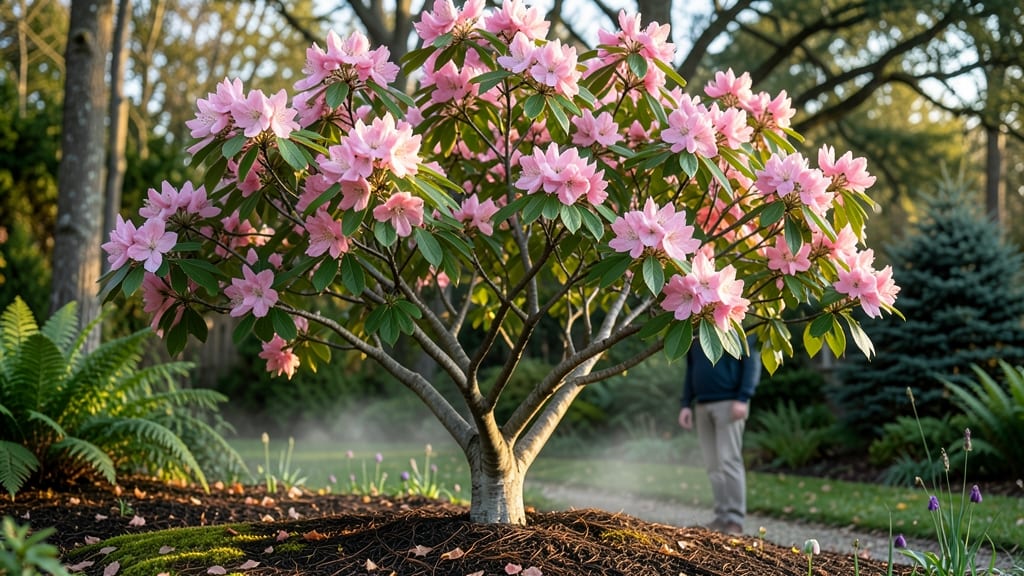
The pink dogwood tree height can reach 20-30 feet tall at maturity—taller than most homeowners expect, which often leads to planting regrets. 🌳 I’ve seen them tower over second-story windows in my neighborhood, casting shade where no one planned for it.
The key to happy dogwoods isn’t just picking the right variety but also accounting for their eventual height when choosing a spot. Growth rate varies by climate: in warmer zones (7-9), they grow 2-3 feet per year, while cooler zones (5-6) see 1-2 feet annually.
Spacing is critical—plant at least 15-20 feet from structures to avoid future pruning headaches. Varieties like 'Cherokee Brave' or 'Pink Icing' stay slightly shorter (15-25 feet), making them better for smaller yards.
You’ll love how they frame a garden entrance or anchor a shaded border—but only if you plan ahead. A well-placed dogwood adds year-round interest with spring blooms, summer foliage, and winter berries, provided you give it room to stretch its branches.
For urban gardens, consider dwarf cultivars or strategic pruning to control height. Just remember: dogwoods hate root disturbance, so pick your spot carefully. Here’s how to make it work without sacrificing their natural beauty.
📚 In This Guide
- What you need
- Instructions
- Tips and common mistakes
- Wrapping up and next steps
What you need
- ● Pruning shears – Bypass pruners (sharp, clean, and sterilized with rubbing alcohol or bleach solution to prevent disease).
- ● Loppers – For thicker branches (1.5"–2" diameter), with a longer handle (24–36") for reach.
- ● Pruning saw – For branches too large for loppers (3"–6" diameter), with a fine-tooth blade for clean cuts.
- ● Ladder or extension pole – Sturdy, non-slip, and tall enough to reach the tree’s mature height (typically 15–25 ft, depending on variety).
- ● Gloves – Heavy-duty, cut-resistant gloves to protect hands from thorns and rough bark.
- ● Disposable pruning bags or bucket – To collect and dispose of clippings (prevents debris buildup and pests).
- ● Rubbing alcohol (70% or higher) or bleach solution – For sterilizing tools between cuts (1 part bleach to 9 parts water).
- ○ Tree wound dressing (optional but recommended) – Pruning sealant for cuts larger than 0.5".
- ● Pole pruner – For high branches without a ladder (extendable up to 20 ft).
- ● Tree support stakes or cables – If your dogwood is young or in a windy area (use soft ties to avoid girdling).
- ● Mulch (2–4 inches of organic mulch) – Spread in a 3-foot radius around the base (avoid piling against the trunk).
- ● Tree growth regulator (if needed) – For varieties prone to overgrowth (consult a local nursery for climate-specific products).
- ● Camera or measuring tape – To track height and growth progress over time!
Understanding pink dogwood tree height: variety and climate factors
Pink dogwoods vary dramatically in mature size—here’s how to predict height based on species and growing conditions.
🌿 Step 1: Identify Your Dogwood Variety
Pink-flowering dogwoods (Cornus florida) come in several cultivars, each with distinct mature heights. The classic ‘Cherokee Brave’ reaches 15-20 feet with a broad, rounded canopy, while dwarf varieties like ‘Pink Icing’ max out at 6-8 feet—ideal for small yards. Always check the label or plant tag, as even slight differences in naming (e.g., ‘Pink Cloud’ vs. ‘Pink Dawn’) can mean 5+ feet of height variation.
Real talk: If you’re planting near a power line or tight space, measure your site first. A 20-foot dogwood planted 10 feet from a fence will eventually smother it unless pruned aggressively. I’ve seen homeowners regret this placement after just 5 years of growth.
☀️ Step 2: Assess Your Climate’s Impact on Growth Rate
Dogwoods thrive in USDA Zones 5-9, but height potential shifts with climate. In humid Southern climates (Zones 7-9), dogwoods grow 2-3 feet faster annually than in cooler Northern regions (Zones 5-6). For example, a ‘Cherokee Brave’ might hit 12 feet in 8 years in Georgia but take 12 years to reach the same height in Pennsylvania.
Watch for bud set in late summer—this is your clue that the tree is preparing for next year’s growth spurt. In colder zones, delay planting until after the last frost (typically mid-May) to avoid winter dieback, which stunts height gain.
🪴 Step 3: Plant in the Right Location for Optimal Height Control
Dogwoods planted in full sun (6+ hours daily) grow 10-15% taller than those in partial shade, but their flowers may fade faster. For vibrant pink blooms, aim for morning sun and afternoon shade—this balances height and floral display. In shady spots, expect 20-30% slower vertical growth, but the tree will develop a denser, bushier form.
Here’s the thing—soil drainage matters more than you’d think. Waterlogged roots (common in clay-heavy soils) cause stunted growth and leaf yellowing. Amend heavy soil with 2-3 inches of compost before planting to improve aeration and encourage steady height progression.
✂️ Step 4: Prune Strategically to Manage Height
Prune dogwoods immediately after flowering (late spring) to avoid cutting off next year’s blooms. For height control, remove 1-2 branches per year from the upper canopy, cutting just above a bud facing outward. Never remove more than 25% of the canopy in one season—this stresses the tree and can trigger height spikes as it compensates.
If your dogwood is already too tall, thinning cuts (removing entire branches at the base) reduce height faster than heading cuts (trimming back branch tips). I’ve seen ‘Cherokee Brave’ trees drop 3-4 feet in height after a single aggressive thinning session—just be prepared for a temporary drop in flower production.
⏰ Step 5: Monitor Growth Milestones Yearly
Track height annually using a measuring tape or laser level for accuracy. Most dogwoods grow 12-24 inches per year in ideal conditions, but dwarf varieties like ‘Pink Pixie’ may only add 6-12 inches annually. Plot growth on a simple chart—spikes in height often correlate with wet springs or high-nitrogen fertilizers.
By year 5, you’ll see the tree’s true mature shape emerge. If it’s growing too fast for your space, switch to low-nitrogen fertilizer (5-10-10 ratio) to slow vertical growth while maintaining foliage health. The goal is balance—height control without sacrificing beauty.
Tips & tricks for predicting pink dogwood tree height
Here’s what nobody tells you about getting your dogwood’s size just right from the start.
Variety Verification: Don’t assume a dogwood is what it claims to be—nursery labels can be misleading. For example, a ‘Pink Dawn’ might actually be a hybrid that grows 4 feet taller than expected. When in doubt, check the plant’s certification or ask the nursery for a guarantee on mature height. I’ve seen ‘dwarf’ varieties that grew into small trees because they were mislabeled.
Climate Adjustments: The 12-24 inches per year growth rate in Step 5 assumes ideal conditions. In Zone 5, where winters are harsh, dogwoods often grow only 6-12 inches annually until they’re established. If you’re in a colder climate, plant in a sheltered microclimate—like near a south-facing wall—to give your tree a growth boost. The difference between 8 years and 12 years to reach 12 feet is huge!
Soil Secrets: The 2-3 inches of compost recommendation in Step 3 is non-negotiable for heavy clay soils. I’ve seen dogwoods planted in unamended clay that barely grew 2 inches a year for the first five years. For sandy soils, mix in some peat moss instead—it helps retain moisture while improving drainage. The key is creating a soil environment where roots can spread easily, which directly impacts vertical growth.
Pruning Precision: When managing height in Step 4, timing matters more than most people realize. If you prune too early in spring, you risk cutting off flower buds that have already formed. I’ve learned this the hard way—once I pruned a ‘Cherokee Brave’ in early April and ended up with half the expected blooms. Always wait until after the pink flowers have faded completely before making your cuts.
Pro Tips for Pink Dogwood Tree Height
- Here’s what nobody tells you about getting your dogwood’s size just right from the start.
- Variety Verification: Don’t assume a dogwood is what it claims to be—nursery labels can be misleading.
- Climate Adjustments: The 12-24 inches per year growth rate in Step 5 assumes ideal conditions.
Frequently asked questions
Got questions about your pink dogwood’s growth? Here are the most common ones—and their answers—to help you plan with confidence!
How tall does a pink dogwood tree grow at maturity?
A pink dogwood’s mature height varies by variety. The classic Cornus florida (like ‘Rubra’ or ‘Cherokee Brave’) typically reaches 15–25 feet tall, while dwarf varieties (e.g., ‘Stellar Pink’) stay between 6–10 feet. Always check the specific cultivar’s tag for precise expectations!
How fast does a pink dogwood grow?
Pink dogwoods are moderate growers, adding about 12–24 inches per year in ideal conditions (full sun to partial shade, well-drained soil). Slower growth is normal in cooler climates or dense shade. Patience pays off—full bloom potential takes 3–5 years!
Does climate affect pink dogwood tree height?
Yes!
Dogwoods thrive in USDA Zones 5–9, but height can shrink in colder zones (e.g., Zone 5) due to winter stress. Southern climates (Zones 7–9) often yield taller trees with vibrant pink blooms. If you’re in a marginal zone, choose cold-hardy varieties like ‘Cherokee Princess’ for better success.
Can I prune a pink dogwood to control its height?
Pruning is not recommended to stunt height—it can harm blooms or weaken the tree. Instead, plant dwarf varieties or choose a location with space. If pruning is needed (e.g., removing dead branches), do it right after flowering to avoid cutting off next year’s buds. Pro tip: Use sharp, sterilized tools to prevent disease!
What’s a good alternative if I want a shorter pink-flowering tree?
If height is a concern, consider these compact pink bloomers:
- ‘Stellar Pink’ Dogwood: 6–10 ft tall, disease-resistant.
- ‘Pink Icing’ Ninebark: 5–6 ft, pink spring blooms + colorful foliage.
- ‘Hot Wings’ Dwarf Cotoneaster: 3–5 ft, pink flowers + red berries.
Wrapping up and next steps
The pink dogwood tree height varies widely—from compact Cornus florida varieties reaching 20 feet to towering Cornus kousa types soaring over 30 feet—but with the right care, your tree can thrive beautifully!
Whether you’re planning a cozy backyard retreat or a striking landscape centerpiece, understanding its mature size and climate needs is your first step to success. 🌸
Now that you’re armed with insights, why not take the next step? Visit your local nursery to pick out the perfect variety for your space, or consult a pruning expert to ensure your dogwood stays healthy and stunning for years to come. Happy gardening! 🌱