
Trees
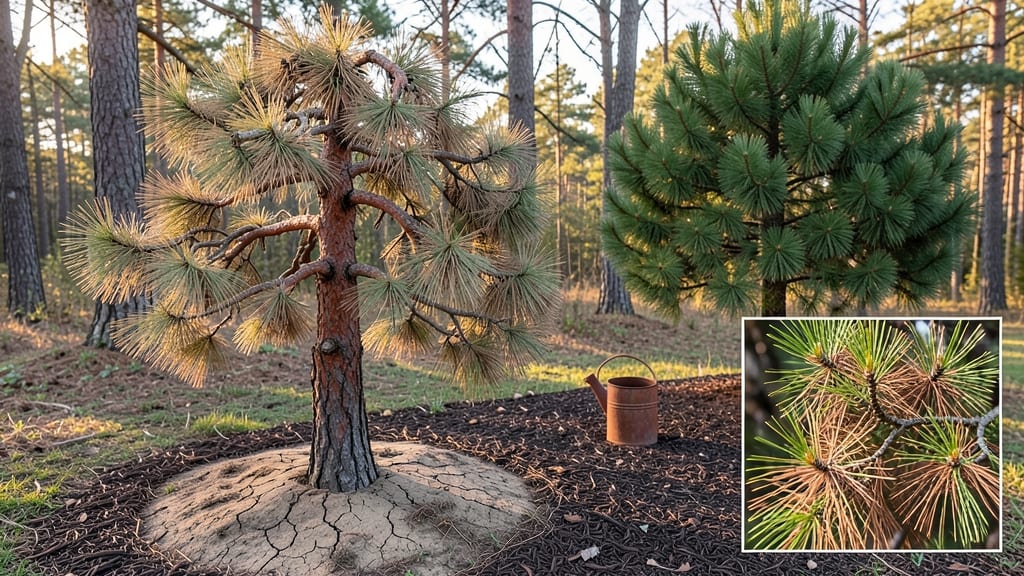
Your pine tree’s drooping needles aren’t a death sentence—just a cry for help. 🌲 Drought stress turns vibrant evergreens into sad, brown husks, but three precise fixes can bring them back to life.
I’ve nursed back more than a few with these same methods after last summer’s heatwave fried my landscape.
The real culprit isn’t just dry soil—it’s how long your tree’s roots have gone without moisture. Pines hate soggy roots but despise drought even more. The fix starts with deep watering (not just a sprinkle) and the right mulch to lock in moisture.
My 5-gallon watering can with slow-release stakes saved my 15-year-old white pine last year.
Within weeks, you’ll see fresh green needles pushing out from the tips—proof the tree’s still alive and fighting back. The key is consistency: check soil moisture every 7-10 days during dry spells, and adjust your watering based on what you find.
Even old trees can bounce back with the right care.
For stubborn cases, soil amendments like compost or pine-specific fertilizer can help, but always test the soil first. If the tree’s been stressed for years, an arborist can assess if it’s worth saving. Most of the time, though, it’s just thirst—and your tree’s thanking you for listening.
Root Causes Of Pine Tree Stress
Drought stress in pine trees isn’t just about a lack of water—it’s a complex interplay of environmental, biological, and even human factors that disrupt the tree’s ability to thrive.
Understanding these root causes is the first step to restoring your pine’s health. Let’s break down the science behind why drought stress happens, so you can address it effectively.
Pine trees evolved in regions with seasonal water fluctuations, but prolonged droughts—especially in urban or arid landscapes—push them beyond their natural resilience. Here’s how it happens:
- Soil Moisture Depletion: Pines rely on deep root systems to access water, but shallow or compacted soil (common in construction zones or heavy foot traffic areas) restricts root growth.
Without enough water in the top 12–18 inches of soil, roots can’t absorb what the tree needs. - Transpiration Overload: On hot, dry days, pine trees lose water through their needles faster than roots can replenish it.
This creates a hydraulic failure—think of it like a straw too narrow to drink from a shrinking glass. - Wilting Point: When soil moisture drops below 15–20%, pine roots struggle to extract water, triggering stress responses like needle browning or shedding.
Pro Tip: 💡 Use a soil moisture meter (or the "squeeze test"—grab a handful of soil; if it crumbles like sand, it’s too dry).
Heat doesn’t just dry out soil—it amplifies drought stress by increasing the tree’s water demands. Pines in full sun without shade or mulch are especially vulnerable:
- Increased Evaporation: Temperatures above 85°F (29°C) cause pine needles to lose water 3–5x faster than in cooler conditions. Urban "heat islands" (where pavement absorbs and radiates heat) make this worse. - Photosynthesis Shutdown: High temperatures damage chlorophyll, reducing the tree’s ability to convert sunlight into energy.
Without energy, the tree can’t sustain root activity or repair drought damage. - Sunburn Risk: While not the same as drought stress, needle scorch (brown, crispy tips) often appears alongside drought symptoms, weakening the tree further.
Actionable Fix: 🌳 Install shade cloth (30–50% coverage) or plant companion shrubs (like boxwood or juniper) to break up intense sunlight.
Even with adequate rainfall, soil quality can sabotage a pine’s drought resistance. Common offenders include:
| Soil Issue | How It Causes Stress | Quick Test |
|---|---|---|
| Compacted Soil | Roots can’t penetrate dense layers, limiting water uptake. | Push a screwdriver in—if it stops at 2", soil is compacted. |
| Low Organic Matter | Poor water retention; soil acts like a sieve instead of a sponge. | Dark, crumbly soil = healthy; gray/sandy = lacking organic matter. |
| High Clay Content | Water drains too quickly or pools, suffocating roots. | Squeeze soil—if it forms a hard ball, it’s clay-heavy. |
| Acidic pH (<4.5) | Pines prefer slightly acidic soil (pH 4.5–6.0); extreme acidity locks out nutrients. | Test with a pH kit or vinegar (bubbles = alkaline; no reaction = acidic). |
Fix It: 🔥 Amend soil with compost, pine bark fines, or peat moss to improve structure and water retention.
Wind might seem harmless, but it accelerates drought damage by:
- Desiccating Needles: Wind removes the boundary layer of moist air around needles, forcing them to transpire faster.
- Root Disruption: Strong winds can uproot shallow or stressed trees, exposing roots to air and speeding up moisture loss.
- Salt Buildup: In coastal areas, wind-blown salt accumulates on needles, clogging stomata (pores) and reducing water absorption.
Solution: 🌡️ Windbreaks (like evergreen hedges or lattice fences) reduce exposure by 30–50%, while anti-desiccant sprays (like Wilt-Pruf) create a protective film on needles.
Sometimes, well-meaning (or careless) human actions worsen drought stress:
- Over-Pruning: Removing too many lower branches reduces the tree’s leaf-to-root ratio, limiting its ability to photosynthesize and store water.
- Lawn Competition: Turfgrass and ground covers steal water and nutrients from pine roots, especially in drought-prone areas.
- Improper Watering: Infrequent deep watering encourages shallow roots, while overwatering can leach nutrients and suffocate roots.
- Construction Damage: Compacted soil from foot traffic or machinery severs fine root hairs, which are critical for water absorption.
Avoid This: ✨ Water deeply but infrequently (1–2 inches per week in drought) and mulch with wood chips (3–4 inches) to retain moisture.
Reviving Your Pine Tree After Stress
Now that you understand the root causes behind pine tree drought stress, it’s time to take action! The good news is that with the right approach, you can help your pine tree bounce back to its vibrant, healthy self.
Below are targeted solutions for each common cause, along with preventive tips to keep your tree thriving long-term.
Problem: Underwatering, overwatering, or poor soil drainage. Fix:
- 🔥 Deep Watering: Water deeply once or twice a week (depending on climate) rather than shallow daily doses. Aim for 1–2 inches of water per week, delivered slowly to the root zone.
- 🍳 Improve Soil Drainage: Amend heavy or compacted soil with organic matter (compost, peat moss, or coconut coir) to prevent waterlogging.
- 👨🍳 Mulch Like a Pro: Apply 2–4 inches of mulch (wood chips, pine straw, or bark) around the base (but not touching the trunk) to retain moisture and regulate soil temperature.
💡 Pro Tip: Test soil moisture by sticking your finger 3–4 inches deep—if it’s dry, water again. If it’s soggy, hold off until it dries slightly.
Problem: Intense heat, sun scorch, or windburn. Fix:
- ✨ Provide Shade: Use lightweight shade cloth (30–50% coverage) during peak afternoon sun (12 PM–4 PM) if your pine is young or in a hot, exposed area.
- 🌡️ Boost Humidity: Mist the tree early in the morning (avoid evening misting to prevent fungal issues) or install a drip irrigation system to keep foliage hydrated.
- 🎯 Windbreaks: Plant fast-growing shrubs or install a temporary windbreak (like a lattice fence) to reduce desiccating winds.
💡 Pro Tip: Mature pines are more resilient, but newly planted trees need extra care—consider a tree guard for the first year.
Problem: Compacted roots, nutrient deficiencies, or poor soil health. Fix:
- 🔪 Aerate the Soil: Use a manual aerator or garden fork to loosen compacted soil around the root zone (avoid damaging roots).
- 🥗 Feed Smart: Apply a slow-release, balanced fertilizer (10-10-10 or 20-20-20) in early spring, followed by a micronutrient boost (like iron or manganese) if yellowing persists.
- 🍎 Organic Boost: Mix compost tea or worm castings into the soil to improve microbial activity and nutrient uptake.
💡 Pro Tip: Avoid over-fertilizing—pine trees prefer acidic, slightly infertile soil. Too much nitrogen can stress them further!
Once your pine tree recovers, prevent future stress with these habits:
- 📊 Monitor Soil Moisture: Use a moisture meter or the finger test to adjust watering as seasons change.
- 💪 Prune Strategically: Remove dead or crowded branches in late winter/early spring to improve airflow and light penetration.
- 🌿 Choose the Right Spot: When planting new pines, pick a location with well-draining soil and partial shade (especially in hot climates).
Final Thought: Patience is key—some signs of drought stress (like browning needles) may take 6–12 months to fully recover. But with consistent care, your pine tree will reward you with lush, vibrant growth for years to come! 🌲✨
Frequently asked questions about pine tree drought stress
How do I tell if my pine tree is suffering from drought stress?
Look for browning or yellowing needles, especially on the tips or inner branches, and thin, brittle new growth. The tree may also pull away from the soil slightly when tugged gently at the base. Check the soil—if the top 3–4 inches are bone-dry, that’s your first clue.
Can I save a pine tree with severely browned needles?
Yes, but act fast! If more than 50% of needles are brown but the branches still feel slightly flexible (not brittle), the tree is likely recoverable. Prune the dead needles and focus on deep watering and mulching. If branches snap easily, the tree may be beyond saving.
How often should I water a drought-stressed pine tree?
Water deeply once or twice weekly (depending on your climate) to reach 12–18 inches deep. Use a soaker hose or drip irrigation to avoid runoff. Test soil moisture—if the top 3–4 inches stay dry between waterings, increase frequency slightly.
Is mulch really necessary for pine trees in drought?
Apply 2–4 inches of organic mulch (like pine bark or wood chips) around the base, keeping it 6 inches away from the trunk. Mulch locks in moisture, regulates soil temperature, and discourages weeds that compete for water. Replenish it annually to maintain effectiveness.
When should I call an arborist for my stressed pine?
Consult an arborist if you see fungal growth (like white cottony patches), large dead patches on the trunk, or if the tree leans heavily despite proper care. They can assess root health, diagnose diseases, or determine if the tree is structurally unsound.