
Pruning
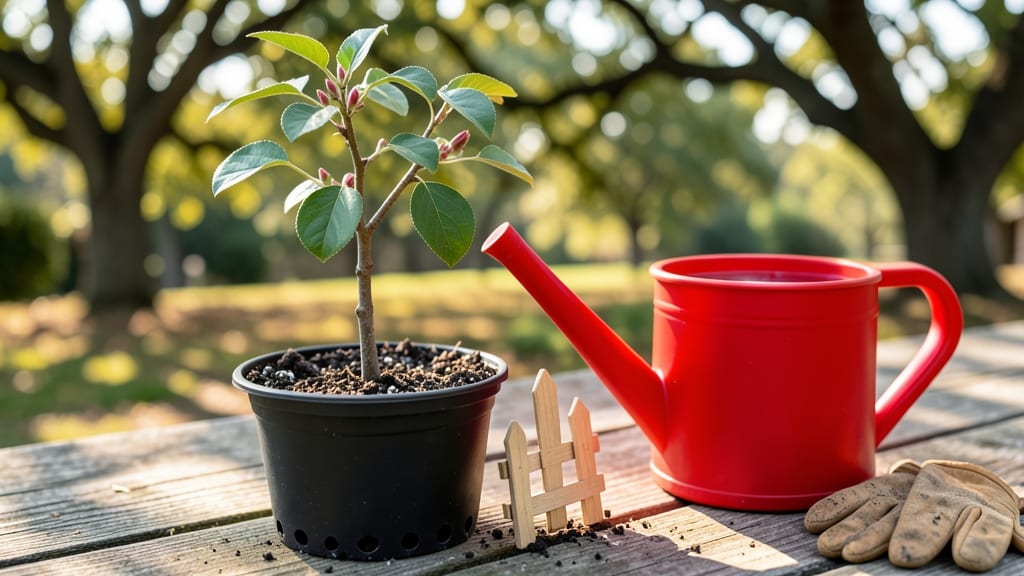
A peach tree starter in your hands means sweet rewards next summer—if you plant it right. 🌱 I’ve learned the hard way that cold-hardy varieties like ‘Reliance’ or ‘Redhaven’ thrive with proper care, and the secret starts with choosing a healthy, dormant starter (not a blooming one).
These trees need patience—first year focuses on roots, not fruit—but get it right, and you’ll have a tree that outlasts your mailbox. The right starter has smooth bark, no cracks, and flexible branches (snapping like a green stick, not breaking dry).
Plant it in well-draining soil mixed with compost, and dig a hole twice as wide as the root ball but no deeper—peaches hate soggy feet. Water deeply after planting, then mulch to lock in moisture and keep roots cool.
Prune only to shape (remove dead wood or crossing branches), and resist the urge to trim heavily—you’ll regret it when buds form next spring. By summer’s end, you’ll see new growth shooting up like a teenager after a growth spurt.
Keep the soil moist but not soggy, and fertilize lightly in early spring with a balanced 10-10-10 mix. The first year is about building roots, not fruit—think of it like training wheels for your tree.
With the right starter and care, you’ll have a tree that bears fruit for decades, not just one disappointing harvest. Cold-hardy varieties handle winter better than most, but protect young trees with a wrapping of burlap in harsh climates.
Prune again in late winter to open the center for airflow, and watch as your tree becomes the star of your yard—frost-resistant, productive, and full of potential. Here’s how to make it happen without the common mistakes.
📚 In This Guide
- What you need
- Instructions
- Tips and common mistakes
- Wrapping up and next steps
What you need
- ● Peach tree starter: Choose a cold-hardy variety (e.g., Relenta®, Contender®, or Reliance®) from a reputable nursery. Opt for a 1- to 2-year-old bare-root sapling for best transplant success.
- ● Shovel or trowel: A garden shovel for digging the hole (18–24" wide/deep) or a hand trowel for smaller roots.
- ● Well-draining soil mix: 60% native soil + 30% compost + 10% perlite/sand (for sandy or clay-heavy areas). Test soil pH (ideal: 6.0–6.5).
- ● Organic mulch: 3–4 inches of wood chips, straw, or pine needles (keep 6" away from the trunk).
- ● Fertilizer: Balanced 10-10-10 or citrus-specific fertilizer (follow package rates for young trees).
- ● Watering can or hose: With a gentle spray nozzle (avoid blasting roots).
- ○ Tree support (optional but recommended):strong> A 3–4 ft stake + soft tree tie (to prevent wind damage in early growth).
- ● Hardiness zone: USDA Zones 4–8 (verify your zone here).
- ● Sunlight: Full sun (6+ hours/day)—peaches thrive in warm, sunny spots!
- ● Space: 15–20 ft apart (for mature tree spread) or 8–10 ft if growing in containers.
- ● Avoid frost pockets: Plant on a south-facing slope or near a heat-retaining wall to extend the growing season.
- ● Root stimulator: A mycorrhizal fungus powder (boosts root growth—mix into planting hole).
- ● Drip irrigation kit: For consistent moisture (critical in dry climates).
- ● Frost cloth: Lightweight frost protection for young trees in late spring/early fall.
- ● Pruning shears: Bypass pruners (for shaping and removing dead branches post-planting).
Step-by-step instructions for planting cold-hardy peach trees
Here’s how to get your peach trees off to a strong start—whether you’re planting bare-root saplings or container-grown starters.
🌱 Step 1: Choose the Right Variety and Planting Time
Cold-hardy peach varieties like ‘Reliance’, ‘Contender’, or ‘Redhaven’ thrive in zones 5-8. Plant them in early spring, as soon as the soil is workable but before buds swell—usually 2-4 weeks before your last frost date. This timing lets roots establish before summer heat arrives.
If you’re planting in fall, do it 6-8 weeks before the first hard frost. Young trees need time to root before winter dormancy kicks in. Dig a hole twice as wide as the root ball but only as deep—peach trees hate being buried too deep, which can suffocate the graft union.
🪴 Step 2: Prepare the Planting Site
Peach trees need full sun—at least 6-8 hours daily—and well-draining soil. Test your soil’s pH (aim for 6.0-6.5). If it’s heavy clay, amend with 2-3 inches of compost mixed into the bottom of the hole. Avoid fresh manure—it can burn roots.
Loosen the soil around the hole to 12-18 inches deep and wide. This prevents compaction and helps roots spread. If your site has poor drainage, consider planting on a slight mound or adding sand or gravel to the hole’s bottom layer. Waterlogged roots mean slow growth or death.
☀️ Step 3: Plant and Stake for Support
Place the tree in the hole so the graft union (the swollen bump near the base) sits 2-3 inches above soil level. This prevents soil from smothering the graft and encourages strong growth above. Backfill with native soil, tamping gently to remove air pockets but not compacting too firmly.
Create a watering basin by mounding soil around the base—this directs water straight to the roots. Install a stake (if needed) at a 45-degree angle and tie the tree loosely with soft fabric or rubber straps. Too-tight ties can girdle the trunk as it grows. Water deeply immediately after planting to settle the soil.
💧 Step 4: Water and Mulch for First-Year Care
Water deeply 2-3 times per week the first season, aiming for 1-2 inches of water per week. Let the top 2-3 inches of soil dry slightly between waterings—peach trees hate soggy roots but need consistent moisture. Avoid overhead sprinklers, which can spread fungal diseases like brown rot.
Apply 2-3 inches of mulch (wood chips or straw) around the base, keeping it 3-4 inches away from the trunk. Mulch retains moisture and regulates soil temperature. Replenish mulch annually—it breaks down over time. In winter, add an extra 4-6 inches of mulch to insulate roots in colder zones.
✂️ Step 5: Prune and Monitor for Year-Round Health
Prune in late winter (just before buds swell) to remove dead, crossing, or inward-growing branches. Cut just outside the branch collar—never leave stubs. Thin the canopy to allow sunlight and air circulation, which reduces disease risk. Aim for an open, vase-like shape for mature trees.
Watch for aphids, peach tree borers, or fungal spots on leaves. Treat early with neem oil or horticultural oil for pests, and copper fungicide for leaf spots. Cold-hardy varieties are tough, but stress from poor care invites problems. Fertilize lightly in early spring with a balanced 10-10-10 formula—peach trees don’t need heavy feeding their first year.
Tips & tricks for planting cold-hardy peach trees
Planting peach trees successfully comes down to these key details that make all the difference between a struggling sapling and a thriving orchard starter.
Timing is Everything: Those 2-4 weeks before last frost in spring give roots time to establish before summer heat arrives. I’ve seen trees planted too late struggle with heat stress—look for soil that’s workable but not muddy. For fall planting, stick to the 6-8 weeks before first frost window. If you miss this, wait until next spring; young roots can’t handle winter dormancy without proper establishment.
Graft Union Position: The swollen graft union should sit 2-3 inches above soil level—this isn’t optional. I’ve seen beginners bury it too deep, which suffocates the tree and can cause rot. Use a small marker or flag to track this level while digging. After planting, gently mound soil to create that 2-3 inch clearance. Think of it as keeping the tree’s "waistline" visible above the soil line.
Watering Wisdom: Those 2-3 inches of mulch and 2-3 waterings per week create the perfect moisture balance. The trick is letting the top 2-3 inches of soil dry slightly between waterings—this prevents soggy roots while maintaining consistent moisture. I use a rain gauge to track my weekly 1-2 inches of water—it’s easier than guessing. For newly planted trees, water deeply immediately after planting to settle the soil around roots.
Staking Strategy: If you install a stake, angle it at 45 degrees and tie loosely with soft fabric. Too-tight ties can girdle the trunk as it grows, creating weak spots. I’ve seen gardeners use old t-shirts or rubber straps—just avoid wire or anything that can cut into the bark. Remove stakes after the first growing season to encourage natural trunk strength.
Pro Tips for Peach Tree Starter
- Planting peach trees successfully comes down to these key details that make all the difference between a struggling sapling and a thriving orchard starter.
- Timing is Everything: Those 2-4 weeks before last frost in spring give roots time to establish before summer heat arrives.
- Graft Union Position: The swollen graft union should sit 2-3 inches above soil level—this isn’t optional.
Frequently asked questions
Got questions about starting your peach tree? You’re not alone!
Whether you're a first-time gardener or a seasoned grower, these common queries will help you plant, care for, and troubleshoot your cold-hardy peach tree starter with confidence. Let’s dive in!
What’s the best time of year to plant a peach tree starter?
For cold-hardy varieties, plant your peach tree starter in early spring (after the last frost) or late fall (6-8 weeks before the first frost). Spring planting gives roots time to establish before summer heat, while fall planting allows roots to grow in cool soil before winter dormancy. Avoid planting in extreme heat or freezing temperatures!
Can I plant a peach tree starter in winter?
While you can plant in winter (if your region has mild winters), it’s riskier. Peach trees are sensitive to frost, and bare-root starters may struggle to establish in cold, wet soil. If you must plant in winter, choose a sheltered spot, mulch heavily, and water sparingly. Spring or fall is always the safer bet!
Do I need to prune my peach tree starter before planting?
Yes! Prune your starter to remove any dead, damaged, or crossing branches before planting. Cut back any suckers (shoots growing from the base) and shape the tree to encourage an open center. This promotes airflow and reduces disease risk. Use clean, sharp pruners and seal larger cuts with pruning sealant if needed.
Why is my peach tree starter’s leaves turning yellow?
Yellow leaves (chlorosis) often signal nutrient deficiency, overwatering, or poor drainage. Check the soil pH—peaches thrive in slightly acidic soil (pH 6.0-6.5). Yellowing between veins may mean iron deficiency (common in alkaline soil), while yellowing edges could indicate overwatering. Adjust care and test your soil for a precise diagnosis!
How cold can a cold-hardy peach tree starter tolerate?
Cold-hardy varieties (like ‘Reliance’ or ‘Contender’) can survive down to -15°F (-26°C) with proper care. However, young trees are more vulnerable. Mulch heavily with straw or wood chips, water deeply before winter, and wrap the trunk with burlap for extra protection. Hardiness varies by variety—check your starter’s label!
Can I grow a peach tree from a store-bought starter, or should I graft?
Store-bought peach tree starters are ready-to-plant and already grafted (if labeled as such), so no need to graft yourself unless you’re propagating from a specific variety. Grafting is best left to experts—stick with certified starters for reliable fruit production and disease resistance.
Wrapping up and next steps
Starting your own peach tree with cold-hardy varieties is a rewarding journey that blends patience with the joy of nurturing life. You’ve learned which varieties thrive in your climate, how to prepare your site, and the essential tools to keep your tree healthy year-round.
Now, take that first step—whether it’s selecting your starter tree or preparing your soil—with confidence! 🌱✨
Next up: Grab your gloves, pick a sunny spot, and let the planting begin. Your future harvest of juicy, homegrown peaches is just a shovel’s throw away!