
Pruning
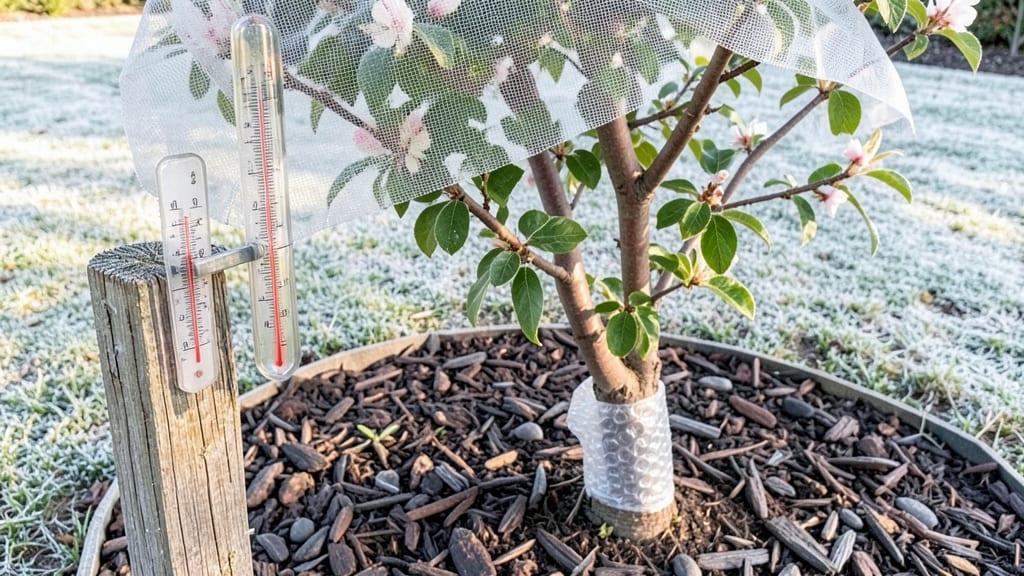
Understanding peach tree cold tolerance is key to growing them successfully, as they thrive primarily in USDA Zones 5-9 and typically endure down to 0°F (-18°C), though severe damage can occur below -10°F (-23°C). Selecting cold-hardy varieties and implementing proper winter care significantly boosts their survival chances.
Peach trees are delicate when it comes to cold weather, and their ability to survive winter depends on both the variety and your location. 🌡️ Most commercial peaches struggle below 0°F (-18°C), but some cold-resistant cultivars like 'Reliance' or 'Contender' can handle temperatures down to -20°F (-29°C) with proper care.
The key is combining the right variety with protective measures—think mulching, pruning for airflow, and even wrapping the trunk in burlap during extreme cold snaps.
What many gardeners overlook is how chilling hours (the number of hours below 45°F (7°C) during winter) directly impact fruit production. Peaches need between 500-1,000 hours of chilling to set fruit properly.
If you're in a warmer zone, you might need to choose low-chill varieties or use artificial chilling methods to ensure a good harvest. Planning ahead makes all the difference!
💡 In This Article
- USDA Zones for Peach Tree Cold Hardiness
- Winterizing Peach Trees for Extreme Cold
USDA zones for peach tree cold hardiness
Peach trees are classified as semi-hardy, meaning they enter a dormant state in winter but still require careful management to survive freezing temperatures. The USDA Zones 5-9 represent their ideal range, where most varieties can thrive without severe stress.
In Zone 5, where winters dip to -20°F (-29°C), only cold-hardy cultivars like 'Reliance' or 'Montgomery' survive, while standard varieties in Zone 6 (-10°F to 0°F/-23°C to -18°C) may need extra protection during polar vortex events.
The difference lies in their cellular structure—cold-resistant peaches produce more protective proteins that prevent ice crystal formation in their tissues.
Temperature thresholds matter more than just the lowest point. Peach trees can handle 0°F (-18°C) for short periods, but prolonged exposure below -10°F (-23°C) causes bark splitting and dieback. What's fascinating is how their dormancy cycle works: trees need 500-1,000 chilling hours (below 45°F/7°C) to break dormancy properly.
In warmer zones like 8-9, where winters rarely drop below 15°F (-9°C), growers must choose low-chill varieties (under 300 hours) like 'Redhaven' or 'Elberta' to ensure fruit set. The science shows that insufficient chilling leads to poor flowering and reduced yields.
Regional adaptations reveal interesting patterns. In the Midwest (Zone 5), growers often plant peaches near south-facing walls to capture solar heat, while Pacific Northwest gardeners (Zone 8) rely on microclimates created by bodies of water.
The key is matching your location's winter patterns to the tree's needs—something as simple as planting in a sheltered spot can add 5-10°F (3-6°C) of protection. What most people don't realize is that peach trees actually benefit from gradual temperature drops in fall, which triggers their dormancy mechanisms.
Sudden freezes can shock the system, making winter care even more critical.
Here's what happens when temperatures drop too fast: the tree's vascular system can't transport protective sugars quickly enough, leading to frost cracks in the bark. These wounds become entry points for diseases like silver leaf fungus. The solution?
Mulching with 4-6 inches of straw or wood chips insulates roots, maintaining soil temps above 20°F (-7°C)—the threshold where root damage begins. In extreme cases, wrapping the trunk with bubble wrap or burlap creates an insulating barrier that can make a 10°F (5.5°C) difference during cold snaps.
For those pushing the limits in Zone 4 (-30°F/-34°C), specialized techniques come into play. Some growers use heated tree wraps or even small heat lamps during prolonged freezes. The most successful cold-zone growers combine these methods with selecting varieties bred for northern climates.
Take 'Contender', for example—a cultivar developed specifically to handle -20°F (-29°C) with minimal protection. Its secret? A thicker bark layer that acts like natural insulation. 🌡️
What's often overlooked is how peach trees' cold tolerance varies by age. Young trees (under 3 years) are more vulnerable because their root systems aren't fully established to anchor them through winter stress. Mature trees develop deeper roots that reach warmer soil layers, giving them a natural advantage.
This is why transplanting peach trees in fall is risky—they need time to establish before winter arrives. The golden rule? Plant bare-root trees in early spring when soil temps are above 50°F (10°C) to give roots a head start.
Understanding these zone-specific factors means you can make informed choices about where to plant and which varieties to select. The right combination of cold-hardy stock and proper winter preparation can turn what seems like an impossible growing zone into a successful peach orchard.
It's all about working with nature's patterns rather than against them. 🌱