
Container Gardens
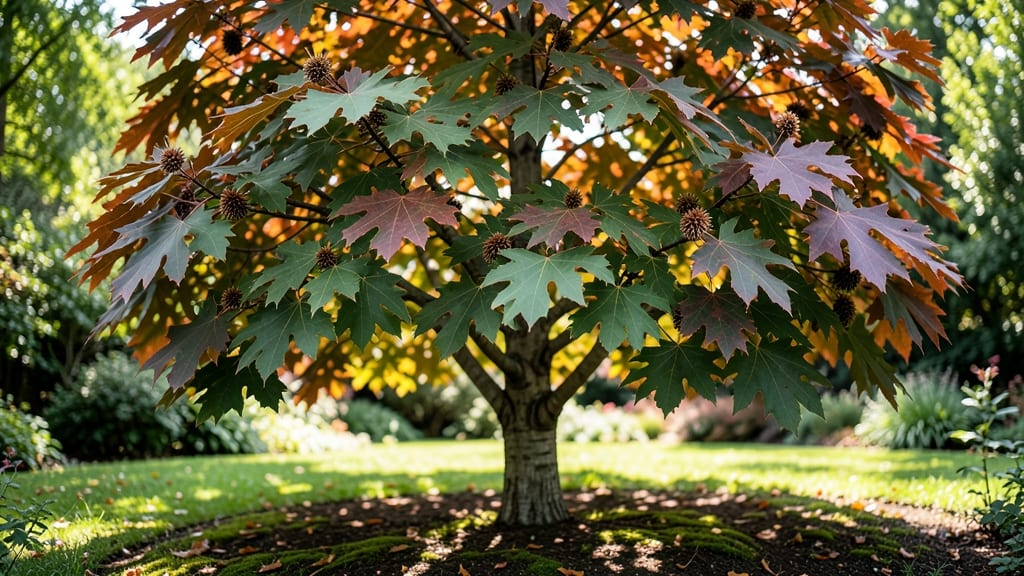
Sweet gum trees grow best in USDA zones 4 through 9, where they handle winter temperatures from -20°F to 30°F (-29°C to 1°C). Their strong cold tolerance and fast growth make them perfect for most U.S. climates, provided they get proper drainage and sunlight.
Sweet gums are nature's tough customers, thanks to their thick bark and deep root systems that shield them from freezing winds. 🌳 In colder zones like 4-5, they'll still thrive if planted in sheltered spots away from harsh northern exposure, while in warmer zones 8-9, they handle summer heat better than many competitors.
The key is mimicking their native southeastern U.S. conditions—moist but well-drained soil and full sun exposure—whether you're in Minnesota or Georgia.
What's fascinating is how these trees adapt their growth cycle: they'll delay leaf drop in mild winters, sometimes keeping their star-shaped foliage until late fall. This resilience means they're one of the few trees that can handle both city heat islands and mountain frosts without special care.
💡 In This Article
- Sweet Gum Tree Cold Hardiness and Temperature Tolerance
- Optimal Planting Zones for Sweet Gum Trees by Region
Sweet gum tree cold hardiness and temperature tolerance
The sweet gum tree's remarkable cold resilience stems from its evolutionary adaptations in the southeastern U.S., where it naturally withstands 15-20°F (-9°C to -7°C) dips regularly.
Its thick, corky bark (up to 1/2 inch thick on mature specimens) acts as natural insulation, preventing frost damage to the cambium layer during winter. This bark structure is similar to oak trees but more effective in younger specimens, allowing sweet gums to recover from -10°F (-23°C) without leaf damage.
Beneath the surface, their deep taproot system (extending 5-6 feet in ideal conditions) anchors the tree and draws moisture from lower soil layers, reducing winter desiccation. The roots also store carbohydrates during summer growth, which the tree metabolizes for energy when temperatures drop below 32°F (0°C).
This physiological adaptation explains why sweet gums often outperform other broadleaf trees in USDA zones 5-6, where they can survive -20°F (-29°C) for short durations.
Temperature extremes trigger fascinating growth responses. In zones 7-9, sweet gums may delay leaf drop until November or December if winters remain mild, extending their photosynthetic period. However, prolonged exposure to below 0°F (-18°C) can cause bud damage, resulting in sparse spring foliage.
The star-shaped leaves also contain tannins, which act as antifreeze compounds, preventing ice crystal formation in cellular structures during freeze-thaw cycles.
What most gardeners don't realize is how microclimates affect hardiness. In zone 4, sweet gums planted near buildings or south-facing slopes can survive 10°F colder than those in open fields due to radiant heat retention.
Conversely, in zone 9, afternoon shade becomes crucial to prevent heat stress, as these trees can suffer from leaf scorch above 95°F (35°C) sustained temperatures.
The tree's growth cycle also shifts with temperature. In northern zones (4-5), new growth typically begins in mid-May when soil temperatures reach 55°F (13°C), while in southern zones (8-9), they may leaf out as early as February.
This flexibility makes sweet gums uniquely adaptable to both short growing seasons and extended warm periods, though they'll always prioritize full sun exposure for optimal photosynthesis.
For practical application, consider that young sweet gum trees (under 5 years) are more vulnerable to cold damage than mature specimens. Mulching with 3-4 inches of organic material creates an insulating blanket that maintains 5-10°F warmer soil temperatures during winter.
This simple technique can extend their hardiness by 1-2 USDA zones in marginal climates.