
Pruning
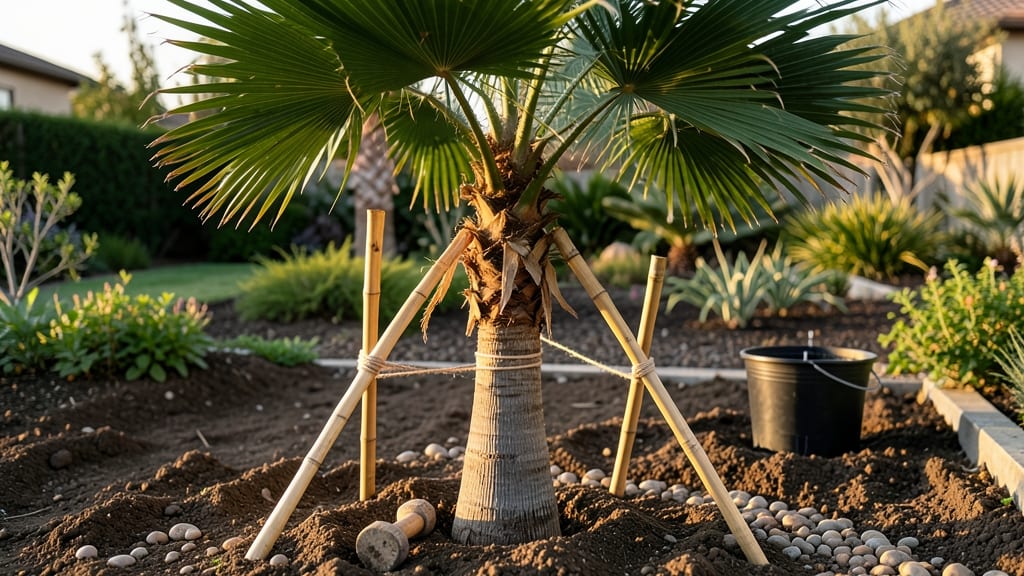
Young palm trees swaying in storms or toppling in wind taught me the hard way that staking isn't optional—it's survival training for your tropical investment. 🌴 The right stakes transform floppy seedlings into sturdy giants, but too-tight ties or wrong angles can strangle growth before it starts.
I've staked everything from delicate pygmy palms to towering Canary Island palms, and the difference between a thriving specimen and a leaning casualty comes down to timing, materials, and technique.
You'll need bamboo stakes (for flexibility) or wooden dowels (for rigidity), plus soft plant ties or wide fabric strips—never wire or anything that can cut into the trunk as it grows.
The best time to stake is right after planting, before the tree has a chance to lean, and in storm-prone areas where even a light breeze could push a young trunk sideways. My first mistake?
Waiting until the tree was already leaning—now I stake within 24 hours of planting to prevent that "oh no" moment.
When done right, staking gives you a straight, strong trunk that supports sky-high growth without the risk of wind damage. You'll see the tree push upward instead of bending, and the roots establish deeper because energy isn't wasted fighting instability.
The goal is to guide, not restrict—check ties every 4-6 weeks to loosen as the trunk thickens, and remove stakes completely once the tree can stand on its own (usually 2-4 years for most palms).
Troubleshooting is where most gardeners trip up: over-tightening causes girdling, while loose ties let the tree wiggle free. Angle matters too—stakes should lean slightly outward (like a tripod) to support the trunk without pinching.
For container palms, use smaller stakes and secure them to the pot's rim to avoid root disturbance. The key is balance: enough support to grow tall, but enough freedom to grow strong.
📚 In This Guide
- What you need
- Instructions
- Tips and common mistakes
- Wrapping up and next steps
What you need
- ● Stakes: 2–4 wooden or bamboo stakes (4–6 ft tall, 1–2 inches in diameter)
- ○ Optional: Metal stakes for extra durability (galvanized to prevent rust)
- ● Ties: 3–5 soft tree ties (fabric or rubber, ½–1 inch wide)
- ● OR plastic tree straps (adjustable for growth)
- ● Tools: Hand pruners or scissors (for trimming ties if needed)
- ● Mallet or hammer (for driving stakes into the ground)
- ● Measuring tape (to ensure proper stake placement)
- ○ Soil Additives (Optional but Helpful): Mulch or compost (to protect roots and improve soil stability)
- ● Garden stakes or markers (to label stakes if managing multiple trees)
- ● A young palm tree (typically under 5 years old or under 10 ft tall)
- ● Well-draining soil (palm trees hate soggy roots!)
- ● Sunny or partially shaded location (matching the tree’s natural habitat)
- ● Patience! Staking should stay in place for 6–12 months as the tree strengthens.
Step-by-step instructions for palm tree staking
Here’s how I stabilize young palms so they grow strong and straight—no more leaning disasters.
🪴 Step 1: Choose the Right Stakes and Position Them Strategically
Use 3-4 bamboo or fiberglass stakes (avoid metal—they conduct heat and can burn the trunk). For a 4-foot-tall palm, each stake should be 1/4 inch in diameter and 3-4 feet long. Drive them into the soil at a 45-degree angle, spaced evenly around the trunk—think of a tripod or quadrilateral formation for balance. The top of each stake should extend 6-12 inches above the palm’s current height.
I like to place stakes 6-8 inches from the trunk to give the palm room to sway slightly while still providing support. If the soil is hard, pre-drill small holes with a 1/2-inch auger to make insertion easier. The stakes should feel snug but not force the trunk into an unnatural position.
🌱 Step 2: Attach the Stakes with Flexible, Non-Restrictive Straps
Use wide, soft plant ties (never wire or narrow straps—they can cut into the trunk as it grows). Start by looping a tie around the trunk just below the crown shaft, then weave it around the stakes in an "X" or crisscross pattern. The goal is to create a loose, diamond-shaped cradle that holds the palm upright without constricting it. Tighten the tie just enough to eliminate wobble—you should be able to fit a finger between the tie and the trunk.
I adjust the ties every 2-4 weeks as the palm grows. If the trunk outgrows the stakes, add a new set 12-18 inches higher and transfer the ties gradually. Never let a tie sit in one place for more than 6 months, or it can leave permanent indentations.
☀️ Step 3: Monitor and Adjust for Wind and Growth
Check the staking system after every strong wind event and at least monthly. If the palm leans even slightly, loosen the ties and reposition the stakes to center the trunk. Over time, the palm will naturally grow straighter, but don’t rush to remove the stakes—wait until the trunk is at least 2 inches in diameter and the palm has 3-4 new fronds (a sign of structural strength).
Here’s the thing—I’ve seen palms "outgrow" their stakes too soon, leading to sudden snapping in storms. If the stakes are visibly bowing or the ties are digging into the trunk, it’s time to reinforce or replace them. A well-staked palm should sway no more than 5 degrees in a breeze—any more, and the stakes need adjusting.
⏰ Step 4: Remove Stakes at the Right Time
Once the palm’s trunk reaches 2-3 inches in diameter and the fronds are heavy but flexible (not brittle), it’s time to wean it from support. Start by loosening the ties completely and removing one stake at a time over 2-3 weeks. Leave the palm unstaked for 1-2 weeks to test its stability in wind. If it holds firm, you can remove the remaining stakes.
I’ve made the mistake of removing stakes too soon—palms that were once straight suddenly developed permanent bends. If your palm leans after staking removal, it’s not too late to restake temporarily and guide it upright over time. Patience here pays off in a strong, self-supporting tree.
Tips & tricks for perfect palm tree staking
These game-changing strategies will help you avoid common pitfalls and ensure your young palms grow straight and strong.
Stake Selection Wisdom: Bamboo stakes are my top recommendation because they're lightweight yet sturdy, and they won't conduct heat like metal. For palms taller than 4 feet, consider extending stakes to 5 feet for better support. The key is finding stakes that match your palm's height while allowing 6-12 inches of clearance above the trunk - this extra height gives you room to adjust as the palm grows. I've learned this the hard way after watching stakes become useless when palms outgrew them too quickly.
Tie Tightening Technique: When attaching your wide, soft plant ties in Step 2, think of them like a seatbelt - snug enough to hold you in place, but not so tight it restricts movement. The "finger test" is crucial: you should be able to slide one finger between the tie and the trunk. I've seen too many palms develop permanent grooves from ties that were too tight. Remember to adjust these ties every 2-4 weeks as your palm grows - this small maintenance step makes all the difference in preventing damage.
Wind Resistance Strategy: The 5-degree sway rule is your guide for proper staking. To test this, gently push the palm after installation - it should move slightly but return to vertical. For coastal areas with strong winds, consider adding an extra stake or using slightly longer ones. I've reinforced systems in hurricane-prone zones by adding diagonal bracing between stakes, creating a more rigid framework without restricting growth. This extra step has saved many palms during storm season.
Growth Monitoring Hack: Use a small flag or ribbon tied to the top of your palm as a visual growth marker. Each time you check the system (monthly or after wind events), you can easily see how much the palm has grown since your last inspection. This simple visual cue helps you determine when it's time to add new stakes or adjust the ties. I've found this method particularly helpful for tracking growth in palms that don't produce obvious height markers like rings.
Pro Tips for Palm Tree Staking
- These game-changing strategies will help you avoid common pitfalls and ensure your young palms grow straight and strong.
- Stake Selection Wisdom: Bamboo stakes are my top recommendation because they're lightweight yet sturdy, and they won't conduct heat like metal.
- Tie Tightening Technique: When attaching your wide, soft plant ties in Step 2, think of them like a seatbelt - snug enough to hold you in place, but not so tight it restricts movement.
Frequently asked questions
Got questions about palm tree staking?
You’re not alone—this process can feel tricky at first! Below, we’ve answered the most common queries to help you stake like a pro and keep your young palms thriving.
When is the best time to stake a palm tree?
The ideal time to stake a palm tree is immediately after planting or when you first notice signs of instability (e.g., leaning, wobbly trunk). For young palms (under 3–5 years old), staking within the first 6–12 months ensures strong root establishment. Avoid staking mature trees—unless they’re recovering from storm damage—since their roots are usually sturdy enough to support themselves.
How many stakes should I use for a palm tree?
For most young palms, 2–3 stakes (angled at 45°) work best. Place them evenly spaced around the trunk, about 12–18 inches from the base. Larger or top-heavy palms (like coconut or royal palms) may need 3–4 stakes for extra support. Use flexible materials (like bamboo or soft plastic) to avoid damaging the trunk as it grows.
How long should a palm tree stay staked?
Typically, 6–12 months is the sweet spot—long enough for roots to anchor but short enough to avoid girdling. Check monthly: If the trunk feels too snug against the stakes, loosen the ties. Once the palm wobbles less than 1 inch when pushed, it’s time to remove stakes gradually (over 2–3 weeks) to prevent shock.
What if my palm tree is already leaning? Can staking fix it?
Staking can help stabilize a leaning palm, but it won’t reverse the lean permanently. First, dig a deeper hole on the shallow side to encourage roots to grow downward. Then, stake on the opposite side of the lean to gently guide it upright. For severe leans (over 30°), consult an arborist—some palms may need cabling or bracing instead.
Are there alternatives to traditional staking?
Yes! If you’re avoiding stakes, try these options:
- Root ball support: Bury a wide, shallow trench around the base to encourage outward root growth (works best for loose, sandy soil).
- Guylines: Use single, angled cables (like those for power poles) anchored to the ground for tall palms in windy areas.
- Mulch mounds: Pile organic mulch (like wood chips) in a cone around the trunk to add weight and stability.
Just remember: Stakes are the most reliable for young palms, but these methods can supplement support in specific cases.
Why is my palm tree’s trunk getting damaged from staking?
Trunk damage usually happens when stakes or ties are too tight or made of hard, rigid materials (like metal or wire). Always use soft, breathable ties (e.g., tree straps, burlap, or rubber tubing) and check them monthly. If you see grooves or bruising, loosen the ties immediately and switch to wider, gentler supports. Pro tip: Pad stakes with rubber or foam to prevent friction.
Wrapping up and next steps
Staking your young palm trees isn’t just about support—it’s about giving them the confidence to grow tall and strong! 🌴 By following the right techniques, you’ll ensure their roots develop properly while protecting them from wind and storms.
Whether you’re a newbie or a seasoned gardener, every little effort makes a big difference in their long-term health.
Ready to take the next step? Start by inspecting your palm trees weekly—adjust stakes as needed and monitor their progress. With patience and care, your palms will thrive, reaching for the sky like the tropical giants they’re meant to be! 🌟