
Pruning
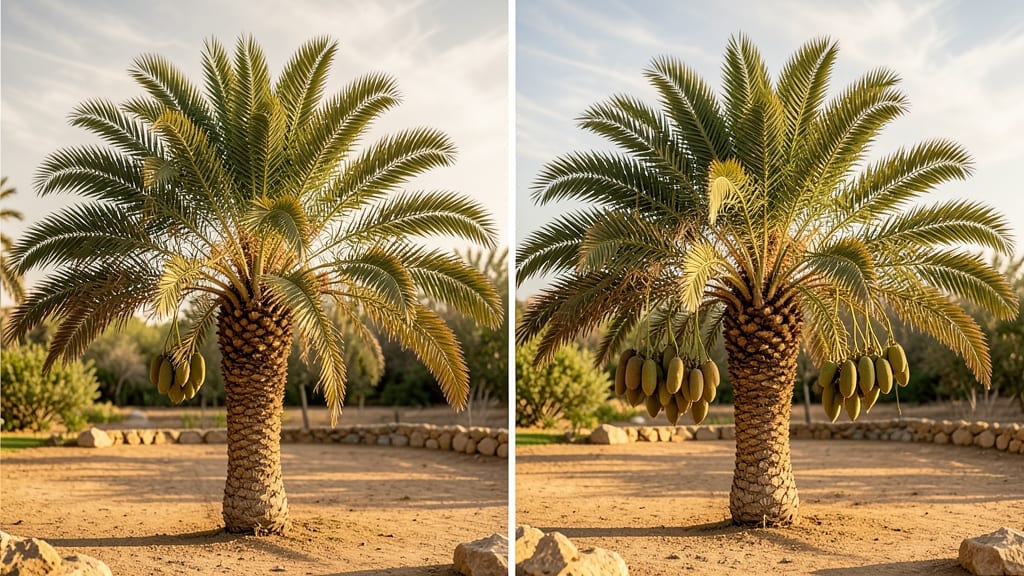
Palm trees and date trees aren't the same: while date palms (genus Phoenix) are specialized fruit-bearing palms, 'palm tree' encompasses over 2,600 species in the Arecaceae family, including coconut, oil, and ornamental varieties with distinct growth patterns and uses.
Date palms belong to the Phoenix genus and produce those familiar sweet, edible fruits we call dates, while most "palm trees" serve ornamental or industrial purposes. 🌵 The confusion comes from their similar frond shapes, but date palms thrive in arid climates and produce fruit clusters, whereas species like coconut palms or royal palms grow in tropical zones and focus on nuts or foliage.
Even their trunks differ—date palms develop a swollen base for water storage, while others maintain slender, smooth stems.
What really sets them apart is their purpose: date palms are cultivated for food, while other palms might be prized for their oil, timber, or landscape value. For example, a coconut palm gives you coconuts and shade, while a Mediterranean fan palm adds aesthetic appeal without edible rewards.
Understanding these differences helps gardeners choose the right palm for their climate and needs.
💡 In This Article
- Botanical Differences Between Date Palms and Other Palm Species
- Growing and Using Date Palms vs. Common Ornamental Palms
Botanical differences between date palms and other palm species
The first key distinction lies in their scientific classification. Date palms belong to the Phoenix genus within the Arecaceae family, while "palm tree" is a broad term covering over 2,600 species across 186 genera.
For example, coconut palms (Cocos nucifera) and oil palms (Elaeis guineensis) belong to entirely different genera but share the same family. This taxonomic separation explains why date palms produce sweet, fleshy fruits while coconut palms yield fibrous husks and edible kernels.
Physically, their growth patterns reveal striking differences. Date palms develop a distinctive swollen trunk base (up to 3 feet in diameter) that stores water and nutrients, allowing them to thrive in arid climates with minimal rainfall (10-20 inches annually).
In contrast, ornamental palms like the Mediterranean fan palm (Chamaerops humilis) have slender trunks and prefer humid, coastal environments. Even their fronds differ: date palms produce arching, feather-like fronds that grow in clusters, while species like the palmetto have fan-shaped leaves.
Ecologically, their roles vary dramatically. Date palms are pollinated by wind and produce fruit that relies on birds and mammals for seed dispersal, while coconut palms use buoyant seeds to spread across ocean currents. This adaptation explains why date palms dominate desert oases, whereas coconut palms flourish near shorelines.
The fruit itself tells the story: a single date palm yields 100-200 dates per season, while a coconut palm produces 1-2 coconuts per year but in much larger quantities per tree.
What's fascinating is how their root systems reflect these adaptations. Date palms develop deep taproots (up to 10 feet) to access groundwater, while ornamental palms like the Kentia palm have shallow, fibrous roots suited for potted environments.
These structural differences aren't just academic—they determine where each palm can grow and how they interact with their environment. For instance, a date palm's robust root system makes it drought-resistant, while a Christmas palm (Adonidia merrillii) thrives in tropical rainforests with year-round moisture.
Consider the visual contrast: a mature date palm stands 65-100 feet tall with a 12-inch-thick trunk, while a pygmy date palm (Phoenix roebelenii) maxes out at 10 feet with a 2-inch trunk.
This size variation highlights how even within the same genus, species adapt to different niches. The pygmy date palm, for example, evolved for shaded, indoor environments with high humidity, while its desert-dwelling cousins require full sun and well-draining soil.
Finally, their reproductive strategies reveal another layer of distinction. Date palms are dioecious, meaning male and female flowers grow on separate trees—a trait that requires careful cultivation for fruit production. In contrast, many ornamental palms are monoecious, producing both male and female flowers on the same plant.
This biological difference affects how each palm is cultivated, harvested, and even propagated. 🌵