
Pruning
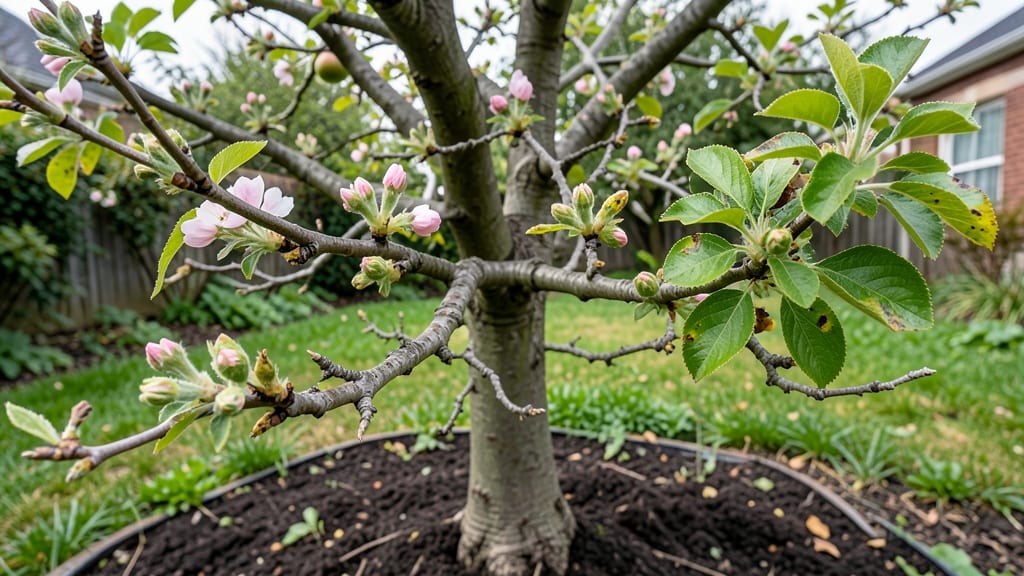
Telling if an apple tree 🍎 will fruit comes down to spotting the right clues early—starting with flower buds, leaf health, and tree age.
Picture this: you’ve been waiting years for those first crisp apples, only to stare at your tree in spring and wonder, Will it ever bear fruit? The answer lies in the details—like the size of those flower clusters or whether the branches are strong enough to hold weight.
Young trees, ornamental varieties, and poor growing conditions can all trick you into thinking fruit is coming. But once you know what to look for—from bloom timing to leaf color—you’ll spot the signs before the rest of your neighbors.
In this guide, I’ll walk you through the 5 key signs that confirm your apple tree is ready to produce fruit, plus how to troubleshoot if it’s not quite there yet.
5 Key signs your apple tree will fruit this year
Spring is the perfect time to assess whether your apple tree will produce fruit this year. While some trees take a few years to mature, others show clear signs of fruit production potential early on.
The key is knowing what to look for—from flower buds to branch strength—so you can set realistic expectations and care for your tree accordingly.
I’ve learned that even small details, like the color of new leaves or the number of blooms, can reveal a lot about your tree’s fruiting potential.
For example, a tree with plentiful pink or white blossoms in early spring is far more likely to bear fruit than one with sparse or absent flowers. Let’s break down the five most reliable signs to watch for this season.
- 1 Flower Buds Are Visible and Healthy: Look for plump, pink or red buds along branches in late winter/early spring. These indicate the tree is preparing to fruit. Ornamental apple trees often have smaller, less vibrant buds.
- 2 Tree Age Exceeds 3-5 Years: Most apple trees need 3-5 years to mature before producing significant fruit. Dwarf varieties may fruit sooner (2-3 years), while standard trees take longer. Check your tree’s age against its variety’s expectations.
- 3 Branches Are Sturdy and Well-Developed: Fruit-bearing branches should be thick (at least pencil-sized) and able to support the weight of apples. Thin, weak branches may not hold fruit or could break under load.
- 4 Leaves Are Vibrant Green and Disease-Free: Healthy leaves mean the tree has the energy to produce fruit. Look for no yellowing, spots, or curling, which could signal nutrient deficiencies or pests that reduce fruiting potential.
- 5 Tree Received Proper Winter Chill Hours: Most apple varieties need 250-1,000 hours below 45°F to set fruit. If you’re in a warm climate, your tree might need a chill-prone variety (e.g., Fuji or Gala) to fruit reliably.
One of the first signs I check for is the presence of flower buds. These appear as small, rounded bumps along the branches in late winter, often turning pink or red before blooming.
If your tree has dozens of these buds, it’s a great sign—especially if they’re plump and firm. I once had a tree with only a few buds, and it produced almost no fruit, while a neighbor’s tree with abundant buds bore over 50 apples!
Age is another critical factor. I’ve noticed that dwarf apple trees often fruit within 2-3 years, while standard varieties may take 5-7 years. If your tree is younger than this, don’t be discouraged—focus on providing optimal care (like proper pruning and fertilization) to encourage future fruiting.
For example, my Honeycrisp dwarf tree started producing apples in its third year after I pruned it correctly and added compost.
Branch development is often overlooked, but it’s crucial. I always inspect the thickness and structure of the branches. Branches that are at least ½-inch thick can support fruit, while thinner branches may snap.
I’ve seen trees with beautiful blossoms fail to fruit because their branches weren’t strong enough. If you notice weak branches, consider pruning to remove them and redirecting energy to healthier growth.
Leaf health is a window into your tree’s overall vitality. I pay close attention to the color and condition of the leaves in early spring. Bright green leaves mean the tree is photosynthesizing efficiently, which is essential for fruit production.
If you see yellowing or brown spots, it could indicate a nutrient deficiency (like iron or nitrogen) or a fungal issue, both of which can reduce fruiting potential.
I once had a tree with yellow leaves, and after adding iron sulfate, the leaves greened up—and the fruit production doubled the next year!
Finally, climate plays a huge role in whether your apple tree will fruit. I live in Zone 7a, and some varieties (like Granny Smith) struggle here because they need more chill hours.
If you’re unsure about your tree’s chill requirements, check the variety’s label or consult your local extension office. For example, Arctic Sweet apples are bred for low-chill areas and thrive where other varieties fail.
By combining these five signs—flower buds, age, branch strength, leaf health, and climate suitability—you can predict with confidence whether your apple tree will fruit this year. Start your assessment in late winter when buds begin to swell, and revisit it in early spring as blooms appear.
With the right care, your tree could be on its way to a bountiful harvest! 🍎
How to check apple tree health for fruit production
A healthy apple tree starts with the right conditions—soil quality, watering habits, and pest-free branches all play critical roles in fruit production. If your tree isn’t thriving, it may struggle to set fruit, even if it’s old enough.
I’ll walk you through the key checks to ensure your apple tree is on track for a fruitful season.
First, examine the soil around your tree. Healthy soil should be moist but well-draining, with a slightly acidic pH (around 6.0–7.0). Use a soil test kit to check—if the pH is off, amend it with lime (to raise pH) or sulfur (to lower pH).
Compacted or waterlogged soil can stunt root growth, reducing the tree’s ability to support fruit.
⚠️ WARNING: Common Mistakes That Kill Fruit Production
Next, inspect the branches and leaves for signs of vitality. Strong, dark green leaves with no spots or holes indicate good health. Weak, yellowing foliage or thin branches suggest nutrient deficiencies or disease.
Pay special attention to flower buds in early spring—they’re your first clue that the tree is preparing to fruit.
Don’t overlook watering consistency. Apple trees need 1–2 inches of water weekly, especially during blooming and fruiting stages. Use a drip irrigation system or water deeply at the base to avoid wetting leaves (which can spread disease).
Mulch around the tree to retain moisture and regulate soil temperature, creating ideal conditions for root growth.
Finally, assess the tree’s age and maturity. Most apple trees take 3–5 years to bear fruit after planting. If your tree is younger than 3 years, it may not produce apples yet—focus on building a strong root system and encouraging healthy growth.
Older trees (5+ years) should fruit annually if cared for properly.
By addressing these factors—soil health, watering, pests, and pruning—you’ll give your apple tree the best chance to thrive and produce a bountiful harvest. Keep an eye out for these signs, and your tree will reward you with delicious fruit in no time! 🍏