
How To
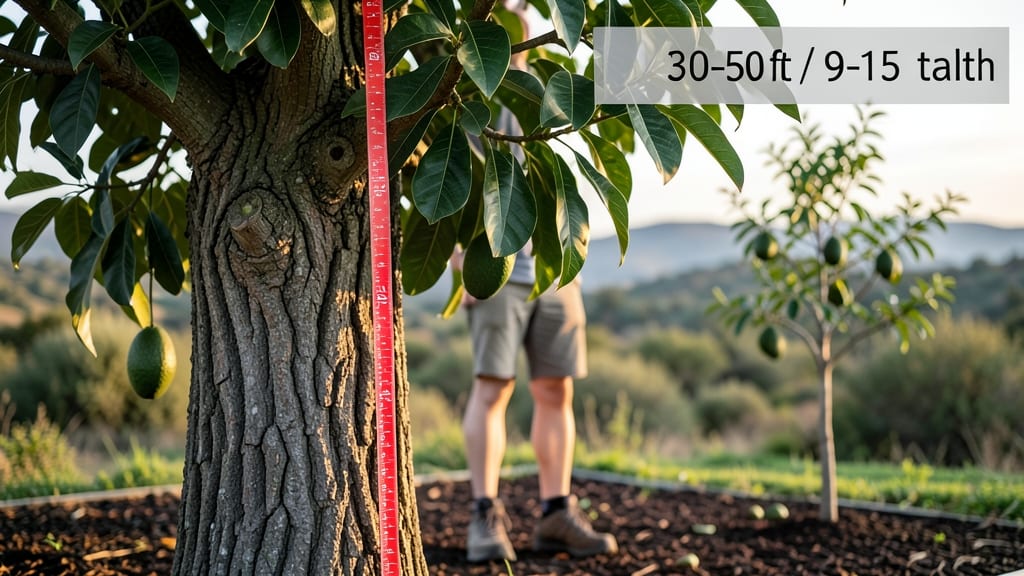
An avocado tree can grow up to 80 feet tall in ideal conditions, turning your backyard into a lush tropical escape with just the right care.
Imagine biting into a creamy, homegrown avocado—now picture the towering tree that makes it possible. But how tall can these tropical giants really grow? The answer depends on variety, climate, and care, with some reaching heights that will make your backyard feel like a jungle paradise.
Standard varieties like Hass and Fuerte can soar to 40-80 feet outdoors in frost-free zones like California or Florida, while dwarf grafted trees stay compact at 6-15 feet, perfect for containers or small spaces.
Even indoors, with the right light and pruning, you can keep your 🥑 avocado tree manageable while still enjoying fresh fruit.
Below, I’ll break down the height ranges by variety, how climate zones affect growth, and the pruning secrets to control size—so you can grow the perfect avocado tree, no matter your space or zone.


Avocado tree height limits by variety: from dwarf to giant
Avocado trees are tropical giants with heights ranging from 6 feet in dwarf varieties to 80 feet in wild-type trees. The size depends entirely on the variety and whether it’s grafted for compact growth.
Standard varieties like Hass and Fuerte can reach 40-50 feet outdoors, while some Mexican avocado types grow even taller in ideal conditions.
If you’re working with limited space, dwarf grafted trees are your best bet. These 6-15 foot varieties are perfect for containers or small backyards. Even in indoor settings, with proper light and care, you can keep your avocado tree manageable while still enjoying fresh fruit.
The key is choosing the right variety for your needs.
| Variety | Mature Height (Outdoor) | Growth Rate (First 5 Years) | Best For | Notes |
|---|---|---|---|---|
| Hass | 40-50 ft | 3-5 ft/year | Commercial orchards, large yards | Most popular; cold-hardy for avocados |
| Fuerte | 30-40 ft | 2-4 ft/year | Urban landscapes, medium spaces | Smooth skin; great for containers if pruned |
| Bacon | 50-60 ft | 4-6 ft/year | Tropical climates, large estates | Fast-growing; needs space |
| Mexicola (Dwarf Grafted) | 6-15 ft | 1-2 ft/year | Containers, patios, small yards | Grafted onto dwarf rootstock; slow-growing |
| Wurtz | 30-40 ft | 3-4 ft/year | Subtropical zones, coastal areas | Cold-sensitive; needs protection |
| Lamb Hass | 50-70 ft | 5-7 ft/year | Commercial orchards, frost-free zones | One of the tallest; needs pruning |
The Hass variety is the most common in home gardens, reaching 40-50 feet outdoors. It’s also one of the most cold-tolerant varieties, making it ideal for USDA Zones 9b-11.
If you’re in a cooler zone, consider Mexicola, a dwarf grafted type that stays under 15 feet and thrives in containers.
Fuerte avocados are another great choice for medium-sized yards, typically growing to 30-40 feet. Their smooth skin and sweet flavor make them popular, but they require full sun and well-draining soil to reach their full height potential. Pruning can help manage their size while encouraging a fuller canopy.
For those in tropical climates, varieties like Bacon and Lamb Hass can grow 50-70 feet tall. These fast-growing trees need plenty of space and consistent care to support their massive size.
In coastal areas, where humidity is high, growth rates can accelerate even further, with some trees adding 6-7 feet per year in their early years.
If you’re growing avocados indoors, dwarf varieties are essential. Even with grow lights, a standard Hass tree would quickly outgrow your home. Instead, choose a grafted dwarf like Mexicola and keep it pruned to 6-10 feet.
With the right container size and draining soil, you can enjoy avocados year-round, even in Zone 6 or colder.
Remember, pruning plays a huge role in managing height. Even standard varieties can be kept smaller with regular pruning and training. The goal is to shape the tree while maintaining a healthy canopy. Avoid over-pruning, though—this can stress the tree and reduce fruit production.
For maximum height, plant in well-draining soil with full sun exposure. In containers, use a large pot (20+ gallons) and fertilize regularly to support growth.
Whether you’re aiming for a towering jungle tree or a compact patio plant, the right variety and care will determine just how tall your avocado can grow.
Climate zones that determine avocado tree growth potential
Your avocado tree’s maximum height isn’t just about genetics—it’s heavily influenced by your local climate zone. In USDA Zones 9b-11, where frost is rare, avocados thrive and can reach 50-80 feet outdoors.
But in cooler zones, like Zone 8 or colder, growth slows dramatically, often requiring container culture to survive winters.
Tropical climates like Hawaii, Southern California, and Florida provide ideal conditions for rapid growth. Here, avocados grow 3-5 feet per year when young, with mature trees towering over 60 feet in just 15-20 years.
Meanwhile, subtropical microclimates—like coastal areas—offer milder winters, allowing trees to grow taller than inland zones with harsher freezes.
Cold sensitivity is the biggest growth limiter for avocado trees. Even a single 28°F freeze can kill young trees, while mature trees may survive brief dips to 20°F—but at the cost of stunted growth.
In California’s coastal regions, like San Diego, trees grow 20% taller than inland counterparts due to milder winters and consistent humidity.
Microclimates play a huge role in height potential. For example, Miami’s heat accelerates growth, while Los Angeles’ coastal breezes prevent fungal issues that could slow a tree down. Inland areas, like Arizona’s Phoenix, see faster vertical growth but may struggle with water stress during summer months.
If you’re in a cooler zone, choose dwarf varieties like ‘Mexicola’ or grafted trees to keep heights manageable (10-15 feet). Even then, container growing is often necessary to protect roots from frost.
In warmer zones, pruning isn’t just for aesthetics—it’s about directing energy upward for those sky-high avocados.
Remember: Soil drainage and wind exposure also affect height. Poor drainage in heavy clay soils can stunt roots, while strong winds may encourage leaning growth rather than upward expansion. For maximum height, pair the right climate zone with well-draining soil and full sun exposure.