
Blooming
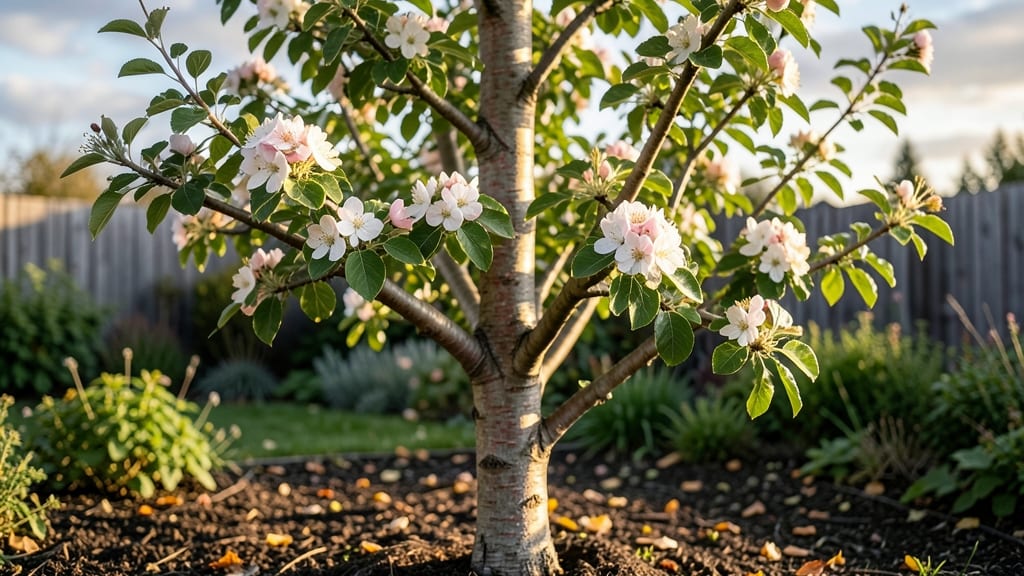
The Honeycrisp apple tree's fragrant spring blossoms signal the start of your harvest journey. 🌸 These delicate pink-and-white flowers transform your yard into a springtime spectacle while setting the stage for sweet, crisp fruit—but only if you nurture them right from day one.
Cold-hardy Honeycrisp thrives in zones 3-7, where late spring frosts won't wreck your blossoms. Plant in full sun with well-draining soil, and water deeply when flowers appear. The key to abundant blooms is winter pruning—open the canopy to let sunlight reach inner branches, and thin crowded growth to prevent disease.
Once those blossoms unfurl, protect them from pests like apple maggots and diseases like fire blight with neem oil sprays. Hand-pollinate if bees are scarce, and watch for tiny green fruit cups forming—each one holds your future Honeycrisp harvest.
After blooms fade, focus on soil health: mulch to retain moisture, fertilize lightly, and monitor for pests. With proper care, your tree will reward you with 2-3 years of reliable blossoms and fruit, turning spring's fleeting beauty into a summer bounty you'll savor.
📚 In This Guide
- What you need
- Instructions
- Tips and common mistakes
- Wrapping up and next steps
What you need
- ● Honeycrisp apple tree: 1–2 bare-root or container-grown saplings (3–5 years old for best blooms)
- ● Certified disease-resistant variety (check labels for fire blight or apple scab resistance)
- ● Planting site: Full sun (6+ hours/day)
- ● Well-draining soil (pH 6.0–7.0)
- ● Space: 12–15 feet between trees (or 20+ feet for standard varieties)
- ● Soil amendments: Compost (5–10 gallons per tree)
- ● Organic matter (e.g., leaf mold or aged manure)
- ● Digging tools: Shovel or spade
- ● Garden fork (for loosening soil)
- ○ Planting supplies: Staking kit (optional, for young trees)
- ● Mulch (3–4 inches of wood chips or straw)
- ● Watering: Hose with soaker nozzle or drip irrigation
- ● Watering can (for container trees)
- ● Know your USDA hardiness zone (Honeycrisp thrives in Zones 3–8)
- ● Check local frost dates (plant after last frost, ideally in early spring)
- ● Cross-pollination partner (Honeycrisp needs another apple variety blooming at the same time, e.g., Zestar! or Gala)
- ● Tree guard (to protect from critters)
- ● Fertilizer (balanced 10-10-10 or compost tea)
- ● Pruning shears (for shaping after planting)
- ● Blossom spray (organic neem oil to deter pests during bloom season)
How to care for Honeycrisp apple tree blossoms
Watch your Honeycrisp tree burst into stunning spring blooms with these simple care steps.
🌱 Step 1: Prune for Airflow and Light Before Bud Break
Start in late winter, just before buds swell, to shape your tree. Remove any dead, crossing, or inward-growing branches first—these block airflow and invite disease. I always cut back to an outward-facing bud or branch collar, keeping the cut clean and angled away from the branch.
Thin out crowded branches to let sunlight reach the center. You'll see new growth emerge more evenly when the tree gets proper light. For a mature tree, aim to remove about 20-30% of the total branches—this encourages stronger blooms. Wear gloves; apple branches can be sharp!
☀️ Step 2: Provide Consistent Moisture During Bloom Season
Once buds open, water deeply once a week—more if your area experiences dry spells. The soil should feel moist 3-4 inches down when you check with your finger. Mulch around the base with 2-3 inches of organic mulch (like wood chips) to retain moisture and regulate soil temperature.
Here's the thing—Honeycrisp trees hate soggy roots. If rain is heavy, check for puddles or pooling water and improve drainage if needed. A soaker hose works best for even moisture without disturbing blooms.
💧 Step 3: Protect Blooms from Late Frost
Cover young blossoms with frost cloth or a lightweight sheet if a late frost is forecasted. Secure it loosely so air can circulate—trapped heat can actually damage buds. I've seen entire blossoms wilt overnight from sudden cold snaps. Remove covers during the day if temperatures rise above 40°F.
For extra protection, wrap the entire tree in burlap if your area gets hard freezes. This creates a microclimate that shields delicate buds. Watch your local weather forecast closely—spring can be unpredictable!
✂️ Step 4: Thin Fruit After Blooming to Improve Quality
When fruit sets (about 4-6 weeks after full bloom), thin clusters to leave 6-8 inches between apples. This ensures each remaining fruit gets enough nutrients and sunlight to grow large and sweet. Use pruning shears to cut the stem just above a bud or branch.
Don't skip this—overcrowded fruit leads to smaller, lower-quality Honeycrisp apples. You'll see the difference in flavor and size within just a few weeks. Thin in stages if needed; some trees produce more fruit than others.
🌿 Step 5: Fertilize for Next Year's Blooms
After harvest, apply a balanced fruit-tree fertilizer (like 10-10-10) in early fall. Spread it evenly over the root zone and water deeply to help it absorb. This gives your tree the nutrients it needs to produce vibrant blossoms next spring.
I also add 2-3 inches of compost around the base—this improves soil structure and provides slow-release nutrients. Avoid high-nitrogen fertilizers late in the season; they encourage new growth that won't harden off before winter.
Tips & tricks for perfect Honeycrisp apple tree blooms
Here's what nobody tells you about nurturing those stunning Honeycrisp blossoms—small details that make all the difference.
Pruning Precision: When you're removing those 20-30% of branches in Step 1, focus on creating an open center rather than just thinning randomly. Look for branches that grow inward or cross others—these are the real culprits blocking airflow. I learned this the hard way after seeing fungal spots appear on my tree's blossoms from poor circulation.
Mulch Magic: That 2-3 inches of organic mulch isn't just about moisture—it also regulates soil temperature. In hot climates, mulch keeps roots cooler, while in cold areas it adds insulation. Apply it in a donut shape around the trunk, keeping it 2-3 inches away from the bark to prevent rot.
Frost Protection Hacks: For Step 3, if you don't have frost cloth, old bedsheets or lightweight row covers work perfectly. The key is securing them loosely—tight covers trap heat and can actually damage buds. I've used cheap cotton sheets from the dollar store with great results. And remember, those 40°F mornings are the critical window—check your forecast night before!
Thinning Timing: The 4-6 week window for thinning fruit is actually flexible—start when apples are about the size of marbles. This gives you a few weeks to adjust based on how many fruit actually set. I've found that thinning in stages (every 2-3 weeks) prevents stress on the tree while still giving you control over final spacing.
Pro Tips for Honeycrisp Apple Tree Blossom
- Here's what nobody tells you about nurturing those stunning Honeycrisp blossoms—small details that make all the difference.
- Pruning Precision: When you're removing those 20-30% of branches in Step 1, focus on creating an open center rather than just thinning randomly.
- Mulch Magic: That 2-3 inches of organic mulch isn't just about moisture—it also regulates soil temperature.
Frequently asked questions
about Honeycrisp apple tree blossoms—because every gardener deserves clarity! Here are answers to the most common questions to help you grow the best blooms and fruit.When do Honeycrisp apple trees bloom?
Honeycrisp apple trees typically bloom in late April to early May, depending on your climate zone. In colder regions (Zones 3-5), expect blooms after the last frost, while warmer areas (Zones 6-7) may see earlier blossoms. Watch for bud swell—it’s your cue!
Are Honeycrisp blossoms frost-sensitive?
Yes! These fragrant blooms are highly frost-sensitive. A late spring frost (<32°F) can damage petals or young fruit. Use frost cloth or a sprinkler system to protect them. Timing is key—plant in a sheltered spot or choose early-blooming rootstocks for extra resilience.
How do I encourage more blossoms for bigger harvests?
Prune in late winter to open the canopy for sunlight, which boosts flowering. Avoid over-fertilizing with nitrogen—it promotes leafy growth over blooms. Instead, use a balanced 10-10-10 fertilizer in early spring. Thin fruitlets when they’re golf-ball sized to redirect energy to blossoms.
Do Honeycrisp trees need bees for fruit?
Honeycrisp apples are self-pollinating but bee-dependent. While they can produce fruit alone, bees dramatically increase yield. Plant near bee-friendly flowers (like clover or lavender) or introduce a bee house to attract pollinators. Even a single hive nearby helps!
Why aren’t my Honeycrisp blossoms opening?
Blossoms may fail to open due to cold stress, drought, or pesticide damage. Check for:
- Late frost: Protect buds with frost cloth.
- Dry soil: Water deeply 1–2 weeks before blooming.
- Pests: Inspect for aphids or mites—use neem oil if needed.
Can I grow Honeycrisp from seed?
Not reliably! Honeycrisp is a hybrid variety, and seeds produce wild, unpredictable apples. For true Honeycrisp fruit, buy a grafted tree from a nursery. If you’re patient, you can grow a seedling apple tree for fun—but don’t expect Honeycrisp traits!
Wrapping up and next steps
Watching your Honeycrisp apple tree blossom in full, fragrant glory is a rewarding experience—one that blends beauty, resilience, and the promise of sweet harvests. Whether you’re a seasoned gardener or just starting, this cold-hardy variety proves that stunning blooms and delicious fruit can go hand in hand. 🍎✨
Now that you’re equipped with the how-tos and answers to common questions, it’s time to roll up your sleeves! Plant your tree, nurture its growth, and enjoy the magic of spring blooms—soon, you’ll be savoring the crisp, juicy Honeycrisp apples you’ve grown yourself. Happy gardening!