
Diseases
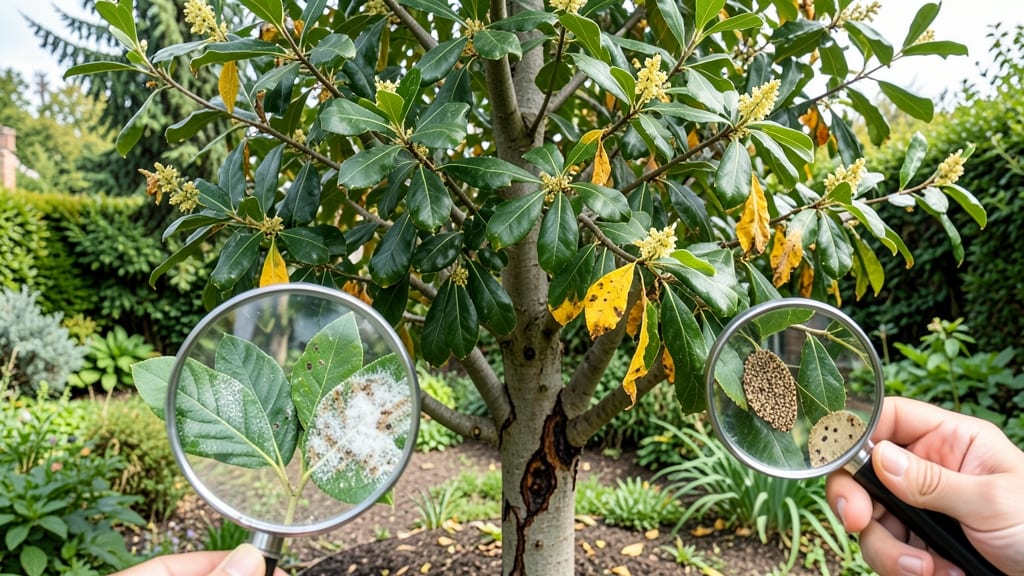
Bay laurel trees turn yellow and drop leaves when fungal diseases strike—don’t panic, there’s a fix. 🌿 I’ve nursed back more than my share of struggling laurels, and the key is catching problems early with simple organic methods that actually work.
The worst offenders—like leaf spot and root rot—often start with just a few brown spots or wilting branches that most gardeners ignore until it’s too late.
Most issues begin with poor drainage or overwatering, which creates the perfect damp conditions for fungal spores to take hold. My first step is always checking the soil moisture—laurels hate soggy roots—and adjusting watering to keep the soil slightly dry between drinks.
A quick soil test (just stick your finger in!) tells you everything you need to know about whether you’re drowning your tree or not.
Once you spot the damage, organic copper fungicides or neem oil sprays can stop the spread in its tracks. I’ve seen trees bounce back completely within 4-6 weeks of consistent treatment, with new growth pushing out strong and healthy.
The secret? Treating at the first sign of trouble—not waiting for half the leaves to turn brown.
This works for both container-grown laurels and in-ground trees, and the same principles apply whether you’re dealing with leaf spot, powdery mildew, or even those pesky scale insects that love to hitch a ride. Early action keeps your tree thriving year after year.
Root Causes Of Trouble
Bay laurel trees (Laurus nobilis) are hardy but not invincible—when diseases strike, they’re often the result of preventable mistakes or environmental stress. Understanding the why behind these issues is the first step to fixing them.
Below, we break down the most common culprits, from microbial invaders to human habits that invite disaster.
Fungi thrive in damp, stagnant conditions, and bay laurels are particularly susceptible to root rot (Phytophthora spp.) and leaf spot (Cercospora or Septoria). Here’s why it happens:
- Waterlogged soil cuts off oxygen to roots, weakening defenses. Fungal spores—always present in soil—seize the opportunity to infect stressed roots. - Poor drainage (clay-heavy or compacted soil) traps moisture near the base, creating a fungal buffet.
Even well-drained soil can become problematic if overwatered. - High humidity (common in coastal or shaded areas) delays drying, giving fungi like Botrytis a foothold on leaves and stems.
Actionable fix: Amend soil with perlite or sand, elevate planting beds, and water deeply but infrequently (1–1.5 inches per week, less in winter).
Bay laurels are a buffet for pests like scale insects, aphids, and spider mites. These critters don’t just feed—they inject toxins and create wounds where bacteria or fungi can enter.
- Stressed trees (drought, nutrient deficiency, or poor pruning) produce sticky sap that attracts aphids, which then spread sooty mold (a black fungal growth).
- Scale insects secrete honeydew, a sugary film that smothers leaves, blocking sunlight and inviting powdery mildew (Erysiphe spp.).
- Spider mites thrive in dry, dusty conditions, weakening leaves and making them prone to bacterial leaf blight (Xanthomonas).
Actionable fix: Use neem oil (1 tsp/gallon water) or insecticidal soap for light infestations. Prune heavily infested branches and dispose of them far from the tree.
Bay laurels are Mediterranean natives—they love moderate climates but struggle when conditions swing extremes.
- Heat stress (especially in containers) causes leaf scorch (brown edges) as cells lose moisture faster than roots can replace it.
- Cold damage (below 15°F) freezes leaf tissue, leading to blackened, mushy leaves—a perfect entry point for bacterial canker.
- Sunburn (common on young trees or those moved suddenly) manifests as white or yellow patches on leaves, weakening the tree’s immune response.
Actionable fix:
- Mulch (3–4 inches of wood chips) to regulate soil temp.
- Avoid late pruning in fall/winter—new growth is more vulnerable to frost.
- Acclimate container-grown trees gradually to outdoor conditions.
Bay laurels need balanced nutrition, but common gardening mistakes throw them off-kilter.
- Over-fertilizing with nitrogen (e.g., lawn fertilizer) promotes soft, sappy growth—a magnet for pests and fungal infections.
- Deficiencies in micronutrients (iron, manganese, zinc) cause yellowing between leaf veins (chlorosis), weakening the tree’s ability to fight disease.
- Salt buildup (from tap water or coastal spray) disrupts root function, making trees susceptible to root rot.
Actionable fix:
- Test soil pH (ideal: 6.0–7.0) and amend with compost or sulfur if needed.
- Use a balanced organic fertilizer (e.g., 5-5-5) in early spring.
- Flush soil annually with rainwater to reduce salt buildup.
Even well-meaning gardeners can trigger diseases with poor practices.
- Improper pruning (cutting too close to the trunk or during wet seasons) creates open wounds where bacterial canker (Pseudomonas syringae) can infect.
- Over-pruning removes protective foliage, exposing the tree to sunburn or frost damage.
- Planting too close to structures reduces airflow, trapping humidity and encouraging powdery mildew.
Actionable fix:
- Prune in late winter/early spring with sterilized tools (70% isopropyl alcohol).
- Make cuts at a 45° angle, ¼ inch above a bud.
- Space trees 10–15 feet apart for airflow.
Some diseases are opportunistic—they wait for the right conditions to strike.
- Heavy rain followed by heat creates the perfect storm for anthracnose (a fungal leaf spot).
- Stagnant water (from poor drainage or low-lying areas) breeds Phytophthora, a deadly root rot.
- Coastal environments with salty mist can cause leaf tip burn, weakening the tree’s defenses.
Actionable fix:
- Raise beds in soggy areas or install French drains.
- Choose disease-resistant cultivars (e.g., ‘Angustifolia’ for compact growth).
- Mulch heavily in coastal areas to protect roots from salt spray.
Quick fixes for ailing bay laurel
Reviving your bay laurel tree starts with identifying the root cause and acting fast. Below are practical, organic solutions tailored to common diseases, along with prevention tips to keep your tree thriving.
Whether it’s fungal infections, bacterial rot, or pest damage, these steps will help you nurse your tree back to health—without harsh chemicals.
🔧 Fix It:
- Prune Affected Areas 🪓
- Use sterilized pruners (wipe with rubbing alcohol) to remove yellowed, spotted, or powdery leaves.
- Cut back to healthy green tissue—never leave stubs.
- Dispose of clippings in the trash (not compost) to prevent reinfection.
- Apply Organic Fungicides 🛡️ - Baking Soda Spray: Mix 1 tsp baking soda + 1 tbsp vegetable oil + 1 tsp mild soap per quart of water.
Spray early morning or evening (avoid direct sun). - Neem Oil Solution: Combine 1 tbsp neem oil + 1 tsp castile soap per gallon of water.
Spray every 7–10 days until symptoms fade. - Copper Fungicide (organic): Use copper sulfate or copper fungicide sprays (follow label rates) for severe cases like root rot.
- Improve Airflow & Drainage 🌬️
- Thin out dense foliage to reduce humidity near leaves.
- Aerate compacted soil with a fork or add organic mulch (wood chips, straw) to keep roots dry.
- Repot if needed: If root rot is confirmed, trim mushy roots, treat with hydrogen peroxide (3%), and repot in fresh, well-draining soil.
💡 Prevention Tips:
- Water at the base (avoid wetting leaves) and early in the day so foliage dries quickly.
- Space trees 3–5 feet apart to prevent overcrowding.
- Rotate fungicide types to avoid resistance (e.g., alternate neem oil and baking soda).
🔧 Fix It:
- Remove Infected Parts Immediately ⚠️
- Cut out blackened, oozing, or wilting branches with sterilized tools.
- Do not compost—bag and discard to stop spread.
- Disinfect Tools & Surfaces 🧼
- Wipe pruners with 70% isopropyl alcohol or bleach water (1:10 ratio) between cuts.
- Clean pots or soil surfaces with vinegar or hydrogen peroxide if bacterial spores are suspected.
- Boost Tree Immunity 💪
- Foliar feed with seaweed extract (rich in nutrients and immune-boosting compounds).
- Apply compost tea (brewed from well-aged compost) to strengthen roots and foliage.
- Avoid overhead watering—bacteria thrive in wet conditions.
💡 Prevention Tips:
- Sterilize tools before and after pruning.
- Choose disease-resistant varieties (e.g., ‘Angustifolia’ bay laurels tolerate humidity better).
- Avoid wounding bark—use sharp tools to prevent bacterial entry points.
🔧 Fix It:
- Blast Off Pests with Water 💦
- Hose down leaves with a strong spray (early morning) to dislodge mites and aphids.
- Repeat every 2–3 days for severe infestations.
- Introduce Beneficial Insects 🐞
- Ladybugs, lacewings, or predatory mites (available at garden centers) devour pests naturally.
- Plant companion herbs like dill, fennel, or marigolds nearby to attract them.
- Use Soap or Oil Sprays 🧴
- Insecticidal soap: Mix 2.5 tbsp castile soap per gallon of water. Spray directly on pests (avoid hot sun).
- Diatomaceous earth (DE): Sprinkle food-grade DE around the base and on leaves. Reapply after rain.
💡 Prevention Tips:
- Inspect new plants before bringing them home (quarantine for 2 weeks).
- Encourage biodiversity—birds and bees help control pest populations.
- Avoid synthetic pesticides—they kill beneficial insects too.
- Fertilize Lightly: Use balanced organic fertilizer (5-5-5 or compost) in spring.
- Mulch Properly: Apply 2–3 inches of mulch (avoid piling against the trunk).
- Monitor Regularly: Check undersides of leaves and new growth weekly for early signs.
✨ Pro Tip: If your bay laurel is severely stressed, consider root pruning (trimming roots in a circle around the base) to encourage new growth—just do this in early spring!
By acting quickly and using these organic, plant-friendly fixes, your bay laurel can bounce back stronger than ever. 🌿💚
Frequently asked questions
Why are my bay laurel leaves turning yellow but staying attached?
Yellowing leaves on bay laurels often signal nutrient deficiencies (like iron or nitrogen) or overwatering. Check the soil—if it’s soggy, reduce watering to once every 10-14 days. For deficiencies, apply a balanced organic fertilizer (5-5-5) in spring and test soil pH (aim for 6.0-7.0). Yellowing without leaf drop is rarely a disease—it’s usually environmental.
Can I save a bay laurel with blackened, mushy stems?
Blackened, mushy stems indicate bacterial canker or root rot, which spreads fast. Prune infected stems 6 inches below the damage with sterilized tools, then treat with copper fungicide. For root rot, trim mushy roots, repot in fresh soil, and avoid overhead watering. Severe cases may require removal—don’t compost infected plant material!
How often should I spray neem oil on my bay laurel?
Neem oil works best as a preventive spray—apply every 7-10 days during active growth (spring-fall). For existing fungal issues, spray twice weekly for 2 weeks, then switch to monthly maintenance. Mix 1 tbsp neem oil + 1 tsp soap per gallon of water and spray evening or cloudy days to avoid leaf burn.
Are bay laurels prone to winter damage?
Yes! Bay laurels struggle in below 15°F temps. Protect young trees with burlap wraps or mulch heavily (4 inches). Prune in late winter to avoid frost damage to fresh cuts. If leaves turn black after cold snaps, it’s likely freeze damage—remove affected branches and wait for new growth in spring.
What’s the difference between powdery mildew and sooty mold?
Powdery mildew appears as white, dusty patches on leaves (fungal), while sooty mold looks black and sticky (from aphid honeydew). Treat powdery mildew with baking soda spray or neem oil. For sooty mold, first control aphids with insecticidal soap, then clean leaves with a damp cloth. Both reduce photosynthesis—act fast!