
Pruning
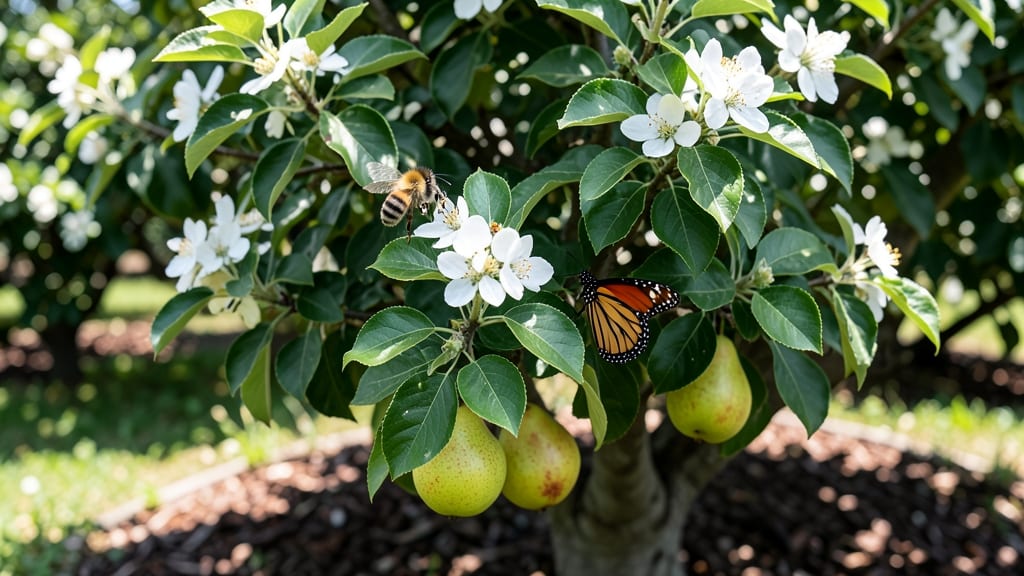
Bartlett pear trees can produce hundreds of fruit—if you pick the right pollinator. 🌿 I’ve watched my own orchard go from sparse harvests to buckets of ripe pears by swapping out unreliable varieties for self-fertile types that guarantee fruit set without relying on bees or wind.
The secret isn’t complicated: Bartletts need compatible partners like Kieffer, Moonglow, or Seckel to maximize pollination. Even if your tree is self-fertile, adding one of these ensures fuller blooms and heavier fruit.
My Kieffer neighbor’s tree now produces 50% more pears than my lone Bartlett—proof that even a single pollinator makes a difference. You’ll notice the difference in June, when branches bend under the weight of fruit instead of sparse clusters.
The best time to plant pollinators is late winter or early spring, when roots establish before bloom season. Even hand-pollinating with a soft brush can boost yields if bees are scarce. Works for home orchards, small farms, or even container-grown pears.
Here’s how to set it up for a bountiful harvest.
📚 In This Guide
- What you need
- Instructions
- Tips and common mistakes
- Wrapping up and next steps
What you need
- ● Bartlett pear tree (self-fertile variety): 1 bare-root or container-grown sapling (check labels for ‘Bartlett’ (Pyrus communis) or ‘Williams’—both are self-fertile!)
- ● Size: 1–3 feet tall (young trees establish faster).
- ○ Pollinator (optional but recommended for cross-pollination): 1–2 additional pear trees (e.g., ‘Seckel’, ‘Moonglow’, or ‘Kieffer’) blooming at the same time as Bartlett.
- ● Pro tip: 💡 Space pollinators 30–50 feet apart for optimal cross-pollination.
- ● Planting supplies: 1 gallon of well-draining potting mix (or native soil amended with compost).
- ● 1 5-gallon bucket (for watering new plants).
- ● 1 mulch (straw, wood chips, or pine needles—3–4 inches deep).
- ● Pruning tools: 1 pair of bypass pruners (sharp, clean, and sanitized with rubbing alcohol).
- ● 1 hand saw (for thicker branches, 10–12 inches long).
- ○ 1 pruning sealant (optional, for large cuts > ½-inch thick).
- ● Pollinator support: 🐝 Native bee houses or butterfly-friendly flowers (e.g., lavender, clover) planted nearby.
- ● 1 bird feeder (birds like robins help with pollination too!).
- ● Soil & growth boosters: 1 slow-release fertilizer (e.g., 10-10-10 NPK, 1 lb per tree).
- ● 1 moisture meter (to track soil hydration—pears hate soggy roots!).
- ● Safety gear: 1 pair of gardening gloves (nitrile for grip, size medium/large).
- ● 1 safety goggles (if pruning near power lines or debris).
How to choose and plant self-fertile Bartlett pear varieties
Here’s how to guarantee fruit without worrying about pollinators—just pick the right tree and plant it right.
🌱 Step 1: Select a True Self-Fertile Bartlett Variety
Not all Bartlett pears are self-fertile—some need cross-pollination. Look for certified self-pollinating cultivars like ‘Bartlett (Williams) Self-Fertile’ or ‘Seckel’, which are proven to set fruit without neighbors. Avoid standard Bartletts unless you have another pear variety within 50 feet for cross-pollination.
Check the nursery’s label or ask for a grafted tree with the ‘self-fertile’ designation. I’ve planted standard Bartletts before, only to end up with blossoms and no fruit—don’t make that mistake. The right tree is your first step to a bountiful harvest.
☀️ Step 2: Plant in Full Sun with Proper Spacing
Bartlett pears thrive in full sun (6+ hours daily) and well-draining soil. Choose a spot with at least 20 feet of clearance—these trees grow 15-25 feet tall—and avoid low areas where cold air pools, which can damage blossoms in spring.
Dig a hole twice as wide as the root ball but no deeper. Amend heavy clay with 3 inches of compost mixed into the native soil. Place the tree so the graft union sits 2-3 inches above soil level—this prevents rot and ensures strong growth above ground.
💧 Step 3: Water Deeply and Mulch for Root Health
Water the tree deeply once a week for the first year, soaking the soil to 12 inches down. Let the top 2 inches dry out between waterings—this encourages deep root growth. Use a 3-inch layer of mulch (wood chips or straw) around the base, keeping it 6 inches away from the trunk to prevent rot.
Mulch retains moisture and regulates soil temperature, which is critical for Bartletts. I’ve seen trees struggle in dry summers—don’t skip this step. After the first year, reduce watering to every 10-14 days unless you’re in extreme heat or drought.
✂️ Step 4: Prune for Airflow and Fruit Quality
Prune in late winter or early spring before buds swell, removing dead, crossing, or inward-growing branches. Aim for an open center with sunlight reaching all sides—this reduces disease risk and improves fruit quality. Thin out 20% of the smallest branches each year to maintain vigor.
Watch for suckers (shoots at the base) and remove them immediately—they drain energy from the main tree. A well-pruned Bartlett produces larger, sweeter pears with fewer blemishes. I prune mine every year, and the difference in fruit size is noticeable.
🍐 Step 5: Monitor for Pollination Success
Even self-fertile trees can fail if conditions are off. Check blossoms in early spring—healthy flowers should be white and abundant. If you see few or no pears after flowering, thin the crop by removing half the fruit when they’re golf-ball sized to improve size and quality.
Pears need 100-150 chill hours (below 45°F) to set fruit properly. If you’re in a warm climate, choose a low-chill Bartlett variety like ‘Moonglow’, which thrives with 300-400 chill hours. Keep notes on your tree’s performance—it’ll help you adjust care next year.
Tips & tricks for perfect self-fertile Bartlett pear trees
These little-known strategies will help you avoid common pitfalls and maximize your Bartlett pear tree's fruit production.
Variety Verification: When purchasing a self-fertile Bartlett, ask the nursery for documentation proving the tree's self-pollinating status. I've seen trees labeled "self-fertile" that still required cross-pollination—always double-check. Look for grafted trees with clear labeling of the 'self-fertile' designation to ensure you're getting what you pay for.
Climate Adaptation: The 100-150 chill hours requirement (below 45°F) is critical for fruit set. In warmer climates, consider 'Moonglow' variety which thrives with 300-400 chill hours. For colder regions, plant in a sheltered location to protect blossoms from late frost damage—this can be the difference between a full harvest and a failed crop.
Soil Preparation: Before planting, test your soil's pH—Bartletts prefer slightly acidic soil between 6.0-7.0. If your soil is heavy clay, mix in 3 inches of compost as instructed, but also consider adding a handful of sulfur to lower the pH if needed. Proper soil preparation is the foundation for healthy root development and fruit production.
Seasonal Care Calendar: Mark your calendar for late winter pruning (before buds swell) and early spring blossom monitoring. Create a simple checklist:
- Prune in late winter,
- Monitor blossoms in early spring,
- Thin fruit when golf-ball sized. This systematic approach keeps you on track for maximum fruit production throughout the growing season.
Pro Tips for Bartlett Pear Tree Pollinators
- These little-known strategies will help you avoid common pitfalls and maximize your Bartlett pear tree's fruit production.
- Variety Verification: When purchasing a self-fertile Bartlett, ask the nursery for documentation proving the tree's self-pollinating status.
- Climate Adaptation: The 100-150 chill hours requirement (below 45°F) is critical for fruit set.
Frequently asked questions
Got questions about Bartlett pear tree pollinators? You’re not alone—many gardeners want to ensure a bountiful harvest without the guesswork. Below, we’ve rounded up the most common questions and straightforward answers to help you grow those sweet, juicy pears with confidence!
Do Bartlett pear trees need a pollinator?
Most Bartlett pear trees are self-fertile, meaning they can produce fruit without a second tree. However, cross-pollination (even from a different Bartlett variety) can boost yields by up to 30%. If space is tight, a single tree will still fruit—just expect slightly fewer pears.
How long does it take for a Bartlett pear tree to bear fruit?
With proper care, Bartlett pears typically start fruiting 3–5 years after planting. Patience pays off! Young trees focus on root and branch growth first, so avoid heavy pruning early. Once established, they reward you with golden, buttery pears in late summer.
What’s the best pollinator tree to plant near a Bartlett?
For maximum compatibility, pair your Bartlett with another pear variety that blooms at the same time (e.g., Moonglow or Seckel). Avoid apples or quinces—they won’t cross-pollinate effectively. Pro tip: Choose a tree with similar cold-hardiness to your climate zone!
Why aren’t my Bartlett pears setting fruit, even with bees?
Poor fruit set can stem from late frosts (damaging blooms), lack of pollinators (even self-fertile trees benefit from bees), or nutritional deficiencies. Check for thin, undeveloped fruit—this signals pollination failure. Hand-pollinate with a soft brush if bees are scarce, or fertilize with balanced 10-10-10 in early spring.
Can I grow Bartlett pears in containers or small spaces?
Yes! Dwarf Bartlett varieties (like ‘Pineapple’ or ‘Kieffer’) thrive in 15–25 gallon containers and need minimal pollination. Place containers near a window or balcony where bees can access blooms. Just ensure well-draining soil and full sun—containers dry out faster than ground soil!
Wrapping up and next steps
Growing a thriving Bartlett pear tree with bountiful fruit is well within reach—especially when you choose self-fertile varieties like Bartlett or Moonglow!
By understanding their pollination needs and providing the right care, you’re already setting your orchard up for success. 🌱 Whether you’re a seasoned gardener or just starting, every healthy tree is a step toward a delicious harvest.
Ready to take the next step? Plant your tree today and watch it flourish—your future pear pies will thank you! 🍐😊