
Companion Plants
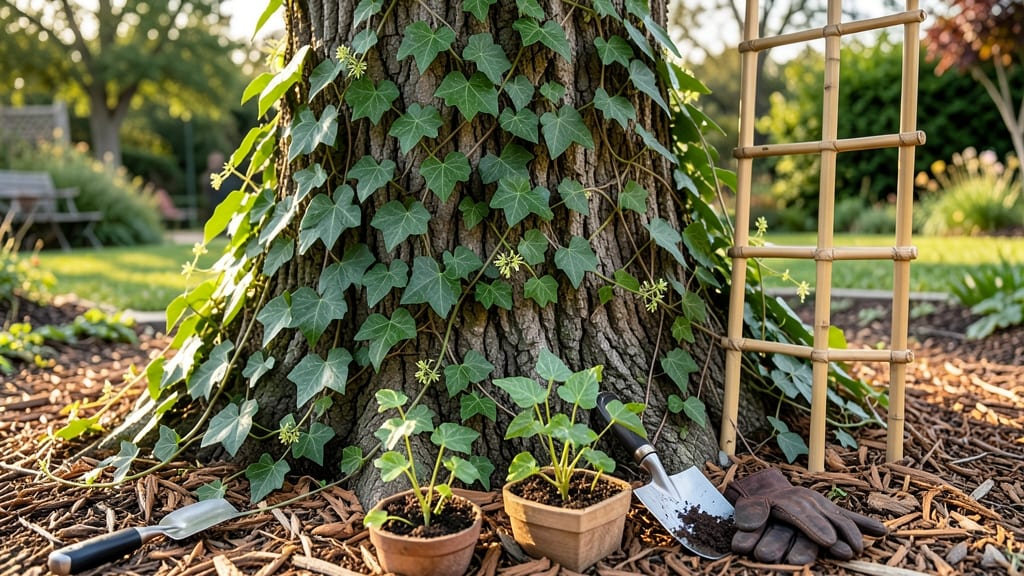
Transforming bare tree stumps with plants to cover tree stumps turns an eyesore into a thriving privacy screen in record time. 🌿 I’ve used fast-growing climbers like morning glories and clematis to turn bare stumps into vibrant vertical gardens in just one season—no waiting years for slow shrubs.
The secret? Match plants to your stump’s sunlight and soil. Morning glories thrive in full sun, while hostas or ferns work in shade. Most need minimal prep: just clear debris, add compost, and plant roots close to the stump for quick coverage.
By summer’s end, you’ll have a living tapestry of greenery that hides the stump entirely. The best part? These plants attract pollinators while keeping maintenance simple—just water and occasional trimming. Works for any climate, from sunbaked backyards to shady corners.
Here’s how to pick the right plants for your space and stump size.
📚 In This Guide
- What you need
- Instructions
- Tips and common mistakes
- Wrapping up and next steps
What you need
- ● Fast-growing plants: Choose 3–5 plants per stump (depending on stump size). Popular picks: Sun-loving: Sunflower (Helianthus annuus) (5–10 seeds or small plants)
- ● Shade-tolerant: Hostas (Hosta spp.) (3–5 plants, varying sizes)
- ● Privacy screens: Bamboo (Bambusa spp.) (2–3 clumps) or Hornbeam (Carpinus betulus) (small saplings)
- ● Soil amendments: Compost (1–2 bags, 40–60 lbs each)
- ● Mulch (3–5 cubic feet, shredded hardwood or pine)
- ● Fertilizer: Slow-release granular fertilizer (10–20 lbs, 10-10-10 NPK ratio)
- ○ Mulch fabric (optional): 4’x50’ roll to suppress weeds and retain moisture
- ● Garden gloves (1 pair, waterproof)
- ● Trowel or hand shovel (for planting)
- ● Pruners or loppers (for trimming plants)
- ● Wheelbarrow (to haul soil/compost)
- ● Watering can or hose with spray nozzle
- ● Measuring tape (to plan spacing)
- ○ Stump grinder (optional, if stump is >6” in diameter)
- ● Check local planting regulations (some areas restrict invasive species like bamboo 🚫).
- ○ Test soil pH (optional but helpful; aim for 6.0–7.0 for most plants).
- ● Clear debris from the stump area (rocks, old roots, or weeds).
- ● Water source nearby (plants need consistent moisture for the first 2–3 weeks!).
Step-by-Step guide to fast-growing privacy screens for tree stumps
Here's how to transform bare stumps into lush, living privacy screens in just one growing season.
🌱 Step 1: Choose Fast-Growing, Stump-Friendly Plants
Select plants that thrive in shallow soil and spread aggressively. I always reach for bamboo (especially running types like Phyllostachys), ivy (Hedera helix), or climbing roses—all grow 3-5 feet per year and smother stumps quickly. Avoid deep-rooted trees; their roots compete with your new plants for water and nutrients.
For instant coverage, mix evergreen shrubs like boxwood or holly with vines. Plant them in a staggered pattern around the stump's perimeter so they fill gaps naturally. I like to space them 12-18 inches apart for dense growth within the first year.
🪴 Step 2: Prepare the Stump Surface
Start by removing any remaining bark or debris from the stump's surface. Use a wire brush to rough up the top 2-3 inches—this creates grip for roots and vines. For extra hold, drill ½-inch holes every 6 inches around the stump's edge. These pockets help plants establish faster.
If the stump is still fresh (less than a year old), the center may still be moist. Test by pressing a finger into the wood—if it feels damp, skip fertilizing. If dry, apply a slow-release organic fertilizer around the base to jumpstart growth. Water deeply to help the fertilizer penetrate the top layer.
☀️ Step 3: Plant and Train Vines for Maximum Coverage
For climbing plants like ivy or roses, install metal trellises or wire mesh around the stump's perimeter. Secure them with stakes driven into the ground. Plant vines at the stump's base, gently weaving their stems through the trellis. You'll see them cling and spread within 2-3 weeks if given enough water.
Train the vines upward by tying them loosely to the trellis with soft twine. Don’t pull too tight—you want gentle guidance, not strangulation. Water immediately after planting to help roots establish. Mulch the base with 2-3 inches of wood chips to retain moisture and suppress weeds.
💧 Step 4: Water and Maintain for Rapid Growth
Water deeply 2-3 times per week for the first month, then taper to weekly deep waterings once plants are established. You’ll know they’re thriving when new leaves appear within 3-4 weeks. For extra speed, fertilize monthly with a balanced liquid fertilizer during the growing season.
Prune aggressively in late summer to encourage bushier growth. Cut back leggy stems by ⅓ to prompt branching. This keeps plants compact and dense. If using bamboo, contain its roots with buried plastic barriers to prevent spreading beyond your desired area.
⏰ Step 5: Monitor and Adjust for Full Coverage
Check weekly for gaps or slow-growing spots. Fill bare patches with additional plants or cuttings. If any plants struggle, adjust watering or add a layer of mulch. By the end of the first growing season, your stump should be completely covered—no bare wood in sight!
For long-term maintenance, prune twice a year: once in early spring to shape growth and again in late summer to control size. With consistent care, your privacy screen will thicken and mature, making the stump disappear entirely within 1-2 years.
Tips & tricks for fast-growing privacy screens
These simple tricks will help you achieve full coverage in record time—and keep your stump transformation on track.
Plant Selection Strategy: For the fastest results, pair aggressive climbers like ivy or climbing roses with evergreen shrubs. I've found that planting ivy at the stump's base and climbing roses along the trellis creates a layered effect that fills gaps immediately. The ivy will spread horizontally while the roses grow vertically, creating a dense curtain within those critical first 3-4 weeks.
Surface Prep Secret: When roughing up the stump's surface in Step 2, don't stop at just the top—extend your wire brushing to the sides if possible. The extra surface area gives plants more places to anchor, especially for vines. I've seen ivy cling to vertical surfaces within days when given this extra grip. For extra insurance, add a few shallow grooves with a chisel along the sides where vines will climb.
Watering Hack: Instead of watering the entire area uniformly, focus on creating a moisture gradient. Water the base of the stump first to encourage root growth, then move outward to the perimeter plants. This mimics natural rainfall patterns and helps prevent fungal issues at the stump's center. I use a soaker hose for the base and a regular hose for the surrounding plants—it makes a noticeable difference in how quickly everything establishes.
Pruning Timing: The late summer pruning in Step 4 is crucial, but timing matters more than you'd think. Aim for early August when plants have finished their main growth spurt but before fall dormancy. This gives them just enough time to recover before winter. I always prune on a cloudy day to reduce stress on the plants—you'll see new growth start within weeks rather than waiting until spring.
Pro Tips for Plants To Cover Tree Stumps
- These simple tricks will help you achieve full coverage in record time—and keep your stump transformation on track.
- Plant Selection Strategy: For the fastest results, pair aggressive climbers like ivy or climbing roses with evergreen...
- Surface Prep Secret: When roughing up the stump's surface in Step 2, don't stop at just the top—extend your wire brus...
Frequently asked questions
Got questions about transforming that unsightly tree stump into a lush, functional privacy screen? You’re not alone! Here are answers to the most common queries—so you can dive in with confidence.
What’s the fastest way to cover a tree stump for privacy?
For rapid results, opt for bamboo, willow, or fast-growing shrubs like privet or forsythia. These can reach 6–10 feet tall in just one season with proper care. Pair them with climbing vines (e.g., morning glory or ivy) for extra speed—just ensure the stump has sturdy support!
How long does it take for plants to fully cover a stump?
Timing depends on the plant! Vines (e.g., wisteria, clematis) can cover a stump in 1–2 seasons, while shrubs (e.g., arborvitae, boxwood) take 2–3 years to fill out. Bamboo is the speed demon—expect noticeable growth in 6–12 months with ideal conditions.
Can I use flowers or ornamental plants for a stump cover?
Ornamental grasses (e.g., fountain grass), hydrangeas, or flowering shrubs (e.g., lilacs, butterfly bush)
add beauty while masking stumps. Just ensure they’re hardy in your zone and won’t outcompete nearby plants for water/nutrients. Bonus: They attract pollinators!
What if my stump is rotting or unstable?
If the stump is soft, crumbling, or leaning, skip planting directly on it—it could collapse under plant weight. Instead, build a raised bed around the stump or plant ground covers (e.g., creeping thyme, clover) nearby. For severe rot, remove the stump first and plant in the surrounding soil.
Do I need to remove the stump before planting?
Not always! If the stump is small, stable, and not rotting, you can plant shallow-rooted species (e.g., hostas, ferns, or low-growing shrubs) around it. For larger stumps or long-term privacy, grind it down first—it creates a cleaner base for planting and prevents pests.
Pro Tip:
Mulch heavily around your new plants to retain moisture and suppress weeds. A 3-inch layer of wood chips or straw works wonders—just keep it 6 inches away from stems to avoid rot.
Wrapping up and next steps
Transforming a bare tree stump into a thriving privacy screen is easier—and faster—than you think! 🌱 From hardy shrubs like sumac and privet to bold climbers like ivy or jasmine, these plants not only mask unsightly stumps but also add beauty and function to your landscape.
With the right choices, you could have a lush, natural barrier in just one season.
Ready to take action? Start small: Pick 1-2 plants from our list, prep your stump, and plant within the next few weeks to see the best results. Your future self—and your neighbors—will thank you! 🌿✨