
Pruning
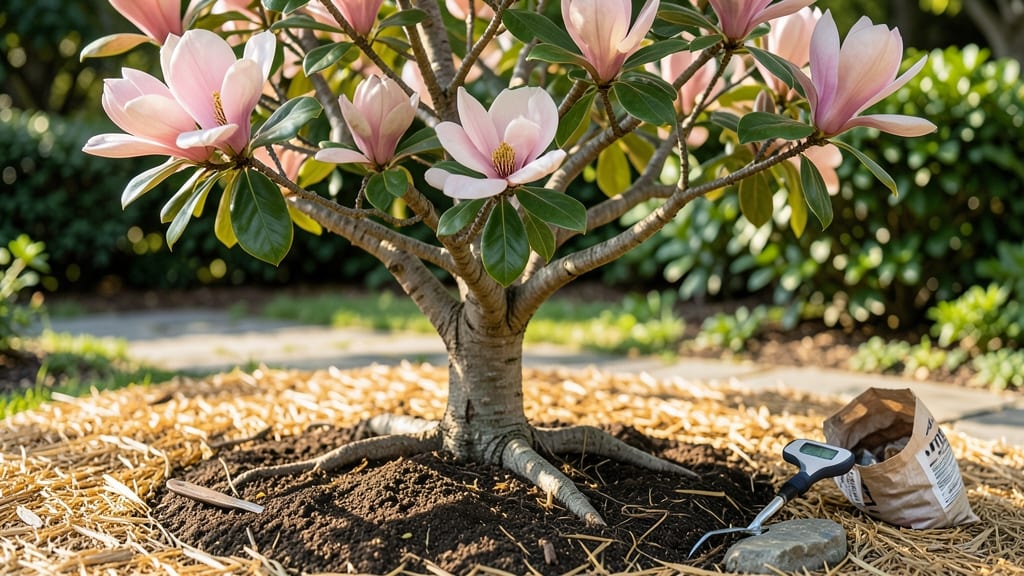
The right magnolia tree soil is the foundation of a thriving, fragrant giant 🌸—and getting it wrong can leave your tree struggling even if you’re watering and pruning perfectly.
You might be overwatering, thinking your magnolia needs constant moisture, but the real issue could be soil that drains too slowly or lacks the acidic pH these trees crave. Without the right mix, roots suffocate, blooms fade, and your $1,000+ investment risks stunting before it ever reaches its full glory.
In this guide, I’ll break down the exact soil composition magnolias need—from pH levels (4.5–6.5) to drainage fixes for clay-heavy yards—and how to amend your soil whether you’re planting in Zone 6a or a container.
No guesswork, just science-backed steps to turn your yard into the perfect home for a magnolia.
You’ll learn how to test your soil, what to mix in for the best texture, and how to spot (and fix) the three most common soil mistakes that kill magnolias before they even bloom.
Magnolia tree soil pH requirements: the ideal range for acid-loving roots
If your magnolia tree looks lackluster with sparse blooms or yellowing leaves, the culprit is often soil pH imbalance. Magnolias are acid-loving plants that thrive in soil with a pH between 4.5 and 6.5.
This acidic environment unlocks essential nutrients like iron and manganese, which fuel vibrant growth and stunning magnolia blooms. Without it, your tree may struggle despite your best care efforts.
I’ve seen firsthand how a simple soil pH adjustment can transform a struggling magnolia into a showstopper. The key is understanding your tree’s needs and acting before problems like iron chlorosis (yellow leaves with green veins) or stunted growth appear.
Let’s dive into the science behind magnolia soil pH and how to get it just right for your climate.
Why pH matters for magnolias: The pH scale measures soil acidity or alkalinity, with 7.0 being neutral. Magnolias prefer the lower end because their roots struggle to absorb nutrients in alkaline soils (pH 7.0+). For example, iron becomes unavailable when soil pH exceeds 7.0, leading to yellowing leaves even if the soil has plenty of iron. Testing your soil is the first step to fixing this.
| Soil pH Range | Magnolia Response | Action Needed |
|---|---|---|
| 4.5–5.5 | Optimal growth, vibrant blooms, dark green leaves | Maintain with organic matter; monitor annually |
| 5.6–6.5 | Good growth, minor nutrient stress possible | Add sulfur or peat moss to lower pH slightly |
| 6.6–7.5 | Nutrient deficiencies (yellow leaves), stunted growth | Apply elemental sulfur or pine needles to acidify |
| 7.6+ | Severe iron/chlorosis, poor blooming, weak roots | Emergency acidification with sulfur + chelated iron |
| 🌱 Pro Tip: Test soil every 2–3 years or if leaves yellow | ||
Testing your soil pH is easier than you think. Grab a soil pH test kit (digital or liquid) from your local garden center. I recommend the LaMotte Soil pH Test Kit for accuracy.
Simply collect soil samples from 6–12 inches deep, mix with distilled water, and follow the kit’s instructions. For a more precise result, send a sample to a local extension office—many offer affordable testing.
Regional differences matter when adjusting magnolia soil pH. In northern climates (USDA Zones 4–6), soils tend to be naturally more acidic due to organic decomposition. Here, focus on maintaining the ideal range by adding compost or peat moss annually.
In southern climates (Zones 7–10), soils are often alkaline or sandy, requiring more frequent sulfur applications to lower pH.
If your soil is too alkaline, don’t panic—it’s fixable! Elemental sulfur is the gold standard for lowering pH. Sprinkle 1–2 pounds per 100 square feet around the tree’s drip line (not directly on roots) in early spring.
Water it in well, and retest soil pH in 2–3 months. For a slower release, use pine bark fines or pine needles as mulch—they naturally acidify soil over time.
Watch for warning signs of incorrect pH. Yellow leaves with green veins signal iron deficiency (common in alkaline soils), while purple stems or stunted growth may indicate phosphorus stress.
If your magnolia’s leaves turn bronze or brown at the edges, it might be over-acidified (pH < 4.5). In this case, add lime sparingly to raise pH slightly, but aim for gradual changes.
For container-grown magnolias, pH management is even more critical since pots drain quickly. Use a pre-mixed acidic potting soil (like Miracle-Gro Acid-Loving Plants Mix) and amend with sphagnum peat moss (20% of the mix).
Repot every 2–3 years with fresh soil to prevent pH drift. I’ve seen container magnolias thrive in pH 5.0–5.5 with regular monitoring—just keep an eye on those leaves!
Long-term care includes mulching with pine straw or oak leaves to maintain acidity and improve soil structure. Avoid synthetic fertilizers that can raise pH; instead, opt for organic amendments like composted leaves or cottonseed meal.
With the right soil pH balance, your magnolia will reward you with larger blooms, darker foliage, and stronger roots for decades to come.
Remember, patience is key. Adjusting soil pH takes time—don’t rush it. Test, amend, and monitor. Your magnolia will thank you with <
Best soil mix for magnolia trees: drainage, texture & organic matter breakdown
Magnolia trees demand a specific soil mix to thrive, combining acidity, aeration, and moisture retention in perfect balance. The wrong blend leads to root rot, nutrient deficiencies, or stunted growth—so let’s break down the ideal texture, drainage, and organic matter for both in-ground and container planting.
For in-ground planting, aim for 60% native soil, 30% organic compost, and 10% coarse sand or perlite to prevent compaction. This mix ensures root expansion while preventing waterlogging, which magnolias despise.
In containers, use a lighter blend with 50% peat moss or coconut coir, 30% compost, and 20% perlite for superior drainage.
Drainage is critical—magnolias hate soggy roots. Test your soil by digging a 12-inch hole; if water pools after 30 minutes, amend with sand or grit. For containers, ensure pots have drainage holes and elevate them to prevent root suffocation.
| Soil Type | Texture Ratio | Drainage | Organic Matter | Best For |
|---|---|---|---|---|
| In-Ground | 60% native soil, 30% compost, 10% sand | Moderate (1-2 inches/hr) | 30% organic compost | Established trees |
| Container | 50% peat moss, 30% compost, 20% perlite | Fast (3+ inches/hr) | 50% organic blend | Young or dwarf varieties |
| Heavy Clay | 50% clay, 30% compost, 20% coarse sand | Slow (amend with gypsum) | 40% compost + pine bark | Southern climates |
Mulch is non-negotiable—apply 3-4 inches of pine bark or shredded leaves around the base (keep mulch 6 inches from the trunk to prevent rot). This retains moisture, regulates temperature, and slowly enriches the soil with organic matter over time.
Avoid common mistakes like over-amending with fresh manure (burns roots) or skipping sand in clay soils (roots suffocate). For container-grown magnolias, refresh the mix every 2-3 years to prevent nutrient depletion. With the right blend, your magnolia will reward you with bold blooms and robust growth for decades.
🌿