
Trees
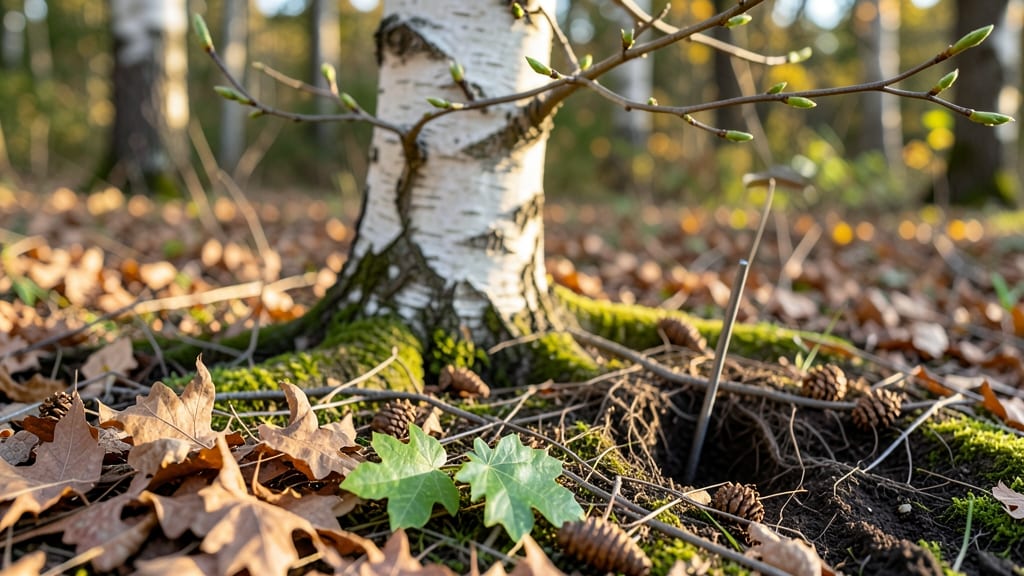
A tree isn't necessarily dead if it has no leaves—it could just be resting for winter. 🌳 I've seen gardeners panic and cut down perfectly healthy trees because they didn't know the difference between dormancy and death.
The key is understanding what your tree should look like this time of year.
Deciduous trees naturally shed leaves in fall, while evergreens might drop needles if stressed. Check the bark: healthy trees have smooth or slightly rough bark, not deep cracks or peeling patches. A simple scratch test reveals if it's alive—if green layers appear under the bark, it's still kicking.
You'll spot signs of life in spring when buds form or sap flows when you cut a small branch. Even if your tree looks bare now, it might surprise you with fresh growth by April. Prune only dead branches to encourage new life, and watch for these telltale signs.
For stubborn cases, consult a local arborist—they can confirm with tools like a resistivity meter. Most leafless trees just need patience, not a chainsaw. Trust the process, and your tree might still have surprises in store.
Natural Causes Behind Leaf Loss
When a tree sheds its leaves, it’s not always a sign of distress—sometimes, it’s just nature’s way of conserving energy. Understanding the why behind leaf loss helps you tell the difference between a tree taking a well-deserved break and one in serious trouble.
Let’s break down the most common reasons a tree might lose its leaves, backed by science and actionable insights.
One of the most common reasons a tree loses its leaves is seasonal dormancy, a natural response to changing temperatures and daylight.
As autumn arrives, trees like oaks, maples, and birches trigger a process called abscission, where a specialized layer of cells (the abscission layer) forms at the base of the leaf stem. This layer seals off nutrients and water, causing the leaf to detach.
Why does this happen? Trees enter dormancy to conserve water and energy during cold months. Without leaves, they reduce water loss through transpiration and redirect resources to their roots and trunk, protecting them from freezing. This isn’t laziness—it’s a strategic survival tactic honed over millennia.
How to tell if it’s dormancy:
- 🍂 Leaves turn brown or fall gradually (not all at once).
- 🌡️ Happens in late fall or early winter.
- 🌱 New buds form in early spring, signaling regrowth.
If your tree fits this pattern, it’s not dead—it’s just napping until spring!
Extreme weather, drought, or poor soil can force a tree to drop its leaves prematurely as a last-resort survival mechanism. When roots can’t absorb enough water (due to dry soil or heatwaves), the tree may sacrifice its leaves to prevent dehydration.
This is called stress-induced defoliation, and it’s the tree’s way of saying, “I need help!”
Other environmental triggers include:
- 💦 Drought: Prolonged dry spells limit water uptake, causing leaves to wilt and drop.
- 🌪️ Wind or hail damage: Physical trauma can strip leaves or block sunlight, forcing early shedding.
- 🌡️ Temperature extremes: Sudden freezes or heatwaves disrupt photosynthesis, leading to leaf loss.
- 🌍 Urban pollution or salt buildup: Contaminants in soil or air can stress roots and foliage.
Unlike dormancy, environmental stress often leads to uneven leaf loss, yellowing (chlorosis), or stunted growth. If you suspect this is the issue, water deeply and mulch to help the tree recover.
Not all leaf loss is harmless—some of the worst culprits are insects, fungi, and bacteria that attack trees from the inside out. These invaders disrupt the tree’s ability to produce or retain leaves, sometimes leading to complete defoliation if left unchecked.
Here are the top offenders:
| Pest/Disease | Signs to Watch For | What It Does |
|---|---|---|
| 🐜 Gypsy Moth Caterpillars | Skeletonized leaves, webbing, and sudden bare branches. | Devour leaves entirely, starving the tree of energy. |
| 🍄 Fungal Infections (e.g., Anthracnose) | Dark spots on leaves, premature browning, and leaf drop. | Clogs leaf pores, preventing gas exchange and causing wilting. |
| 🐛 Borers (e.g., Emerald Ash Borer) | D-shaped exit holes, sawdust-like frass, and dieback. | Destroys vascular tissue, cutting off water/nutrient flow to leaves. |
| 🦟 Spider Mites | Fine webbing, stippled or yellowing leaves. | Pierce leaves to feed, causing them to dry out and fall. |
Actionable tip: 🔍 Inspect leaves and bark for signs of pests or unusual spots. If you spot these red flags, prune infected branches, apply targeted treatments, or consult an arborist before the problem spreads.
A tree’s leaves are like its energy factories, and without the right nutrients, they can’t function properly. Deficiencies in key elements—like nitrogen, magnesium, or iron—often manifest as leaf discoloration and premature drop. Here’s how it breaks down:
- 🟢 Nitrogen (N) Deficiency: Leaves turn pale yellow or yellow-green, starting at the oldest leaves. The tree lacks the building blocks for chlorophyll, so it sheds underperforming foliage.
- 🟡 Magnesium (Mg) Deficiency: Leaves develop interveinal yellowing (chlorosis) between veins, especially on older leaves. Magnesium is crucial for photosynthesis, so without it, leaves become inefficient and drop.
- 🔴 Iron (Fe) Deficiency: New leaves stay bright yellow while veins remain green (a classic “lime-green” look). Iron is vital for chlorophyll production, and in alkaline soils, trees struggle to absorb it.
- ⚪ Potassium (K) Deficiency: Leaf edges brown and crisp (called “scorch”), and leaves may drop early. Potassium regulates water and disease resistance.
How to fix it: 🌱 Conduct a soil test to identify deficiencies, then amend soil with organic matter (compost) or targeted fertilizers. For iron deficiencies, chelated iron supplements can help.
Leaf loss isn’t always a death sentence—it’s often a tree’s way of communicating. By recognizing the root cause (pun intended), you can determine whether your tree is resting, struggling, or in danger. Next up: How to tell if a leafless tree is truly dead—or just waiting for spring.
Reviving Your Leafless Tree
A tree without leaves might seem lifeless, but don’t rush to the grave just yet! Whether your tree is dormant, struggling, or simply shedding, there are practical steps to nurse it back to health.
Below, we’ve broken down the most common causes of leafless trees and the actionable fixes to bring them back to life—plus tips to keep them thriving long-term.
---
Some trees, like oaks, maples, and birches, naturally drop leaves in autumn as part of their survival strategy. This isn’t a sign of death—it’s dormancy! Here’s how to tell if your tree is just taking a break:
#### 🔍 How to Confirm It’s Normal Dormancy - Timing matters: Leafless trees in late fall/winter are likely dormant.
If it’s summer or spring, investigate further. - Bark and buds: Check for swollen buds (a sign of new growth) or green undertones in the bark. - Root test: Gently scratch the bark—if it’s moist underneath, the tree is still alive.
#### 🌿 What to Do - Patience is key: Wait until early spring before acting.
Many trees re-leaf on their own. - Water deeply (but not excessively) if your area has had a dry winter. 💡 Pro Tip: Mulch around the base (2–4 inches) to retain moisture. - Avoid pruning: Wait until late winter/early spring to trim dead branches—never prune a dormant tree in cold months.
#### 🛡️ Prevention for Next Season - Mulch properly: Use organic mulch (like wood chips) and keep it 3–4 inches deep, 6 inches away from the trunk. - Water deeply in late fall: A slow, deep soak (1–2 inches) before winter helps roots store moisture. - Monitor for pests: Even dormant trees can attract borers or scale insects.
Inspect bark for sawdust-like frass or oozing sap.
---
If your tree lost leaves suddenly in late winter or early spring, it might be suffering from freeze damage or winter desiccation (when cold winds dry out leaves). Here’s how to revive it:
#### 🔥 Signs of Cold Damage - Brown, crispy leaves that fell off early. - Split bark or peeling on young trees. - Wilting new growth in spring (if it’s too cold for buds to open).
#### 🌡️ How to Help It Recover - Protect from wind: Erect a windbreak (like a temporary fence or burlap screen) if your tree is exposed. - Water in late winter: A slow drip irrigation (not flooding) can help rehydrate roots before buds break. - Avoid fertilizing: Wait until new growth appears—fertilizer can stress a damaged tree.
#### ❄️ Long-Term Cold Prevention - Wrap young trees: Use tree guard wrap (not plastic) to shield bark from sunscald in winter. - Water before frost: A deep watering in late fall helps roots withstand cold snaps. - Choose cold-hardy species: If you’re planting new trees, opt for native varieties (like serviceberry or hackberry) that tolerate your climate.
---
If your tree’s leaves turned brown, curled, or fell prematurely, pests or disease could be the culprit. Here’s how to diagnose and treat:
#### 🐛 Common Culprits & Fixes | Problem | Signs | Solution | |---------------------------|------------------------------------|------------------------------------------------------------------------------| | Aphids/Scale Insects | Sticky residue, curled leaves | Spray with neem oil or insecticidal soap.
Repeat every 7–10 days. | | Spider Mites | Yellowing leaves, fine webbing | Blast off mites with a strong water spray, then apply horticultural oil. | | Fungal Leaf Spot | Dark spots, yellowing leaves | Prune infected branches, apply copper fungicide, and improve airflow. | | Borer Infestation | Sawdust-like frass, oozing sap | Drill and inject systemic insecticide (or call an arborist for severe cases). |
#### 🛡️ Prevention Tips - Inspect trees regularly: Check for unusual holes, sap, or webs every spring. - Keep trees healthy: Water deeply and fertilize moderately (over-fertilizing attracts pests). - Encourage predators: Plant marigolds or lavender nearby to attract ladybugs and lacewings, which eat pests.
---
If your tree’s leaves turned brown and brittle but the tree itself feels soft or spongy, root stress (from overwatering, drought, or compacted soil) may be the issue.
#### 🚰 How to Revive a Stressed Tree - Test the soil: Stick a screwdriver in the ground—if it goes in easily, the soil is too wet.
If it’s hard to push, it’s too dry. - Adjust watering: - Too dry? Water deeply 2–3 times a week (until soil is moist 6 inches down). - Too wet? Improve drainage with sand or compost and avoid watering until the top inch is dry. - Aerate compacted soil: Use a soil aerator or dig in gypsum to break up hardpan.
#### 🌱 Long-Term Soil Care - Mulch correctly: Use wood chips or straw, but never pile against the trunk (this causes rot). - Avoid foot traffic: Compacted soil = poor root growth.
Create a gravel path around the base. - Mulch volcanoes are evil: ❌ Never pile mulch in a cone around the trunk—it traps moisture and invites pests.
---
If your tree lost leaves due to storm damage, animal gnawing, or bad pruning cuts, it may be stressed but not dead. Here’s how to fix it:
#### 🔪 What to Do Immediately - Remove broken branches: Use clean, sharp pruners to cut just outside the branch collar (the swollen area where the branch meets the trunk). - Seal large wounds (if needed): For trunk damage over 2 inches, apply pruning sealant to prevent disease. - Support weak limbs: Use tree straps or cables if large branches are at risk of snapping.
#### 🌿 Prevention for Future Damage - Prune at the right time: Late winter/early spring (when trees are dormant but before new growth). - Avoid "topping": ❌ Never cut the top flat—this weakens the tree.
Instead, prune selectively. - Protect from animals: Use tree guards or chicken wire if deer or rabbits are chewing bark.
--- Final Thought: A leafless tree isn’t always a dead tree—it’s often just resting, recovering, or fighting back. By identifying the root cause (literally!) and taking targeted action, you can give your tree the best shot at a full comeback. 🌳✨
Frequently asked questions
Why do some trees keep their leaves year-round while others lose them?
Evergreens like pines and spruces retain their needles because they have specialized leaves that reduce water loss in cold weather. Deciduous trees (like oaks or maples) shed leaves to conserve energy during winter dormancy. The key difference is needle structure—evergreens have thick, waxy coatings, while broadleaf trees rely on seasonal rest.
Can a tree survive without leaves for more than one year?
Yes, but it depends on the cause. If the tree is dormant (like in winter), it can survive multiple leafless seasons. However, if leaves are lost due to disease, pests, or drought, the tree may struggle. Check for green bark underneath or new buds in spring—these are good signs of life.
How can I tell if my leafless tree is dead or just dormant?
Perform the scratch test: Scrape the bark gently—if you see green layers underneath, the tree is alive. Also check for swollen buds (spring growth) or flexible branches (dead wood snaps easily). A resistivity meter (used by arborists) gives precise readings.
Will pruning a leafless tree help it recover?
Only prune dead or diseased branches—never remove healthy wood. Cut just outside the branch collar (the swollen area where the branch meets the trunk). Wait until late winter/early spring to avoid stressing the tree further. Over-pruning weakens it, especially if it's already struggling.
Can I save a tree that lost leaves due to drought?
Water deeply 2-3 times a week (until soil is moist 6 inches down) and mulch with 2-4 inches of organic matter. Avoid watering in the evening to prevent fungal growth. Monitor for new leaf buds in spring—they’re a sign of recovery.