
Companion Plants
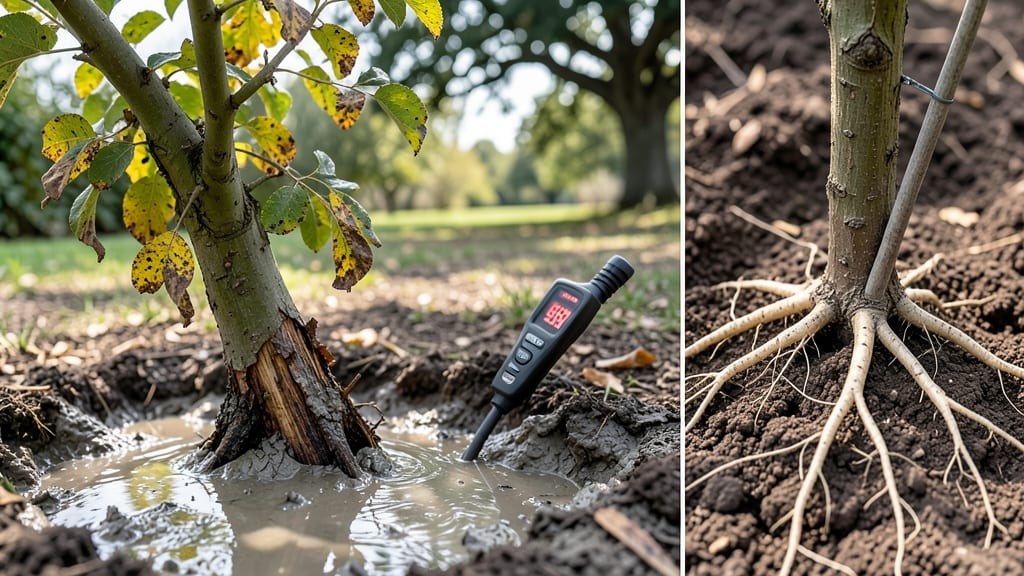
An overwatered tree can recover if you act quickly, but prolonged saturation often causes root rot or permanent damage. The key is to prune yellowed leaves, improve soil drainage, and cut back on watering while checking moisture levels regularly.
Overwatering disrupts a tree's natural balance by suffocating roots, preventing oxygen absorption, and creating ideal conditions for harmful fungi. 🌱 Even if the tree looks healthy at first, symptoms like yellowing leaves, slow growth, or moldy soil signal trouble.
The good news? Many trees bounce back within weeks if you address drainage issues and adjust your watering routine—think of it like giving your tree a chance to "breathe" again.
For best results, combine immediate action (like trimming damaged foliage) with long-term fixes: amend heavy soil with perlite or sand, and consider installing French drains if your yard holds excess water.
I've seen oak trees and maples make dramatic comebacks after just two weeks of proper care, but always monitor progress—some species are more resilient than others.
💡 In This Article
- How Overwatering Damages Tree Roots and What Happens Next
- Step-by-Step Recovery Plan for Overwatered Trees
How overwatering damages tree roots and what happens next
When soil stays too wet, tree roots suffocate because oxygen can't reach them—roots need 10-20% air space in soil to function properly. Without oxygen, roots can't absorb nutrients or water efficiently, leading to a condition called anaerobic stress.
This triggers a chain reaction: cells start dying from oxygen deprivation, and harmful bacteria and fungi (like Phytophthora) multiply rapidly in the waterlogged environment. 🌱 The worst part? These pathogens release toxins that further damage root tissues, creating a vicious cycle.
Symptoms appear gradually, often 2-4 weeks after overwatering begins. You'll notice yellowing leaves (chlorosis) first—this happens when roots can't supply enough nutrients, especially nitrogen. The edges of leaves may brown and curl, while new growth slows or stops entirely.
In severe cases, a musty smell from moldy soil and blackened, mushy roots confirm irreversible rot. The key difference? Temporary wilting from overwatering recovers within 3-5 days if you stop watering, while rot spreads silently underground for weeks before visible damage appears.
Tree species vary in resilience—deciduous trees like maples or oaks can handle brief overwatering better than evergreens (which need well-drained soil constantly).
For example, a 10-year-old oak might show stress after 3 weeks of excessive moisture, while a young pine could develop root rot in just 10 days under the same conditions. The root system's depth also matters: shallow-rooted trees (like fruit trees) suffer faster than deep-rooted species (like willows).
What most gardeners miss is how soil texture affects recovery. Clay soil holds water like a sponge, while sandy soil drains quickly—this explains why trees in clay-heavy areas show symptoms twice as fast as those in loamy soil.
Even "healthy" looking trees can hide internal damage: I've seen trees with 50% dead roots still standing upright because the remaining roots compensate. That's why physical checks (gently digging near the trunk) are crucial—they reveal the true extent of the problem.
Here's the science behind the recovery window: roots can survive 24-48 hours without oxygen in cool weather, but only 6-12 hours in hot conditions. This is why summer overwatering is particularly dangerous—heat speeds up microbial activity that attacks stressed roots.
The good news? Trees have a remarkable ability to regenerate new feeder roots when conditions improve, but only if the original root structure isn't completely compromised.
Consider this real-world example: A 20-foot maple in my neighborhood had yellowing leaves for 6 weeks before owners realized they'd been watering 3 times weekly instead of every 10-14 days.
After adjusting watering and aerating the soil with a garden fork, the tree regained full foliage in 8 weeks. The difference? They caught it before root rot set in—something that would have taken years to notice if they'd ignored the early symptoms.