
How To
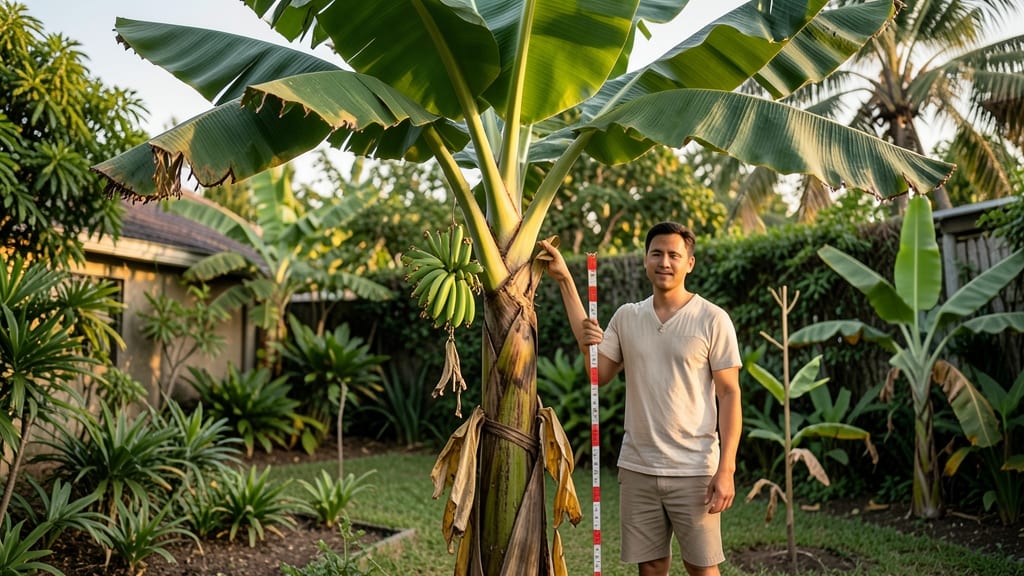
How tall can a banana tree grow? The answer depends on the variety and growing conditions—so that kitchen starter plant might just become your backyard’s new skyline.
If you’ve ever wondered whether that tiny banana plant in your kitchen could one day tower over your house—or if you’re dreaming of a tropical oasis—you’re in the right place. Banana trees aren’t just plants; they’re architectural marvels with varieties ranging from waist-high dwarfs to skyscraper-like giants.
The dwarf Cavendish, a common grocery store variety, typically maxes out around 12 feet, while the Gros Michel can reach 30 feet or more in ideal tropical conditions. Even in containers, some varieties will stretch toward the ceiling, making height control a key skill for home gardeners.
Below, I break down the exact heights of 10+ varieties, how to manage overgrowth, and whether you can even grow one indoors—without sacrificing your living room’s ceiling.


Banana tree height by variety: exact growth ranges for dwarf to giant species
Banana trees are famous for their dramatic height differences—some stay small enough for patio gardens, while others stretch toward the sky like tropical skyscrapers. The Musa acuminata family alone includes over 50 varieties, with mature heights ranging from 6 feet to a staggering 30+ feet.
Your choice of variety determines whether you’ll need a greenhouse or just a sunny corner. Let’s explore the exact growth ranges and what influences them.
Climate plays a huge role in banana tree height. In USDA Zones 10-12, where frost is rare, trees thrive year-round and reach their full potential. Cooler zones like Zone 9b (e.g., Phoenix) may see stunted growth without winter protection.
Even soil type matters—well-draining, slightly acidic soil (pH 5.5-7.5) encourages rapid growth, while compacted or alkaline soil can slow a tree down by 30-50%.
Here’s the breakdown of 10+ banana varieties and their mature heights, from the world’s tallest to the smallest dwarfs:
| Variety | Mature Height | Growth Rate (Year 1) | Climate Needs | Best For |
|---|---|---|---|---|
| Musa acuminata ‘Gros Michel’ | 25–30 ft | 12–18 ft | Tropical (Zones 10-12) | Commercial farms |
| Musa balbisiana ‘Bluggoe’ | 18–22 ft | 10–14 ft | Subtropical (Zones 9b-11) | Home gardens |
| Musa velutina ‘Dwarf Cavendish’ | 6–10 ft | 4–6 ft | Zones 9b-12 (containers) | Patios, balconies |
| Musa acuminata ‘Lady Finger’ | 10–14 ft | 6–8 ft | Zones 10-12 | Small orchards |
| Musa acuminata ‘Red Dacca’ | 12–16 ft | 8–10 ft | Tropical/subtropical | Decorative landscapes |
| Musa textilis ‘Abacá’ | 20–25 ft | 15–20 ft | Tropical (Zones 10-12) | Fiber production |
| Musa ingens | 15–20 ft | 10–14 ft | Tropical (Zones 10-12) | Wild landscapes |
| Musa ornata | 8–12 ft | 5–7 ft |
How to control banana tree height: pruning, variety selection, and container gardening tipsIf your banana tree is shooting up faster than you’d like, don’t panic—there are smart ways to manage its height without sacrificing fruit production. The key lies in pruning techniques, dwarf variety selection, and container gardening hacks. Unlike many plants, banana trees don’t respond well to aggressive pruning, so timing and method matter. Let’s explore how to keep your tropical beauty in check while still enjoying those sweet rewards. First, understand that banana trees grow from a pseudostem—a tightly packed sheath of leaves that can reach 20-30 feet in standard varieties. However, dwarf varieties like ‘Lady Finger’ or ‘Red Dacca’ max out at 8-12 feet, making them perfect for patios or small yards. The secret to controlling height starts with choosing the right variety and giving it the right growing conditions. For container growers, root pruning and pot size limits can naturally stunt growth while keeping the plant healthy.
🌱 Best Dwarf Varieties for Small Spaces
✂️ Pruning Tips for Height Control
When it comes to pruning, timing is everything. The best time to prune is late winter or early spring, just before new growth begins. This allows the plant to recover and focus energy on producing fruit rather than regrowing lost foliage. For container-grown banana trees, root pruning every 2-3 years can also help manage height. Simply trim the roots by 10-20% when repotting to encourage a more compact growth habit. Just be sure to use a well-draining potting mix with added compost to support root health. Another game-changer is container selection. If you’re growing bananas in pots, choose a wide, shallow container (at least 18-24 inches in diameter) to accommodate the plant’s broad root system. Deeper pots encourage taller growth, while wider pots promote bushier, shorter plants. For extra height control, place your container in a shady spot for a few hours each day—banana trees grown in partial shade tend to stay shorter and produce smaller, but often sweeter, fruit. Don’t forget that nutrient management plays a role in height control. Over-fertilizing with high-nitrogen feeds will encourage rapid leafy growth, making your banana tree tower over your deck. Instead, use a balanced fertilizer (like 10-10-10) and focus on phosphorus and potassium to support fruiting. Reduce fertilizer use in the last 2 months of growth to slow height increases and encourage flowering. Pair this with consistent watering—banana trees need 1-2 gallons of water per week, but soggy soil can stunt growth and invite pests. With these strategies, you can enjoy a manageable-sized banana tree that fits your space while still producing a bounty of fruit. Whether you’re growing ‘Lady Finger’ in a pot on your balcony or pruning back a semi-dwarf variety in your garden, the key is patience and precision. Start with the right variety, prune strategically, and give your plant the right growing conditions—and you’ll have a tropical beauty that’s as productive as it is picturesque. |