
Watering
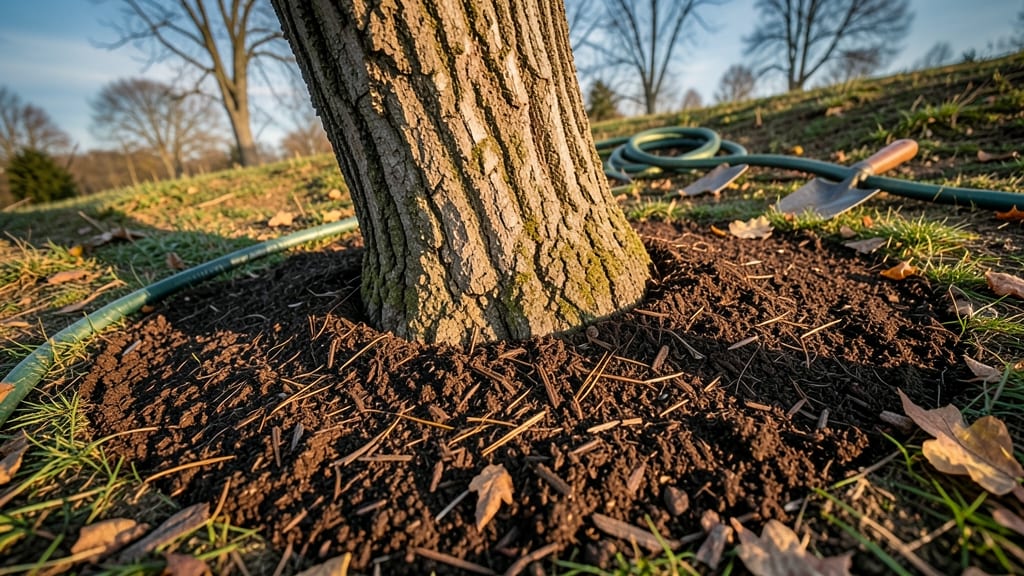
New trees need consistent watering to establish strong roots, but overwatering can be just as harmful. These precise watering guidelines—broken down by season and tree type—ensure your young tree thrives without wasting time or resources.
Newly Planted Deciduous Trees in Spring
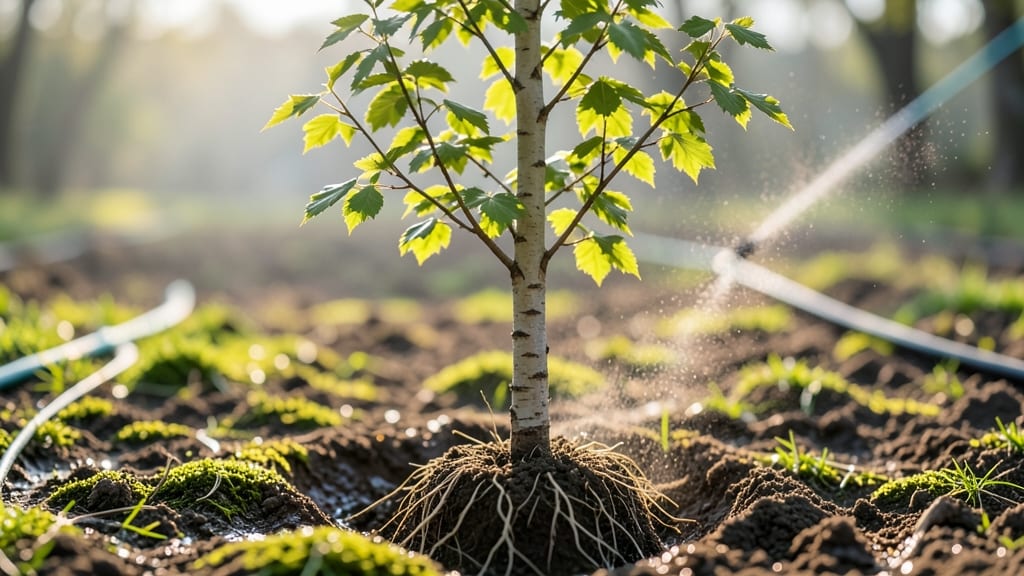
Spring is the most critical season for newly planted deciduous trees, as their roots race to establish themselves before summer heat sets in. Unlike mature trees, young leafy trees like maple, birch, or oak need deep, slow watering to prevent transplant shock and encourage root expansion into surrounding soil.
Use a hose to deliver 10-15 gallons of water per inch of trunk diameter, applied over 30-60 minutes for optimal absorption. Water twice weekly during the first growing season, focusing on the root zone (the area extending beyond the tree’s drip line). This method mimics natural rainfall and prevents surface roots from drying out or suffocating.
Beginners and urban gardeners will find this approach especially helpful—it’s simple yet effective for trees planted in compacted city soil where roots struggle to spread. Consistent deep watering now means fewer headaches later as your tree matures. 💚
Evergreen Trees During Summer Heatwaves
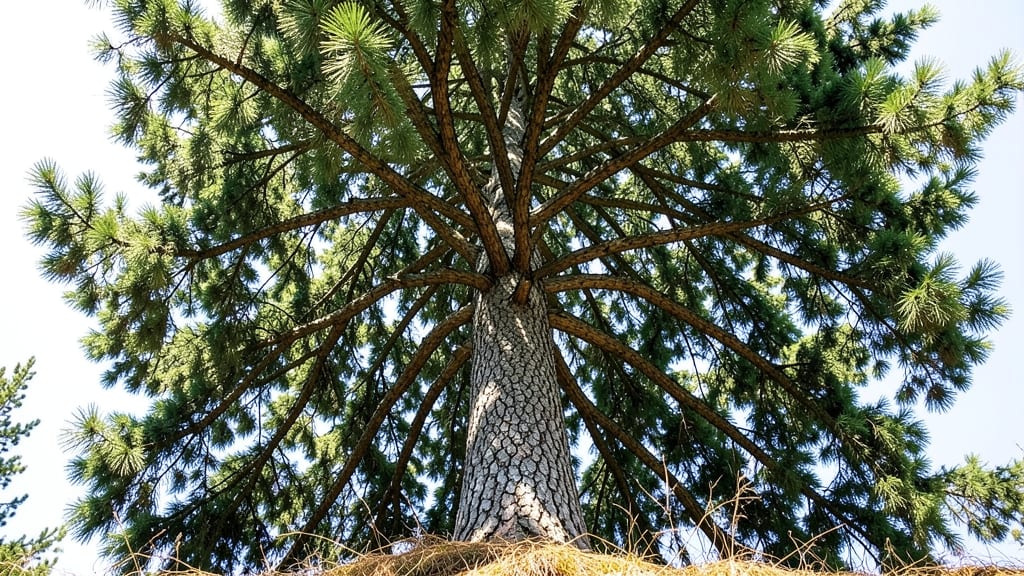
Evergreen trees like pine, spruce, and fir may look sturdy, but their needle-covered branches actually lose moisture faster in summer heat than you’d expect. Unlike their leafy cousins, these trees can’t rely on seasonal dormancy to conserve water, making them particularly vulnerable during heatwaves.
Instead of deep, infrequent watering, use a gentle, frequent approach—think of it like mimicking a light summer rain. Water the root zone 2-3 times per week for 10-15 minutes per session with a hose set to a slow trickle. This keeps the soil consistently moist without drowning the roots, which are prone to rot in waterlogged conditions. Early morning or late evening watering minimizes evaporation.
This method is especially helpful for gardeners in hot climates or those with newly planted evergreens. By keeping the soil evenly moist, you’ll help your trees maintain their vibrant color and strength through the hottest months. 💚
Fruit Trees in Early Fall
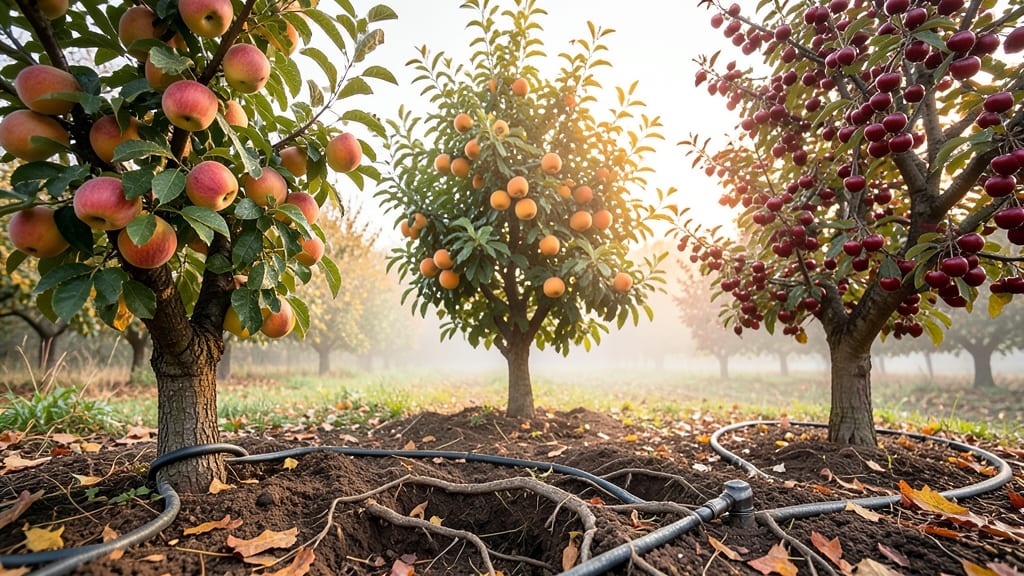
Early fall is the sweet spot for fruit trees—your apple, peach, or cherry trees are still fruiting but need to prepare for winter dormancy. The key? A balanced watering approach that supports the final harvest while signaling roots to slow growth for dormancy.
Water deeply once every 7-10 days (about 15-20 gallons per inch of trunk diameter) to keep soil moist but not soggy. Avoid overhead watering to prevent fungal diseases like brown rot, which thrives in damp fruit. Instead, use a soaker hose at the base and taper off watering by mid-October to encourage natural dormancy.
This method is perfect for home orchards or backyard fruit trees, ensuring your harvest stays juicy while your tree gets the right signal to rest. 🌟
Drought-Tolerant Trees in Winter
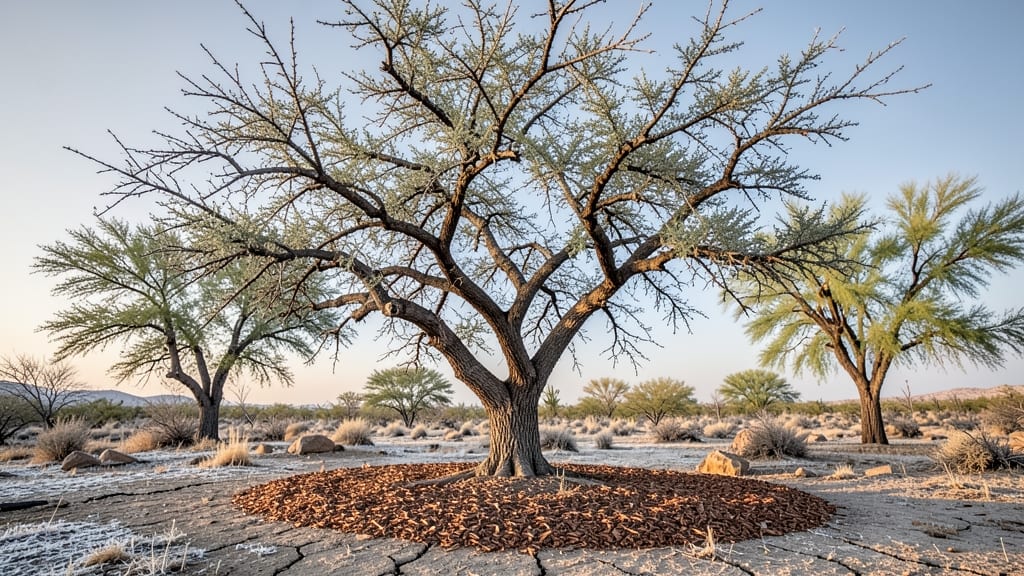
Winter watering for drought-tolerant trees like mesquite or palo verde might seem counterintuitive—but the real focus should be on protecting roots from freeze-thaw damage rather than hydration. These native species store water efficiently and need far less than other trees, but sudden temperature swings can crack soil and sever delicate roots.
Instead of frequent watering, aim for one deep soak every 4-6 weeks using a hose on a slow setting to saturate the root zone without pooling water. Apply a 2-3 inch layer of mulch (like wood chips) to insulate roots and maintain even moisture. Avoid watering during hard freezes, as wet soil expands and contracts more dramatically.
This approach is perfect for arid climates or gardeners with limited time—minimal watering keeps these resilient trees thriving while preventing the hidden damage that often goes unnoticed. 🌿
Shallow-Rooted Trees Like Maple
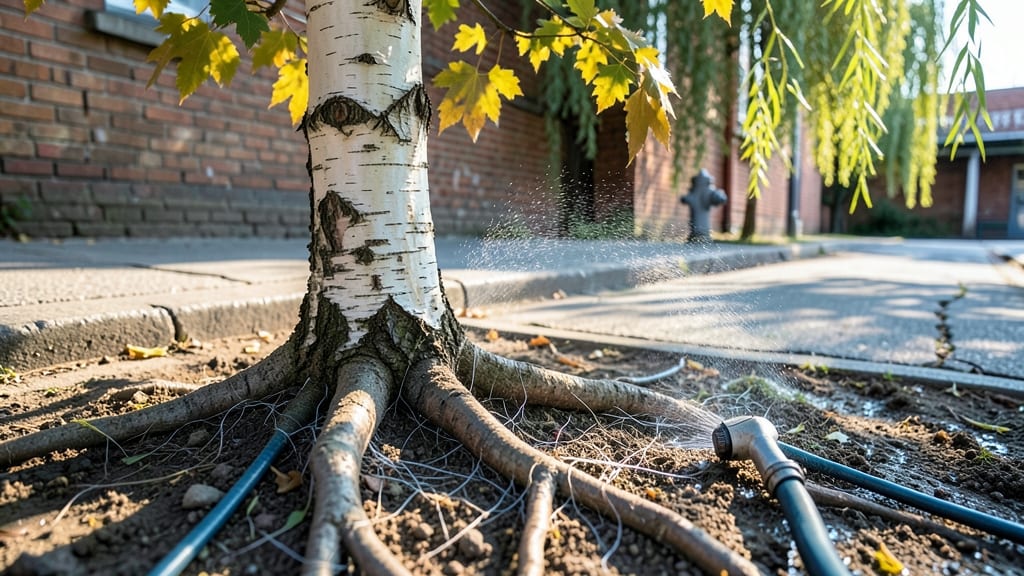
Urban gardeners and city dwellers with maple, birch, or willow trees know the struggle—deep watering isn’t always practical when roots spread just beneath the soil surface. These shallow-rooted species need a different approach to avoid compaction and drought stress.
Instead of long, deep hoses sessions, use a gentle spray nozzle for 5–10 minutes every 2–3 days during the first year. This keeps the top 6–12 inches of soil moist without crushing roots or creating waterlogged zones. For mature trees, reduce to once a week in summer, but always check soil moisture—dryness shows up as wilting leaves or brittle bark.
This method is perfect for sidewalk plantings or small yards where heavy watering equipment won’t fit. Light, frequent watering mimics natural rainfall and helps roots spread horizontally without competition. 🌻
Deep-Rooted Oak Trees in Late Summer
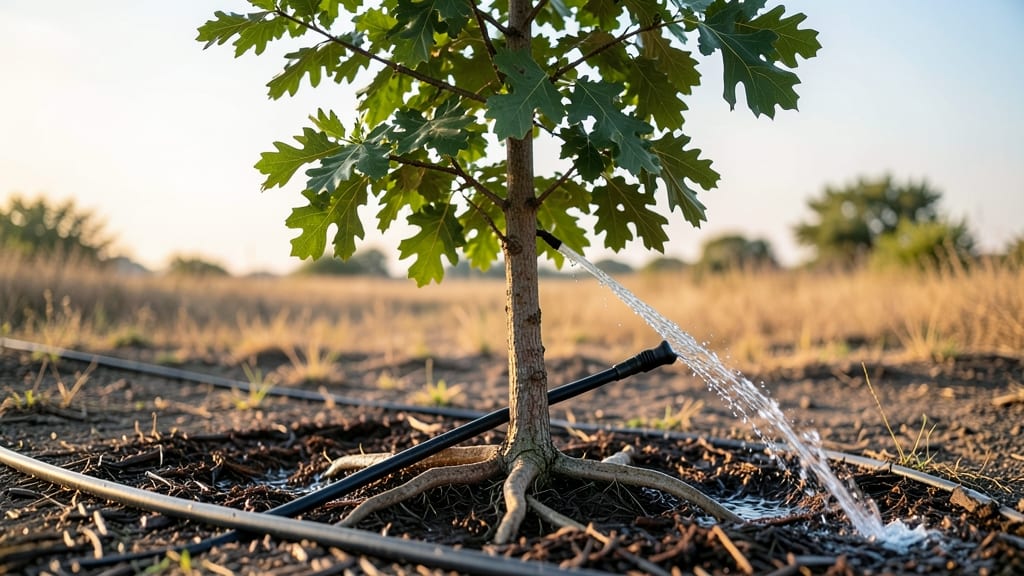
Late summer heat can stress young oak trees, but their deep-rooted nature gives you a unique advantage—slow, deep watering sessions that encourage roots to grow downward naturally. Unlike shallow-rooted species, oaks need 1-2 inches of water per week, delivered over 20-30 minutes with a hose at the base to penetrate deep soil layers.
Use a soaker hose or gentle stream to avoid disrupting the soil surface, focusing on the drip line (the edge of the tree’s canopy). Water early morning or late evening to minimize evaporation, and check soil moisture by inserting a screwdriver—if it resists, your tree needs more water. This method reduces surface evaporation and strengthens roots for future droughts.
Perfect for homeowners with mature oak saplings, this approach saves time while ensuring long-term resilience. Your tree will reward you with stronger growth and fewer watering sessions as it matures. 🌟
Container-Grown Trees Year-Round
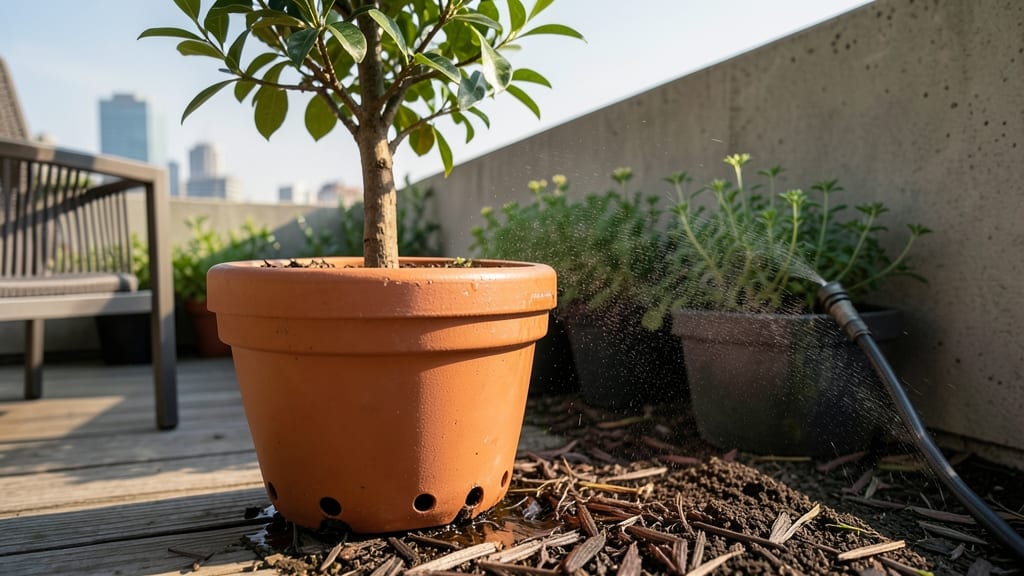
Container-grown trees bring urban greenery to patios and balconies, but their potted roots dry out 3-5 times faster than in-ground trees. The key to keeping them thriving lies in understanding how pot size and drainage holes change your watering routine—especially when using a hose.
For small pots (under 10 gallons), water thoroughly until it drains from the bottom every 2-3 days in summer, reducing to weekly in cooler months. Larger pots (15+ gallons) can stretch to 5-7 days between deep waterings, but always check soil moisture 2 inches down—if it’s dry, it’s time. Terracotta pots dry faster than plastic, so adjust accordingly. Avoid letting water pool at the bottom, which suffocates roots.
This approach is ideal for urban gardeners, apartment dwellers, or anyone with limited space. With the right watering rhythm, your container tree can grow just as strong as its in-ground counterparts—without the risk of root suffocation. 🌿
Newly Transplanted Trees in Rainy Seasons
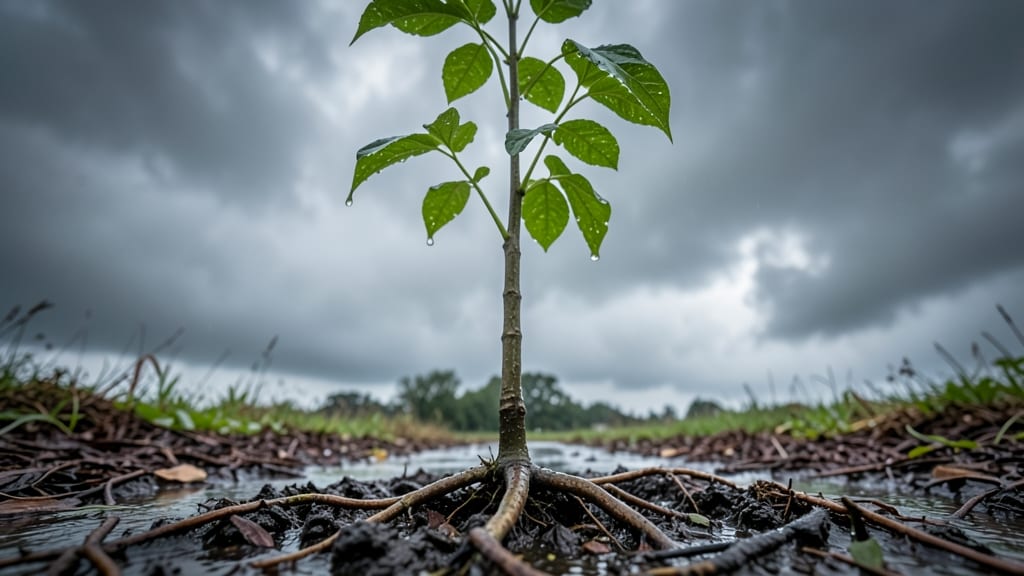
Rainy seasons can feel like a gardener’s dream—less time with the hose and more time admiring your new tree’s fresh growth. However, excessive moisture from natural rainfall creates hidden risks for newly transplanted trees, especially when it comes to root suffocation and fungal diseases.
Instead of skipping watering entirely, use the hose to supplement rainfall—aim for 1-2 inches of water per week total, including natural precipitation. Stick your finger 2-3 inches into the soil; if it’s soggy, hold off on watering. For clay-heavy soils, reduce watering further, as they retain moisture longer. A well-draining soil mix with organic matter helps balance moisture levels naturally.
This approach is ideal for gardeners in Pacific Northwest or Southeast climates, where rainy seasons dominate. By monitoring soil moisture and adjusting hose time, you’ll prevent waterlogged roots while still giving your tree the hydration it needs to thrive. 🌿
Fast-Growing Trees Like Willow
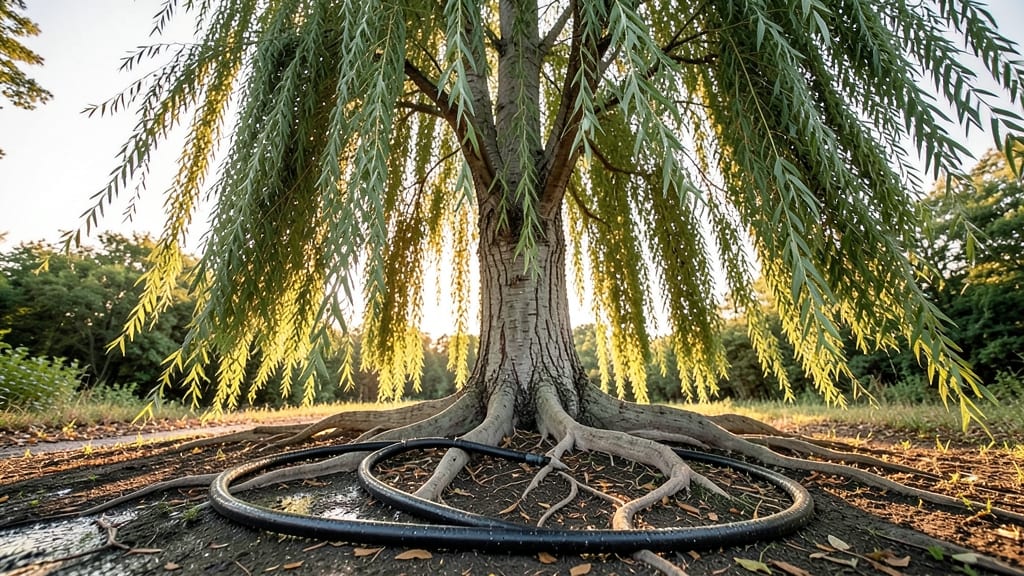
If your garden features a fast-growing tree like a willow, poplar, or hybrid cottonwood, you’re dealing with a root system that spreads aggressively—often faster than you can water it. These trees demand consistent moisture to support their rapid growth, but the wrong watering technique can lead to shallow, sprawling roots that weaken the tree over time.
For these species, focus on deep, infrequent watering rather than frequent shallow sessions. Aim to water once every 5-7 days during the first growing season, delivering 10-15 gallons of water per inch of trunk diameter. Use a hose to create a slow, deep soak that encourages roots to grow downward, away from the surface. Avoid letting the soil dry out completely between waterings, as this can stress the tree and trigger surface root dominance.
This approach is especially beneficial for gardeners with wet soil conditions or those planting near ponds or streams. By mimicking natural rainfall patterns with deep watering, you’ll help your willow or similar species develop a strong, stable root system that supports its rapid vertical growth. 🌱
Mulched Trees in All Seasons

Tired of spending hours with the hose just to keep your trees hydrated? A 3-inch layer of mulch around your tree’s base can slash your watering time by 30-50% while protecting roots year-round. This simple technique works for every season, from scorching summers to frosty winters.
Apply mulch in a donut shape—never pile it against the trunk—to prevent moisture buildup and pests. For best results, water deeply at the mulch’s outer edge to encourage roots to spread outward. Organic mulches like wood chips or shredded bark also improve soil as they break down, giving your tree a long-term moisture boost.
This method is a game-changer for busy gardeners or anyone in drought-prone areas. With less watering and more efficiency, your trees will focus on growing strong roots instead of struggling to survive. 💚