
Pruning
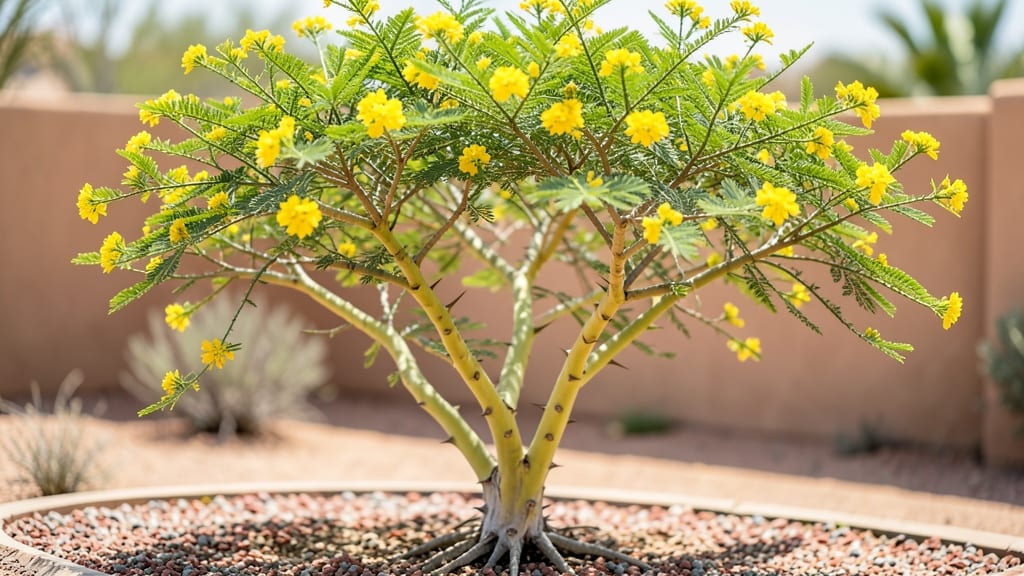
A Palo Verde tree in your front yard isn’t just a plant—it’s an instant conversation starter. 🌿 Its bright green bark and delicate yellow blooms create a striking focal point that works in any climate, from deserts to coastal areas.
The tree’s natural shape and drought resistance mean less maintenance while adding curb appeal that lasts year-round.
Spacing is key—plant it 15-20 feet from your house and other structures to let its branches spread without crowding. The tree thrives in full sun, so place it where it gets at least 6 hours of sunlight daily, and its roots will appreciate well-draining soil.
Pair it with succulents, lavender, or ornamental grasses to create a cohesive, low-water landscape.
With minimal pruning needed, a Palo Verde tree stays lush and elegant, its unique foliage adding texture and color. In spring, the bright yellow flowers attract pollinators, while its year-round greenery keeps your yard vibrant.
This tree doesn’t just survive—it thrives, making it a standout choice for any front yard.
Whether you’re designing a modern, Mediterranean, or desert-inspired space, this tree fits seamlessly. The secret? Let it grow naturally while adding complementary plants that love the same conditions. Your front yard will look effortlessly polished with almost no upkeep.
Root Causes Of Palo Verde Struggles
The palo verde tree (Parkinsonia) is a desert-dwelling powerhouse, but even resilient species face challenges when planted in front yards. Understanding why these trees sometimes struggle helps homeowners address issues before they escalate.
Below, we break down the scientific and environmental factors behind common problems—from poor growth to pest invasions—so you can take targeted action.
---
Palo verde trees evolved in well-draining, alkaline soils with minimal organic matter. When planted in front yards with heavy clay, compacted soil, or poor drainage, they face root suffocation, nutrient deficiencies, and waterlogging—all of which stunt growth or kill the tree over time.
#### Key Soil-Related Issues: - Clay or Silt-Heavy Soil 🧱 - Clay soils retain too much moisture, leading to anaerobic (oxygen-deprived) roots, which rot and fail to absorb nutrients. - Solution: Amend soil with sand, perlite, or pumice (20-30% by volume) to improve aeration.
Test soil pH—ideal range is 7.0–8.5 (alkaline).
- Lack of Native Soil Adaptation 🏡 - Front yards often use topsoil or amended mixes that lack the calcium carbonate and sandy loam palo verdes prefer. - Solution: Plant in native desert soil or replicate it with a 50/50 mix of native soil and coarse sand.
- Over-Fertilization with Organic Matter 🌿 - Too much compost or mulch can smother roots and encourage fungal growth, mimicking a rainforest environment instead of a desert one. - Solution: Use minimal organic matter (5–10%) and focus on slow-release, low-nitrogen fertilizers (e.g., 5-10-10).
---
Palo verdes are drought-tolerant, but improper watering—either too much or too little—triggers stress, disease, and even death. Front yards often overcompensate with frequent, shallow watering, which encourages weak root systems and fungal infections.
#### Common Watering Errors: - Overwatering (Most Common Culprit) 💦 - Symptoms: Yellowing leaves, leaf drop, root rot (black, mushy roots), and soil fungus (e.g., Phytophthora). - Science: Palo verdes have deep taproots that seek moisture underground.
Surface watering drowns shallow roots and attracts pests. - Fix: Water deeply but infrequently (every 7–14 days in summer, monthly in winter). Use drip irrigation 6–12 inches from the trunk.
- Underwatering (Slow Death) 💀 - Symptoms: Curling leaves, brittle branches, and premature leaf shed (even in non-dormant seasons). - Science: While drought-resistant, palo verdes do need occasional deep hydration to sustain their photosynthetic efficiency. - Fix: Water once every 2–3 weeks in extreme heat (10+ gallons per watering for mature trees).
- Inconsistent Moisture Levels 🔄 - Symptoms: Alternating wilting and sudden leaf growth (a sign of hydraulic stress). - Science: Fluctuating moisture confuses the tree’s osmotic balance, leading to nutrient uptake failures. - Fix: Stick to a schedule and monitor soil moisture 2–3 inches deep (use a moisture meter).
---
Front yards introduce new stressors—pests and pathogens that don’t exist in the tree’s natural habitat. Scale insects, spider mites, and fungal diseases thrive in the humid microclimates created by lawns, sprinklers, and dense plantings.
#### Top Urban Threats: | Pest/Disease | How It Attacks | Tell-Tale Signs | Prevention/Treatment | |------------------------|--------------------------------------------|---------------------------------------------|--------------------------------------------------| | Scale Insects 🐛 | Suck sap, weaken tree, secrete honeydew | Sticky residue, black sooty mold, yellowing leaves | Horticultural oil (dormant season), prune infested branches | | Spider Mites 🕷️ | Thrive in dry heat, pierce leaves | Fine webbing, speckled leaves, bronze coloring | Spray with water (knocks them off), neem oil | | Fusarium Wilt 🍄 | Fungal soil-borne disease blocks water | Sudden wilting, yellowing, dieback (even with water) | Remove infected trees, sterilize soil with solarization | | Aphids 🐜 | Cluster on new growth, spread viruses | Curled leaves, sticky sap, ants (farm them) | Blast with water, insecticidal soap |
- Pro Tip: 💡 Avoid overhead sprinklers—they create leaf wetness, perfect for fungal spores. Use drip systems instead.
---
Palo verdes love hot, dry climates, but front yards can create unnatural temperature swings—especially in coastal areas, urban heat islands, or shaded spots. These shifts disrupt flowering, leaf drop, and even dormancy cycles.
#### Temperature-Related Stressors: - Cold Snaps (Below 20°F) ❄️ - Symptoms: Leaf scorch, bud dieback, or complete defoliation (though the tree usually regrows). - Science: Palo verdes are semi-deciduous—they drop leaves in drought or cold, but prolonged freezing damages vascular tissue. - Fix: Mulch heavily (3–4 inches), water deeply before freeze, and avoid planting in frost pockets.
- Urban Heat Islands 🏙️ - Symptoms: Premature leaf drop, sunburned bark, or reduced flowering. - Science: Pavement and buildings radiate heat, raising soil temps 10–15°F higher than rural areas—stressing roots. - Fix: Plant in full sun, use light-colored mulch, and provide afternoon shade if temps exceed 105°F.
- Wind Burn 💨 - Symptoms: Brown, crispy leaf edges, stunted growth on exposed sides. - Science: Desert winds (even gentle ones) desiccate leaves faster than the tree can replace them. - Fix: Stake young trees, plant windbreaks (e.g., yucca), or choose a sheltered front yard spot.
--- Final Note: Most palo verde struggles in front yards boil down to mimicking their natural environment—well-draining soil, deep watering, and minimal interference. By addressing these root causes, your tree will thrive as the drought-resistant star of your landscape. 🌵✨
Revive & Maintain Your Palo Verde Tree
Transforming your front yard into a stunning, low-maintenance landscape starts with addressing common issues that may plague your palo verde tree—whether it’s struggling with drought, pests, or improper care.
Below, we’ve mapped out practical solutions for the most frequent problems, paired with prevention tips to keep your tree thriving for years. Let’s get your tree back to its vibrant best!
---
Cause: Palo verdes are drought-tolerant, but prolonged dry spells or poor soil drainage can leave them thirsty and stressed.
How to Fix It: 🔥 Deep Watering Technique - Water deeply but infrequently—aim for 1–2 inches per week during dry spells (more in extreme heat). - Use a soaker hose or drip irrigation to deliver water directly to the root zone (6–12 inches deep). - Water early in the morning to reduce evaporation and fungal risks.
🍳 Improve Soil Drainage - If your soil is clay-heavy, amend it with compost or coarse sand to enhance aeration. - Avoid over-mulching—the tree needs 2–3 inches of mulch (not more!) to prevent root suffocation.
🌡️ Adjust Watering in Winter - Palo verdes enter dormancy in winter—reduce watering to once every 2–3 weeks unless frost is forecasted.
💡 Prevention Tip: Install a rain gauge to monitor rainfall and adjust watering accordingly. Native plants like desert marigold planted nearby can also help retain soil moisture.
---
Cause: Weakened trees or dry conditions attract pests that sap nutrients and weaken branches.
How to Fix It: 👨🍳 Manual Removal for Scale & Mites - Scale insects: Wipe off infested areas with a soapy water solution (1 tsp mild dish soap per gallon of water). - Spider mites: Spray with neem oil (follow label instructions) or introduce beneficial predators like ladybugs.
🔪 Prune Damaged Branches - Cut out heavily infested branches 6–12 inches below the damage using sterilized pruners. - Dispose of pruned material off-site to prevent reinfestation.
⏰ Long-Term Pest Control - Apply systemic insecticide (like imidacloprid) early spring as a preventive measure. - Encourage natural predators by planting lavender or rosemary nearby.
💡 Prevention Tip: Regularly inspect leaves and bark (especially under branches) for early signs of pests. Healthy trees are less vulnerable—fertilize lightly in early spring with a balanced, slow-release fertilizer.
---
Cause: Overwatering, nutrient deficiencies, or fungal diseases (like powdery mildew) can turn leaves yellow or cause premature drop.
How to Fix It: 📊 Diagnose the Root Cause - Overwatering? Let soil dry between waterings—stick your finger 2 inches deep to check moisture. - Nutrient deficiency? Test soil pH (ideal: 6.0–7.5) and amend with iron sulfate (for yellowing) or compost. - Fungal issues? Prune affected leaves and apply copper fungicide if powdery mildew is present.
🥗 Fertilize Smartly - Use a low-nitrogen, high-phosphorus fertilizer (like 5-10-10) in early spring to support root growth. - Avoid high-nitrogen fertilizers—they promote leafy growth at the expense of drought resistance.
💡 Prevention Tip: Avoid wetting foliage when watering to prevent fungal spores. If leaves drop in fall, it’s normal—palo verdes shed seasonally!
---
Cause: Aggressive growth or improper pruning can lead to a messy, unbalanced tree.
How to Fix It: ✂️ Structural Pruning - Best time to prune: Late winter or early spring (avoid summer heat stress). - Remove dead, crossing, or weak branches using clean, sharp pruners. - Thin out inner branches to improve airflow and sunlight penetration.
🎯 Shape for Balance - Palo verdes have a naturally rounded canopy—prune to maintain this shape. - Avoid topping (cutting back the top)—it weakens the tree and encourages suckers.
💡 Prevention Tip: Prune gradually over 2–3 years for large trees to avoid shocking the plant. Disinfect tools with rubbing alcohol between cuts to prevent disease spread.
--- Once you’ve addressed immediate issues, keep your palo verde thriving with these easy maintenance habits: - Mulch annually (spring) with wood chips or gravel to retain moisture. - Monitor for disease after heavy rains—prune out infected areas immediately. - Avoid compacting soil around the base (keep foot traffic away from the trunk). - Plant companion natives like ocotillo or agave to create a cohesive, low-water landscape.
--- Your palo verde tree is a resilient star—with the right care, it’ll reward you with year-round greenery, shade, and curb appeal. 🌟 Start with one fix today, and watch your front yard transform into a drought-proof oasis!
Frequently asked questions
How close to my house can I plant a Palo Verde tree?
Keep it 15-20 feet from your home or structures to prevent root damage and allow proper branch spread. The tree’s wide canopy needs space to grow naturally without crowding windows or foundations.
What's the best companion planting for a Palo Verde in my front yard?
Pair it with drought-tolerant plants like desert marigold, agave, or yucca for a cohesive look. These natives share similar water needs and enhance the tree’s natural desert aesthetic.
Will a Palo Verde tree attract bees or other pests?
Yes! Its bright yellow spring blooms attract pollinators like bees and butterflies—great for your garden’s ecosystem. However, it rarely attracts harmful pests if kept healthy with proper watering and occasional pruning.
How fast does a Palo Verde tree grow in a front yard?
Expect 12-24 inches per year under ideal conditions. Young trees grow faster, while mature specimens stabilize at 20-30 feet tall with a spread of 25-30 feet. Its slow-to-moderate growth makes it perfect for long-term landscaping.
Can I plant a Palo Verde in a container for my front yard?
No—this tree needs deep roots and won’t thrive in containers. Its extensive root system requires at least 6 feet of soil depth to establish properly. Plant it directly in your yard for best results.