
Pruning
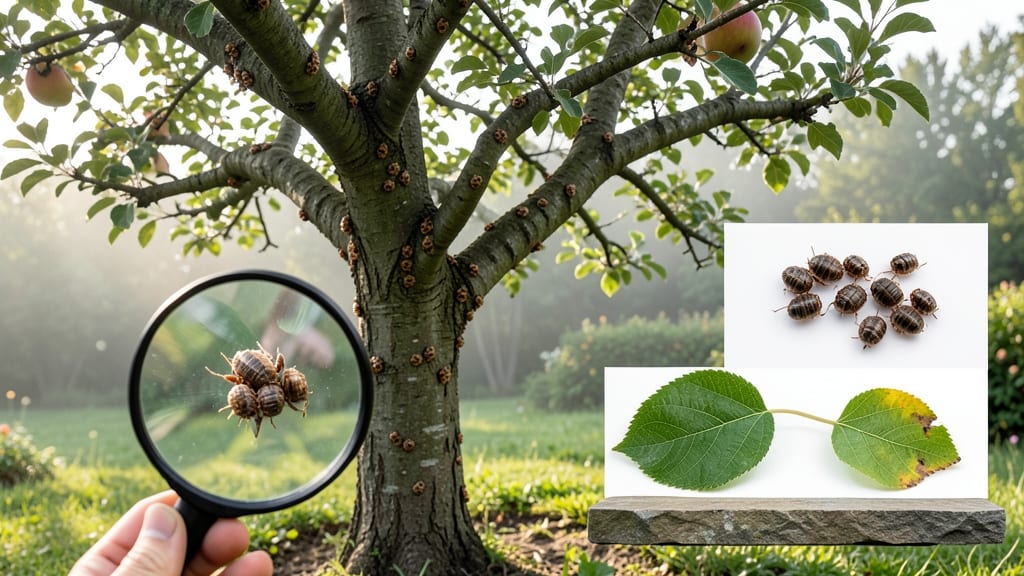
Apple tree scale looks like tiny gray bumps on branches, but those armored pests can defoliate your tree in weeks if ignored. 🌱 I’ve battled them for years, and the key to stopping them fast is knowing when to strike—right after the crawler stage, when their shells are still soft and vulnerable.
One organic spray application at the right time can break the cycle before your tree’s health spirals. The problem starts when these sap-sucking insects cluster under bark or buds, leaving sticky honeydew that attracts soot mold.
Pruning out heavily infested branches first cuts their numbers, but the real game-changer is a horticultural oil spray applied when temps are above 50°F—it smothers the crawlers without harming bees or beneficial insects. The 24-hour window for effectiveness is tight, so timing matters more than anything else.
You’ll see results within days: new growth emerges stronger, leaves stay vibrant, and the sticky residue disappears. The tree’s natural defenses kick back in, and next season’s infestation risk drops by 70%. No more helplessly watching your harvest potential vanish under a gray blanket of scale.
Works for both backyard orchards and container-grown apple trees. Here’s the exact spray recipe and timing schedule that’s saved my trees year after year—no chemicals, no guesswork.
Root Causes Of Apple Tree Infestations
Apple trees are prized for their fruit, but they’re also a magnet for tiny, stubborn pests like scale insects. These sap-sucking critters don’t just weaken your tree—they can turn leaves yellow, stunt growth, and even kill branches if left unchecked.
Understanding why these pests show up in the first place is the first step to stopping them. Let’s break down the science behind their invasion.
Scale insects thrive when your apple tree is stressed or compromised. A healthy tree’s natural defenses—like a strong bark barrier, resilient leaves, and beneficial predators—can repel or outcompete these pests. But when your tree is weakened, scales move in like squatters in a vacant home.
- Nutrient Deficiencies: Lack of essential nutrients (especially nitrogen, potassium, or phosphorus) makes trees more susceptible. Think of it like a human with a vitamin deficiency—weakened immunity makes you an easy target for infections.
- Poor Watering Practices: Overwatering or underwatering disrupts root health, reducing the tree’s ability to fight off pests. Scale insects love drought-stressed trees because their weakened sap flow is easier to tap into.
- Physical Damage: Broken branches, sunburn, or improper pruning create entry points for pests. Scales exploit these wounds, just as bacteria invade a cut on your skin.
Actionable Fix: Conduct a soil test to check nutrient levels and adjust fertilization. Water deeply but infrequently (1–2 inches per week) to encourage strong root growth. Prune only during the dormant season to minimize stress.
Scale insects don’t just appear out of nowhere—they hitchhike on wind, birds, or even garden tools from infested trees nearby. If your apple tree is planted too close to other fruit trees (especially pears, plums, or citrus), scales can spread like wildfire.
- Lack of Spacing: Trees packed too tightly create humid, shaded conditions—perfect breeding grounds for scales. Poor airflow traps moisture, which softens bark and makes it easier for scales to latch on.
- Wildlife Vectors: Birds, bees, and even squirrels can transport scale eggs from one tree to another. A single infested branch in your yard can become a pandemic.
- Old Debris: Fallen leaves, mummified fruit, or dead branches harbor scale eggs over winter. These pests overwinter in these hiding spots, emerging when conditions are ripe.
Actionable Fix:
- Space new trees at least 20–25 feet apart for proper airflow.
- Remove and dispose of (don’t compost!) fallen leaves and fruit after harvest.
- Install fine mesh netting around young trees to block flying pests.
Scale insects are opportunistic—they don’t invade randomly; they wait for the perfect storm. Warm temperatures, low humidity, and dry conditions trigger their life cycle, allowing them to multiply rapidly.
| Factor | Why It Helps Scales | How to Disrupt It |
|---|---|---|
| 🌞 Warm, Dry Summers | Scales reproduce faster in heat (ideal range: 75–95°F). Dry air also weakens tree defenses. | Use mulch to retain soil moisture and shade cloth to reduce heat stress. |
| 💧 Low Humidity | Dry conditions make trees produce more sugary sap—scale insects’ favorite snack. | Install a drip irrigation system for consistent moisture. |
| 🍂 Mild Winters | Scale eggs survive harsher winters but thrive in mild climates, leading to earlier hatching. | Apply horticultural oil in late winter to smother overwintering eggs. |
Pro Tip: 🌡️ Monitor your local frost dates—scales often hatch just before buds swell in spring. This is your best window for early intervention.
In nature, apple trees aren’t defenseless—they’re part of a balanced ecosystem where predators keep scale populations in check. But if you’ve used broad-spectrum pesticides (like neonicotinoids or synthetic pyrethroids), you’ve likely wiped out the good guys too.
- Lost Ladybugs & Lacewings: These insects devour scale nymphs and eggs. A single ladybug can eat 50+ scales in a day.
- Parasitic Wasps: Tiny wasps like Aphytis melinus lay eggs inside scale insects, killing them from within.
- Birds & Praying Mantises: They snack on adult scales, but their populations plummet with pesticide use.
Actionable Fix:
- Avoid chemical pesticides—opt for organic sprays (like neem or insecticidal soap) that target scales without harming predators.
- Plant companion plants like dill, fennel, or yarrow to attract beneficial insects.
- Install birdhouses or bat boxes to encourage natural pest control.
Key Takeaway: Scale infestations are rarely random—they’re a symptom of an underlying issue. By addressing weak defenses, poor growing conditions, and disrupted ecosystems, you can starve out scales before they become a full-blown crisis.
Quick Fixes for Apple Tree Scales
If your apple tree is battling those pesky armored scales, don’t panic—there are effective, organic solutions to restore its health. The key is targeting the cause with the right treatment, then locking in long-term prevention.
Below, we break down the fixes by problem type, so you can act fast and keep your tree thriving.
Cause: Heavy scale buildup (visible as bumps or cottony residue) stunts growth and weakens fruit quality.
Fix:
- Prune Infested Branches 🔪
- Use sterilized pruners to cut and remove heavily infested branches (especially small twigs).
- Dispose of clippings in a sealed bag—do not compost them!
- Apply Horticultural Oil 🥘 - Best for: Soft scales (less armored). - How: Mix 2% horticultural oil (like Neem Bliss) with water (1 tsp per quart).
Spray thoroughly on both sides of leaves and bark, focusing on crevices where scales hide. - When: Early morning or late evening (avoid direct sun). - Frequency: Repeat every 7–10 days for 3–4 weeks.
- Diatomaceous Earth (DE) Dust ✨
- Best for: Light infestations or prevention.
- How: Lightly dust food-grade DE on bark and under leaves. It dehydrates scales but is harmless to bees (apply when they’re not active).
- Pro Tip: Reapply after rain—it loses effectiveness when wet.
Cause: Scale eggs laid in spring hatch into nymphs, feeding on sap and reducing fruit sweetness.
Fix:
- Dormant Oil Spray ❄️
- Best for: Preventing new infestations (apply before buds swell in late winter/early spring).
- How: Use refined dormant oil (like Bonide Winter Dormant Spray). Follow label rates—usually 1–2% concentration.
- Why It Works: Smothers overwintering eggs before they hatch.
- Kaolin Clay Barrier 🏗️
- Best for: Protecting fruit from new scale activity.
- How: Mix kaolin clay (like Surround WP) with water and spray every 7–14 days starting at petal fall.
- Bonus: Also deters codling moths and apple maggots!
- Beneficial Insects 🐝
- Best for: Long-term control (scales’ natural predators).
- How: Introduce parasitic wasps (like Aphytis melinus) or ladybugs. Order from garden centers or online suppliers.
- When: Release in early spring before scales multiply.
Cause: You need fast action—scales are spreading rapidly, and fruit is at risk.
Fix: The "3-Step Express Treatment"
| Step | Solution | How to Apply | When |
|---|---|---|---|
| 1 | Neem Oil Spray | 1 tbsp neem oil + 1 tsp mild soap + 1 quart water. Shake well. | Evening (avoid bees) |
| 2 | Spinosad (Organic) | Follow label (e.g., Captain Jack’s). Spray directly on scales. | Next morning |
| 3 | Follow-Up Hort Oil | Reapply horticultural oil 3 days later. | Repeat weekly |
Why It Works:
- Neem disrupts feeding and repels new scales.
- Spinosad kills existing scales fast (derived from soil bacteria).
- Hort oil smothers remaining eggs/nymphs.
⚠️ Warning: Avoid spraying directly on blooms—it harms pollinators!
Once you’ve tackled the infestation, stop it from coming back with these low-effort habits:
- 🌡️ Monitor Tree Health Year-Round
- Inspect every 2 weeks in spring/summer. Look for white cottony residue (sign of new scales).
- 🍂 Clean Up Debris
- Remove fallen leaves, mummified fruit, and prunings from the base of the tree. Scales hibernate in this debris!
- 💡 Encourage Natural Predators
- Plant dill, fennel, or yarrow nearby to attract ladybugs and parasitic wasps.
- 🌱 Soil & Water Care
- Avoid overwatering—scales love stressed trees. Water deeply but infrequently.
- Add compost to boost tree resilience (healthy trees resist pests better).
- 📅 Timing Matters
- Apply dormant oil in late winter (before buds break).
- Use kaolin clay after blooming to protect fruit.
Final Pro Tip: If scales persist after 2–3 treatments, consider repeating the cycle or consulting a local extension service for a customized plan—some regions have scale-resistant apple varieties (like Liberty or Akane) that might be worth planting next!
Frequently asked questions
What do apple tree scales look like up close?
Apple tree scales appear as tiny, armored bumps—often gray, brown, or white—that stick firmly to branches and leaves. Under magnification, you’ll see their waxy, protective shells (like tiny shields) that make them resistant to many sprays. Look for clusters under buds or along leaf veins where they feed on sap.
Can I use vinegar to kill apple tree scales?
No, vinegar won’t work effectively against scales. The acidic solution can harm your tree’s bark and won’t penetrate their protective shells. Instead, use horticultural oil or neem oil, which smother the pests without damaging the tree when applied correctly.
How do I know if my apple tree has scales or just soot mold?
Soot mold (black, fuzzy residue) is a secondary symptom of scale infestations—the scales produce sticky honeydew that attracts mold. If you see both black mold and tiny bumps, you’ve got scales. Treat the scales first (with oil sprays), and the mold will disappear as the honeydew stops.
Will pruning alone get rid of apple tree scales?
Pruning helps reduce scales but won’t eliminate them completely. Cutting infested branches removes some pests, but eggs may still remain on the tree. Combine pruning with dormant oil sprays in late winter for best results—this smothers overwintering eggs before they hatch.
Are there any apple varieties naturally resistant to scales?
Yes! Some varieties like Liberty or Akane have better natural resistance. However, no tree is 100% scale-proof—even resistant varieties need proper care (like horticultural oil sprays in early spring) to stay healthy. Check with your local extension office for region-specific recommendations.