
Pruning
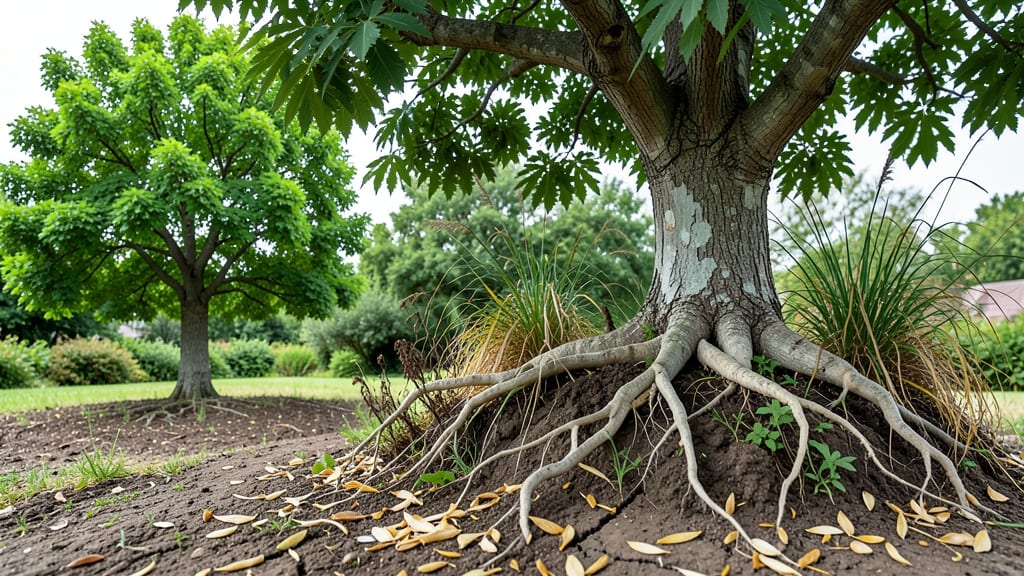
Tree of Heaven is considered bad because its invasive roots and prolific seed production outcompete native plants, disrupting entire ecosystems. The tree releases allelopathic chemicals that poison surrounding soil, while its rapid spread smothers forests and gardens, making it a major ecological threat.
Why is Tree of Heaven bad? The damage stems from its biological dominance. 🌱 Its roots spread aggressively, seeking water and nutrients, while the tree produces thousands of seeds annually that germinate with remarkable efficiency. Unlike native species, Tree of Heaven doesn't rely on pollinators—it self-fertilizes, creating dense monocultures that eliminate biodiversity. The allelopathic compounds it releases create "chemical warfare" zones where few other plants can survive, turning once-diverse areas into uniform stands of this invasive species.
This ecological disruption has real-world consequences. Landowners often discover their property overrun with Tree of Heaven, forcing costly removal efforts. 💥 The tree's ability to thrive in disturbed soils—like construction sites or abandoned lots—makes it particularly problematic in urban areas, where it can quickly dominate landscapes.
Once established, complete eradication becomes nearly impossible without professional intervention, making prevention the only truly effective strategy.
💡 In This Article
- How Tree of Heaven Invades Ecosystems
- Removing Tree of Heaven: Safe Eradication Methods
How tree of Heaven invades ecosystems
The Tree of Heaven (Ailanthus altissima) dominates ecosystems through a combination of biological weapons. Its roots grow up to 10 feet per year—far faster than most native species—and produce a dense, underground network that steals water and nutrients from surrounding plants.
This aggressive root system creates a "competitive exclusion zone" where native flora simply can't compete for resources. 🌱
The real ecological damage comes from its allelopathic compounds, particularly ailanthone, which leaches into the soil. These chemicals suppress seed germination and root growth in competing plants, effectively poisoning the ground beneath the Tree of Heaven.
Studies show that soil beneath established trees can remain barren for years after removal, as the toxins persist. This "chemical warfare" strategy gives the tree an unfair advantage in any ecosystem it invades.
Seed production is another key weapon in its arsenal. A single Tree of Heaven can release 30,000 to 50,000 seeds annually, which germinate with remarkable efficiency. Unlike many trees that rely on pollinators, these seeds are wind-dispersed and self-fertile, meaning they don't need other trees to reproduce.
This creates dense monocultures that eliminate biodiversity, turning diverse forests into uniform stands of this invasive species.
The tree's ability to thrive in disturbed soils—like construction sites or abandoned lots—makes it particularly problematic in urban areas. Its rapid growth allows it to quickly dominate landscapes, while its tolerance for pollution and poor soil conditions gives it an edge over native plants.
Once established, complete eradication becomes nearly impossible without professional intervention, as even small root fragments can regenerate new trees.
Consider this: In New York City alone, Tree of Heaven has been found to occupy 20% of urban forest areas, outcompeting native species like oaks and maples.
The economic impact is significant too, as property values drop when these trees invade landscapes, and removal costs can exceed $5,000 per tree in dense urban environments. The tree's dominance isn't just an ecological issue—it's a growing economic and aesthetic problem.
What makes this invasion particularly insidious is the tree's ability to adapt to human activity. It thrives in parking lots, along highways, and in vacant lots, making it nearly impossible to eradicate without coordinated efforts.
The combination of its aggressive roots, chemical warfare, and prolific seed production creates a perfect storm of invasiveness that few native species can withstand. 💥