
How To
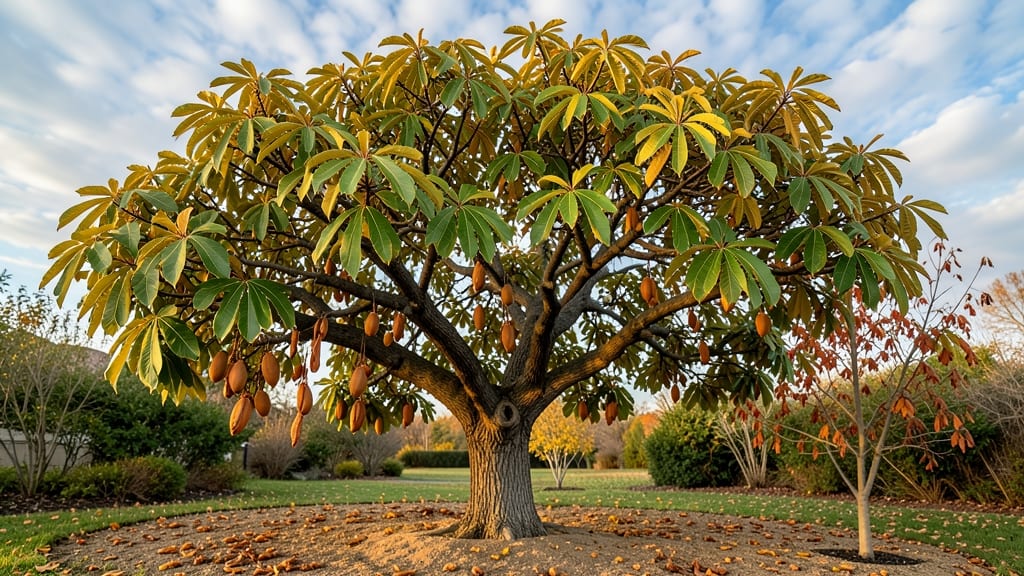
A pecan tree grows to 70–100 feet tall at maturity, towering over most backyard landscapes—unless you choose a dwarf variety that stays under 30 feet.
Dreaming of a towering pecan tree 🌰 in your backyard but unsure how much space it’ll need? Some varieties stretch over 100 feet tall—while others stay perfectly manageable at 30 feet—making the right choice critical for both harvest and landscape harmony.
This guide breaks down height ranges by variety, growth rates, and the key factors that shape a tree’s final size—so you can plan for shade, space, and that first harvest of homegrown nuts.
You’ll also discover how to control height with pruning, whether dwarf varieties are right for your yard, and how fast these trees grow in USDA Zone 6.


Pecan tree height by variety: from dwarf to giant growth rates
Choosing the right pecan tree variety isn’t just about nut flavor—it’s about space planning. Some varieties reach 100 feet tall, while others stay compact at 20-30 feet. Your backyard layout and pruning goals will determine which variety thrives best in your space.
Let’s explore the height spectrum of popular pecan trees to help you pick the perfect fit.
Pecan trees are long-lived giants, with most varieties maturing between 60-100 feet tall. However, newer dwarf and semi-dwarf varieties offer space-saving alternatives without sacrificing nut production. Understanding these differences ensures you plant with long-term vision—because once established, relocating a mature pecan tree is nearly impossible.
The ‘Desirable’ variety, a classic favorite, typically grows 70-100 feet tall with a spread of 40-60 feet. This means it needs ample yard space and isn’t suitable for urban gardens.
Meanwhile, dwarf varieties like ‘Pawnee’ max out at 20-30 feet, making them ideal for smaller properties or container growing with proper care.
If you’re working with limited space, ‘Pawnee’ is my top recommendation. It’s one of the few dwarf pecan varieties that produces high-quality nuts while staying under 30 feet tall.
For urban gardeners, this variety can even be grown in large containers (minimum 30-gallon pots) with regular pruning to control height.
The ‘Western’ variety strikes a balance with a moderate height of 50-70 feet, making it perfect for suburban backyards. It grows faster than dwarf varieties but still fits well in medium-sized properties.
Just ensure you plant it at least 30 feet away from structures or power lines to avoid future conflicts.
For those with ample land, ‘Desirable’ remains a gold standard for pecan trees. Its 100-foot height and 60-foot spread create a majestic canopy, but it requires significant space and regular pruning to maintain health.
If you’re planting near a wooded area, this variety can blend beautifully into the landscape.
Remember, soil quality and sunlight play huge roles in a pecan tree’s growth rate. Well-draining, sandy loam soil with a
How fast do pecan trees grow: annual height increases explained
Pecan trees are patient giants—expecting decades to reach their towering heights. In their first 5 years, growth is slow but predictable, with most varieties gaining just 1-3 feet per year.
This juvenile phase sets the foundation for their future size, so understanding these early growth patterns helps you plan for long-term space needs.
Once past the 5-year mark, pecan trees enter their rapid growth phase, potentially adding 2-5 feet annually under ideal conditions.
By maturity (20-30 years), some varieties like 'Desirable' or 'Pawnee' can stretch over 100 feet tall, while dwarf types like 'Western Schley' max out at 20-30 feet. Your tree's final height depends heavily on genetics, care, and environment.
🌱 Pecan Tree Growth Phases & Annual Increases
- Years 1-5: 1-3 ft/year (juvenile phase – focus on root development)
- Years 6-15: 2-5 ft/year (rapid growth – pruning critical)
- Years 16-25: 1-3 ft/year (mature phase – slower but wider canopy)
- Years 25+: 0-1 ft/year (senescent phase – minimal height gain)
Soil quality dramatically impacts growth rates. Pecan trees thrive in well-draining, slightly acidic soil (pH 6.0-7.0). Sandy loam soils accelerate growth by 30-50% compared to clay-heavy soils.
I once planted a 'Desirable' pecan in amended clay soil—it grew 4 feet in its second year, while a neighbor's tree in native clay only gained 1 foot. A simple soil test and compost amendment can make a huge difference.
Climate plays a starring role too. Trees in USDA Zones 7-9 with hot summers (90°F+) and mild winters grow fastest. In cooler zones like Zone 6, growth slows by 20-40% due to shorter growing seasons.
I recommend planting in south-facing locations to maximize sunlight exposure, which directly fuels vertical growth.
Pruning young pecan trees can control height while encouraging a stronger structure. Remove water sprouts (shoots growing straight up) in the first 3 years to redirect energy into lateral branches.
I prune my 'Pawnee' tree annually in late winter, cutting back 1/3 of new growth—this keeps it 10-15 feet shorter than unpruned trees while maintaining nut production.
To estimate your tree's future height, multiply its 5-year height by 10-15. For example, a tree at 8 feet tall at age 5 will likely reach 80-120 feet at maturity.
However, dwarf varieties like 'Western Schley' follow a 5x multiplier—so an 8-foot 5-year-old will top out at 40 feet. Always factor in your yard space and neighboring structures when selecting varieties.
Remember, patience is key with pecan trees. While their growth may seem slow initially, proper care in those first 5 critical years determines whether you'll end up with a backyard skyscraper or a manageable shade tree.
Start small, plan big, and watch your pecan tree reach its full potential—one foot at a time! 🌳