
Companion Plants
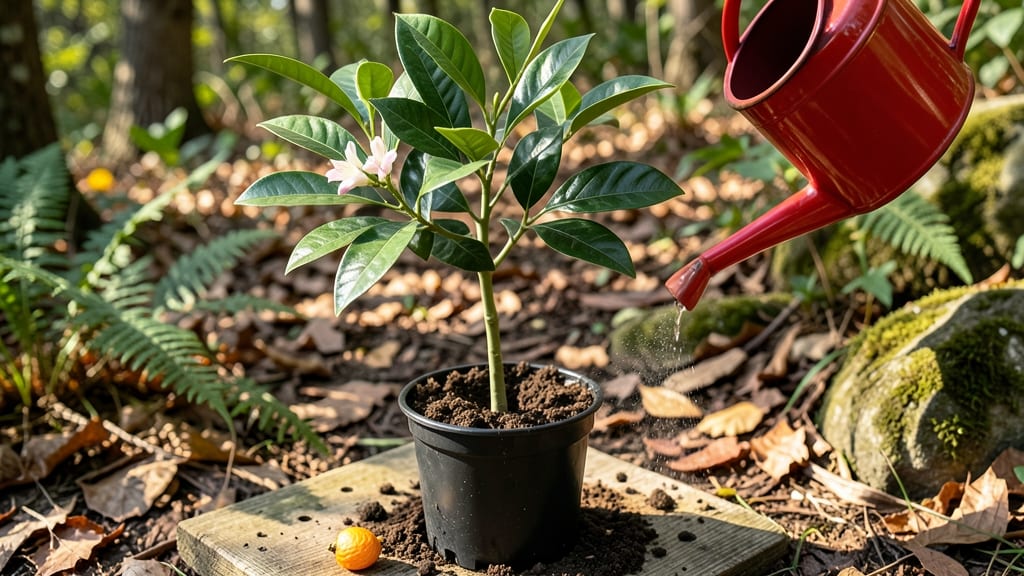
You can grow an orange tree from an orange seed, but the resulting fruit will be bitter and inedible due to genetic hybridization. The seed must be dried, planted in well-draining soil, and maintained at 70-80°F with consistent moisture for germination, which typically occurs in 2-6 weeks. Fruit production won't happen for 5-10 years, so patience is essential.
While it's true that orange seeds will sprout into trees, the fruit they produce won't taste like the sweet oranges you're familiar with. 🌱 This happens because commercial oranges are grafted hybrids—growers carefully select and cross-breed varieties to create the flavorful fruit we enjoy.
When you grow from seed, you're essentially planting a wild citrus relative that retains its natural bitterness. The good news? You can still enjoy the experience of nurturing a citrus tree, and if you're patient, you might even get decorative blooms or small, tart fruit.
For best results, start with seeds from organic oranges—conventional ones may have been treated to prevent sprouting. Once planted, keep the soil lightly moist but never soggy, and place your seedling in a sunny spot (at least 6 hours of light daily).
Most gardeners find that container-growing works best for indoor seedlings, allowing you to move them outdoors once they're established.
💡 In This Article
- Why Store-Bought Orange Seeds Rarely Grow True Fruit
- Step-by-Step Guide to Germinating Orange Seeds Indoors
Why store-bought orange seeds rarely grow true fruit
The oranges you buy in grocery stores are almost never grown from seed—they're the result of careful horticultural grafting. 🌱 Commercial citrus trees are typically grafted onto rootstocks that produce the specific sweet, juicy varieties we love, like Navel or Valencia.
When you plant a seed from a store-bought orange, you're growing what's called a "seedling tree," which inherits the genetic traits of its wild ancestors. These trees often produce small, tart, and bitter fruit that's inedible compared to commercial varieties.
The bitterness comes from compounds called limonoids and flavonoids, which are naturally present in citrus seeds.
These compounds act as a defense mechanism against pests and diseases in the wild. 🍊 For example, a seed-grown orange tree might produce fruit with a flavor profile closer to a sour orange or pomelo than the sweet oranges we're accustomed to.
The genetic diversity introduced through seed propagation means the resulting tree could also have different leaf shapes, growth habits, and even cold hardiness compared to grafted trees.
Another key factor is seed viability. Many store-bought oranges have seeds treated with chemicals to prevent germination, especially if they're imported.
Even if the seeds aren't treated, they may not be fully mature when harvested, reducing their chance of sprouting. 🌱 For best results, use seeds from organic oranges or those specifically labeled as seed-bearing.
The viability of citrus seeds also decreases rapidly—plant them within a few days of extraction for the highest success rate.
Citrus trees grown from seed take much longer to bear fruit compared to grafted trees. While a grafted tree might produce oranges in as little as 3-5 years, a seedling tree could take 5-10 years before it flowers and fruits.
This delayed fruiting is due to the tree's focus on establishing a strong root system and canopy before allocating energy to reproduction. The extended timeline is one reason why commercial growers rely on grafting—it allows them to produce fruit much faster while maintaining consistent quality.
If you're hoping to grow a tree that produces fruit similar to your favorite grocery store variety, you'll need to start with a grafted tree rather than a seed.
Grafting involves taking a cutting (called a scion) from a desired variety and attaching it to the rootstock of a compatible citrus tree.
This method preserves the exact genetic traits of the parent plant, ensuring the fruit will have the same flavor and characteristics. 🌿 For seed-grown trees, the real reward often comes from the tree itself—its unique growth patterns, fragrant blossoms, and potential for small, decorative fruit make it a fascinating ornamental plant.